

in the hydrogenation of p-cyanobenzaldehyde and 2-octynal, although that obtained
in the reduction of p-nitrobenzaldehyde was lower.
A ligand effect was also reported in the hydrogenation of α,β-unsaturated carbonyl compounds by Ir NPs (2.1 (0.2) nm) stabilised with Ph 2 P(CH 2 CH 2 O) 22 CH 3
[50]. These NPs showed high selectivity towards the hydrogenation of the aldehyde
group. By contrast, a preference for the C¼C bond of unsaturated ketones was also
observed (Table 4). The authors suggested different adsorption models for aldehydes
and ketones on the NP surface. The C¼O group would be preferentially adsorbed via
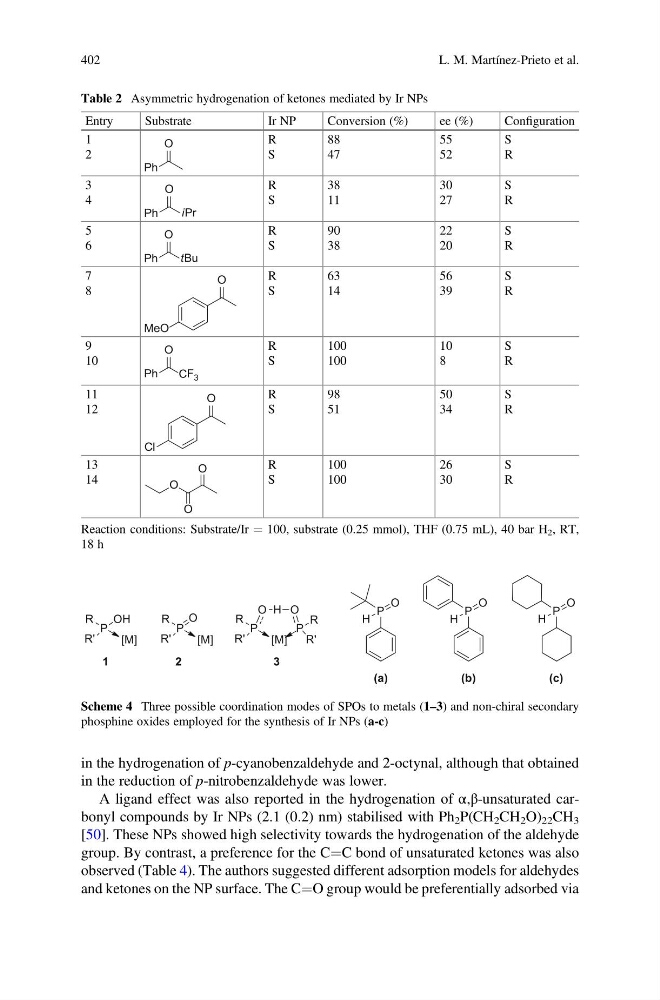
Table 2 Asymmetric hydrogenation of ketones mediated by Ir NPs
Entry
Substrate
Ir NP
Conversion (%)
ee (%)
Configuration
1
2
R
S
88
47
55
52
S
R
3
4
R
S
38
11
30
27
S
R
5
6
R
S
90
38
22
20
S
R
7
8
R
S
63
14
56
39
S
R
9
10
R
S
100
100
10
8
S
R
11
12
R
S
98
51
50
34
S
R
13
14
R
S
100
100
26
30
S
R
Reaction conditions: Substrate/Ir ¼ 100, substrate (0.25 mmol), THF (0.75 mL), 40 bar H 2 , RT,
18 h
Scheme 4 Three possible coordination modes of SPOs to metals (1–3) and non-chiral secondary
phosphine oxides employed for the synthesis of Ir NPs (a-c)
402
L. M. Martínez-Prieto et al.
in the reduction of p-nitrobenzaldehyde was lower.
A ligand effect was also reported in the hydrogenation of α,β-unsaturated carbonyl compounds by Ir NPs (2.1 (0.2) nm) stabilised with Ph 2 P(CH 2 CH 2 O) 22 CH 3
[50]. These NPs showed high selectivity towards the hydrogenation of the aldehyde
group. By contrast, a preference for the C¼C bond of unsaturated ketones was also
observed (Table 4). The authors suggested different adsorption models for aldehydes
and ketones on the NP surface. The C¼O group would be preferentially adsorbed via
Table 2 Asymmetric hydrogenation of ketones mediated by Ir NPs
Entry
Substrate
Ir NP
Conversion (%)
ee (%)
Configuration
1
2
R
S
88
47
55
52
S
R
3
4
R
S
38
11
30
27
S
R
5
6
R
S
90
38
22
20
S
R
7
8
R
S
63
14
56
39
S
R
9
10
R
S
100
100
10
8
S
R
11
12
R
S
98
51
50
34
S
R
13
14
R
S
100
100
26
30
S
R
Reaction conditions: Substrate/Ir ¼ 100, substrate (0.25 mmol), THF (0.75 mL), 40 bar H 2 , RT,
18 h
Scheme 4 Three possible coordination modes of SPOs to metals (1–3) and non-chiral secondary
phosphine oxides employed for the synthesis of Ir NPs (a-c)
402
L. M. Martínez-Prieto et al.