

Fischmeister and coworkers developed the Cp*Ir(SO 4 ) complex [Ir-43]
containing a bis 2-pyridylamine as ligand which they tested for the reduction of
LEV under both hydrogenation and transfer hydrogenation (TH) conditions
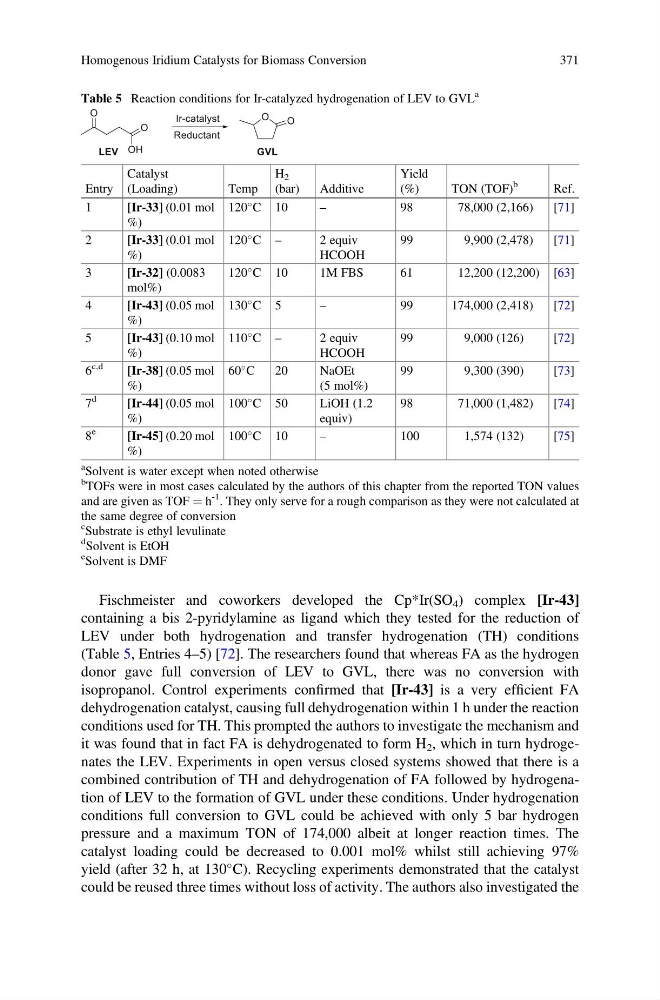
(Table 5, Entries 4–5) [72]. The researchers found that whereas FA as the hydrogen
donor gave full conversion of LEV to GVL, there was no conversion with
isopropanol. Control experiments confirmed that [Ir-43] is a very efficient FA
dehydrogenation catalyst, causing full dehydrogenation within 1 h under the reaction
conditions used for TH. This prompted the authors to investigate the mechanism and
it was found that in fact FA is dehydrogenated to form H 2 , which in turn hydrogenates the LEV. Experiments in open versus closed systems showed that there is a
combined contribution of TH and dehydrogenation of FA followed by hydrogenation of LEV to the formation of GVL under these conditions. Under hydrogenation
conditions full conversion to GVL could be achieved with only 5 bar hydrogen
pressure and a maximum TON of 174,000 albeit at longer reaction times. The
catalyst loading could be decreased to 0.001 mol% whilst still achieving 97%
yield (after 32 h, at 130
C). Recycling experiments demonstrated that the catalyst
could be reused three times without loss of activity. The authors also investigated the
Table 5 Reaction conditions for Ir-catalyzed hydrogenation of LEV to GVL
a
Entry
Catalyst
(Loading)
Temp
H 2
(bar)
Additive
Yield
(%)
TON (TOF)
b
Ref.
1
[Ir-33] (0.01 mol
%)
120
C 10
–
98
78,000 (2,166)
[71]
2
[Ir-33] (0.01 mol
%)
120
C –
2 equiv
HCOOH
99
9,900 (2,478)
[71]
3
[Ir-32] (0.0083
mol%)
120
C 10
1M FBS
61
12,200 (12,200) [63]
4
[Ir-43] (0.05 mol
%)
130
C 5
–
99
174,000 (2,418)
[72]
5
[Ir-43] (0.10 mol
%)
110
C –
2 equiv
HCOOH
99
9,000 (126)
[72]
6
c,d
[Ir-38] (0.05 mol
%)
60
C
20
NaOEt
(5 mol%)
99
9,300 (390)
[73]
7
d
[Ir-44] (0.05 mol
%)
100
C 50
LiOH (1.2
equiv)
98
71,000 (1,482)
[74]
8
e
[Ir-45] (0.20 mol
%)
100
C 10
–
100
1,574 (132)
[75]
a Solvent is water except when noted otherwise
b
TOFs were in most cases calculated by the authors of this chapter from the reported TON values
and are given as TOF ¼ h
-1
. They only serve for a rough comparison as they were not calculated at
the same degree of conversion
c Substrate is ethyl levulinate
d
Solvent is EtOH
e Solvent is DMF
Homogenous Iridium Catalysts for Biomass Conversion
371
containing a bis 2-pyridylamine as ligand which they tested for the reduction of
LEV under both hydrogenation and transfer hydrogenation (TH) conditions
(Table 5, Entries 4–5) [72]. The researchers found that whereas FA as the hydrogen
donor gave full conversion of LEV to GVL, there was no conversion with
isopropanol. Control experiments confirmed that [Ir-43] is a very efficient FA
dehydrogenation catalyst, causing full dehydrogenation within 1 h under the reaction
conditions used for TH. This prompted the authors to investigate the mechanism and
it was found that in fact FA is dehydrogenated to form H 2 , which in turn hydrogenates the LEV. Experiments in open versus closed systems showed that there is a
combined contribution of TH and dehydrogenation of FA followed by hydrogenation of LEV to the formation of GVL under these conditions. Under hydrogenation
conditions full conversion to GVL could be achieved with only 5 bar hydrogen
pressure and a maximum TON of 174,000 albeit at longer reaction times. The
catalyst loading could be decreased to 0.001 mol% whilst still achieving 97%
yield (after 32 h, at 130
C). Recycling experiments demonstrated that the catalyst
could be reused three times without loss of activity. The authors also investigated the
Table 5 Reaction conditions for Ir-catalyzed hydrogenation of LEV to GVL
a
Entry
Catalyst
(Loading)
Temp
H 2
(bar)
Additive
Yield
(%)
TON (TOF)
b
Ref.
1
[Ir-33] (0.01 mol
%)
120
C 10
–
98
78,000 (2,166)
[71]
2
[Ir-33] (0.01 mol
%)
120
C –
2 equiv
HCOOH
99
9,900 (2,478)
[71]
3
[Ir-32] (0.0083
mol%)
120
C 10
1M FBS
61
12,200 (12,200) [63]
4
[Ir-43] (0.05 mol
%)
130
C 5
–
99
174,000 (2,418)
[72]
5
[Ir-43] (0.10 mol
%)
110
C –
2 equiv
HCOOH
99
9,000 (126)
[72]
6
c,d
[Ir-38] (0.05 mol
%)
60
C
20
NaOEt
(5 mol%)
99
9,300 (390)
[73]
7
d
[Ir-44] (0.05 mol
%)
100
C 50
LiOH (1.2
equiv)
98
71,000 (1,482)
[74]
8
e
[Ir-45] (0.20 mol
%)
100
C 10
–
100
1,574 (132)
[75]
a Solvent is water except when noted otherwise
b
TOFs were in most cases calculated by the authors of this chapter from the reported TON values
and are given as TOF ¼ h
-1
. They only serve for a rough comparison as they were not calculated at
the same degree of conversion
c Substrate is ethyl levulinate
d
Solvent is EtOH
e Solvent is DMF
Homogenous Iridium Catalysts for Biomass Conversion
371