

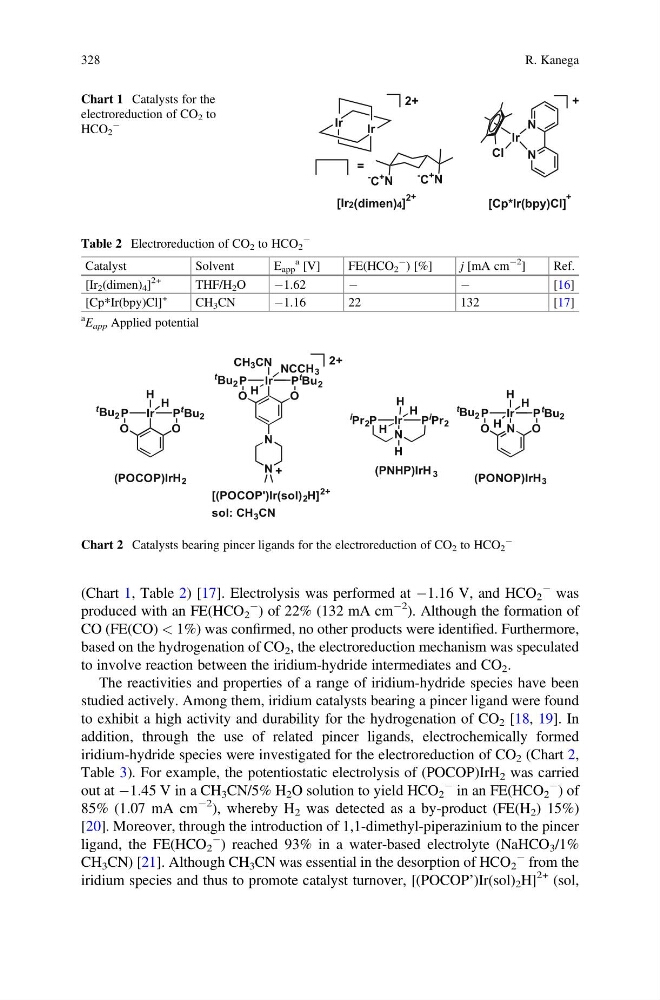
(Chart 1, Table 2) [17]. Electrolysis was performed at À1.16 V, and HCO 2
À was
produced with an FE(HCO 2
À ) of 22% (132 mA cm
À2 ). Although the formation of
CO (FE(CO) < 1%) was confirmed, no other products were identified. Furthermore,
based on the hydrogenation of CO 2 , the electroreduction mechanism was speculated
to involve reaction between the iridium-hydride intermediates and CO 2 .
The reactivities and properties of a range of iridium-hydride species have been
studied actively. Among them, iridium catalysts bearing a pincer ligand were found
to exhibit a high activity and durability for the hydrogenation of CO 2 [18, 19]. In
addition, through the use of related pincer ligands, electrochemically formed
iridium-hydride species were investigated for the electroreduction of CO 2 (Chart 2,
Table 3). For example, the potentiostatic electrolysis of (POCOP)IrH 2 was carried
out at À1.45 V in a CH 3 CN/5% H 2 O solution to yield HCO 2
À in an FE(HCO 2
À ) of
85% (1.07 mA cm
À2 ), whereby H 2 was detected as a by-product (FE(H 2 ) 15%)
[20]. Moreover, through the introduction of 1,1-dimethyl-piperazinium to the pincer
ligand, the FE(HCO 2
À
) reached 93% in a water-based electrolyte (NaHCO 3 /1%
CH 3 CN) [21]. Although CH 3 CN was essential in the desorption of HCO 2
À from the
iridium species and thus to promote catalyst turnover, [(POCOP’)Ir(sol) 2 H]
2+ (sol,
[Cp*Ir(bpy)Cl]
+
N
N
Ir
Cl
+
-
C
+
N
-
C
+
N
Ir
Ir
=
2+
[Ir2(dimen)4]
2+
Chart 1 Catalysts for the
electroreduction of CO 2 to
HCO 2
À
Table 2 Electroreduction of CO 2 to HCO 2
À
Catalyst
Solvent
E app
a [V]
FE(HCO 2
À ) [%]
j [mA cm
À2
]
Ref.
[Ir 2 (dimen) 4 ]
2+
THF/H 2 O
À1.62
À
À
[16]
[Cp*Ir(bpy)Cl]
+
CH 3 CN
À1.16
22
132
[17]
a E app Applied potential
Ir
H
P
t Bu 2
H
P
O
O
t Bu 2
(POCOP)IrH 2
Ir
NCCH 3
P t Bu 2
CH 3 CN
P
O
O
t Bu 2
[(POCOP')Ir(sol) 2 H]
2+
N
N +
Ir
N
H
P i Pr 2
H
P
H
i Pr 2
H
(PNHP)IrH 3
2+
H
sol: CH 3 CN
Ir
N
H
P
t
Bu 2
H
P
O
O
t Bu 2
(PONOP)IrH 3
H
Chart 2 Catalysts bearing pincer ligands for the electroreduction of CO 2 to HCO 2
À
328
R. Kanega
À was
produced with an FE(HCO 2
À ) of 22% (132 mA cm
À2 ). Although the formation of
CO (FE(CO) < 1%) was confirmed, no other products were identified. Furthermore,
based on the hydrogenation of CO 2 , the electroreduction mechanism was speculated
to involve reaction between the iridium-hydride intermediates and CO 2 .
The reactivities and properties of a range of iridium-hydride species have been
studied actively. Among them, iridium catalysts bearing a pincer ligand were found
to exhibit a high activity and durability for the hydrogenation of CO 2 [18, 19]. In
addition, through the use of related pincer ligands, electrochemically formed
iridium-hydride species were investigated for the electroreduction of CO 2 (Chart 2,
Table 3). For example, the potentiostatic electrolysis of (POCOP)IrH 2 was carried
out at À1.45 V in a CH 3 CN/5% H 2 O solution to yield HCO 2
À in an FE(HCO 2
À ) of
85% (1.07 mA cm
À2 ), whereby H 2 was detected as a by-product (FE(H 2 ) 15%)
[20]. Moreover, through the introduction of 1,1-dimethyl-piperazinium to the pincer
ligand, the FE(HCO 2
À
) reached 93% in a water-based electrolyte (NaHCO 3 /1%
CH 3 CN) [21]. Although CH 3 CN was essential in the desorption of HCO 2
À from the
iridium species and thus to promote catalyst turnover, [(POCOP’)Ir(sol) 2 H]
2+ (sol,
[Cp*Ir(bpy)Cl]
+
N
N
Ir
Cl
+
-
C
+
N
-
C
+
N
Ir
Ir
=
2+
[Ir2(dimen)4]
2+
Chart 1 Catalysts for the
electroreduction of CO 2 to
HCO 2
À
Table 2 Electroreduction of CO 2 to HCO 2
À
Catalyst
Solvent
E app
a [V]
FE(HCO 2
À ) [%]
j [mA cm
À2
]
Ref.
[Ir 2 (dimen) 4 ]
2+
THF/H 2 O
À1.62
À
À
[16]
[Cp*Ir(bpy)Cl]
+
CH 3 CN
À1.16
22
132
[17]
a E app Applied potential
Ir
H
P
t Bu 2
H
P
O
O
t Bu 2
(POCOP)IrH 2
Ir
NCCH 3
P t Bu 2
CH 3 CN
P
O
O
t Bu 2
[(POCOP')Ir(sol) 2 H]
2+
N
N +
Ir
N
H
P i Pr 2
H
P
H
i Pr 2
H
(PNHP)IrH 3
2+
H
sol: CH 3 CN
Ir
N
H
P
t
Bu 2
H
P
O
O
t Bu 2
(PONOP)IrH 3
H
Chart 2 Catalysts bearing pincer ligands for the electroreduction of CO 2 to HCO 2
À
328
R. Kanega