

Alternative catalytic cycles have been suggested within the last years, both from
experimental and theoretical studies, and will be discussed in due course along this
chapter.
2 C–H Borylation of Heteroarenes
Early works on C–H borylation of aromatic heterocycles containing one heteroatom
were conducted by Miyaura, Ishiyama, and co-workers in 2002 with bis(pinacolato)
diboron (B 2 pin 2 ) and [Ir(μ-Cl)(COD)] 2 as precursor of catalyst [7–10]. The
borylation of six-membered heterocycles including pyridine and quinoline selectively occurred at the 3-position, and the extension of the reaction to five-membered
substrates such as thiophene, furan, pyrrole, and their benzo-fused derivatives
exclusively produced 2-borylated products.
The use of [Ir(μ-OMe)(COD)] 2 as precursor of catalyst was further extended to
the borylation of heteroarenes containing multiple heteroatoms as well as high
nitrogen content with pinacolborane (HBpin) [11, 12] or B 2 pin 2 [13–15] as
borylative reagents.
Iridium complex [Ir(μ-OMe)(COD)] 2 has been modified with 4,4
0 -di-tert-butyl
bipyridine (dtbpy) in mostly of the optimized reactions [16]; however, recently the
use of 3,4,7,8-tetramethyl-1,10-phenanthroline (Me 4 Phen) as ligand has provided
higher yields presumably due to the greater electron-donating ability and backbone
rigidity of Me 4 phen compared to those of dtbpy [17]. Hartwig and co-workers have
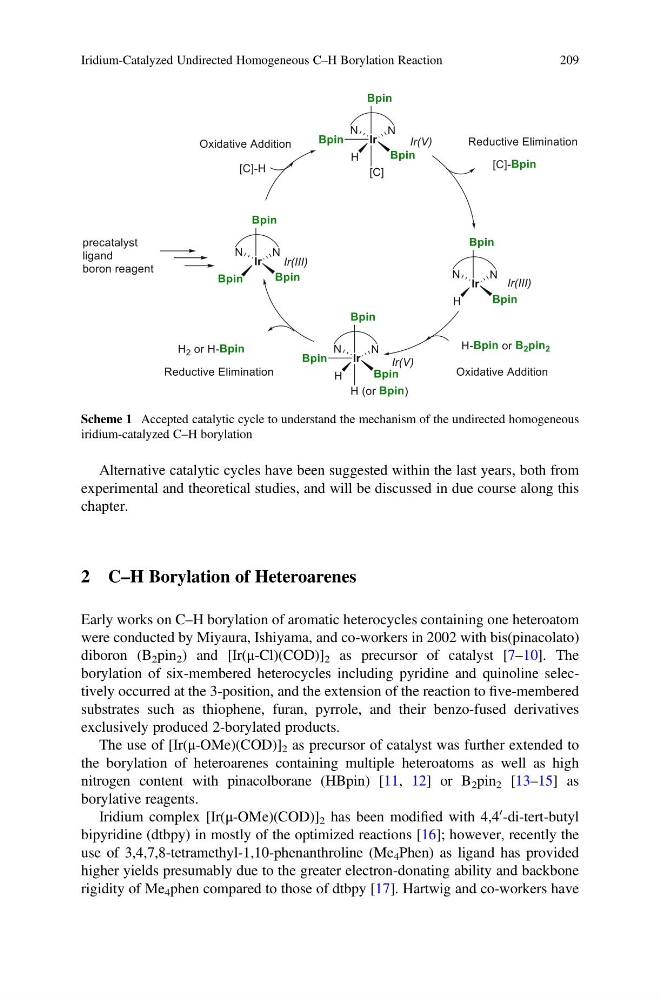
Scheme 1 Accepted catalytic cycle to understand the mechanism of the undirected homogeneous
iridium-catalyzed C–H borylation
Iridium-Catalyzed Undirected Homogeneous C–H Borylation Reaction
209
experimental and theoretical studies, and will be discussed in due course along this
chapter.
2 C–H Borylation of Heteroarenes
Early works on C–H borylation of aromatic heterocycles containing one heteroatom
were conducted by Miyaura, Ishiyama, and co-workers in 2002 with bis(pinacolato)
diboron (B 2 pin 2 ) and [Ir(μ-Cl)(COD)] 2 as precursor of catalyst [7–10]. The
borylation of six-membered heterocycles including pyridine and quinoline selectively occurred at the 3-position, and the extension of the reaction to five-membered
substrates such as thiophene, furan, pyrrole, and their benzo-fused derivatives
exclusively produced 2-borylated products.
The use of [Ir(μ-OMe)(COD)] 2 as precursor of catalyst was further extended to
the borylation of heteroarenes containing multiple heteroatoms as well as high
nitrogen content with pinacolborane (HBpin) [11, 12] or B 2 pin 2 [13–15] as
borylative reagents.
Iridium complex [Ir(μ-OMe)(COD)] 2 has been modified with 4,4
0 -di-tert-butyl
bipyridine (dtbpy) in mostly of the optimized reactions [16]; however, recently the
use of 3,4,7,8-tetramethyl-1,10-phenanthroline (Me 4 Phen) as ligand has provided
higher yields presumably due to the greater electron-donating ability and backbone
rigidity of Me 4 phen compared to those of dtbpy [17]. Hartwig and co-workers have
Scheme 1 Accepted catalytic cycle to understand the mechanism of the undirected homogeneous
iridium-catalyzed C–H borylation
Iridium-Catalyzed Undirected Homogeneous C–H Borylation Reaction
209