

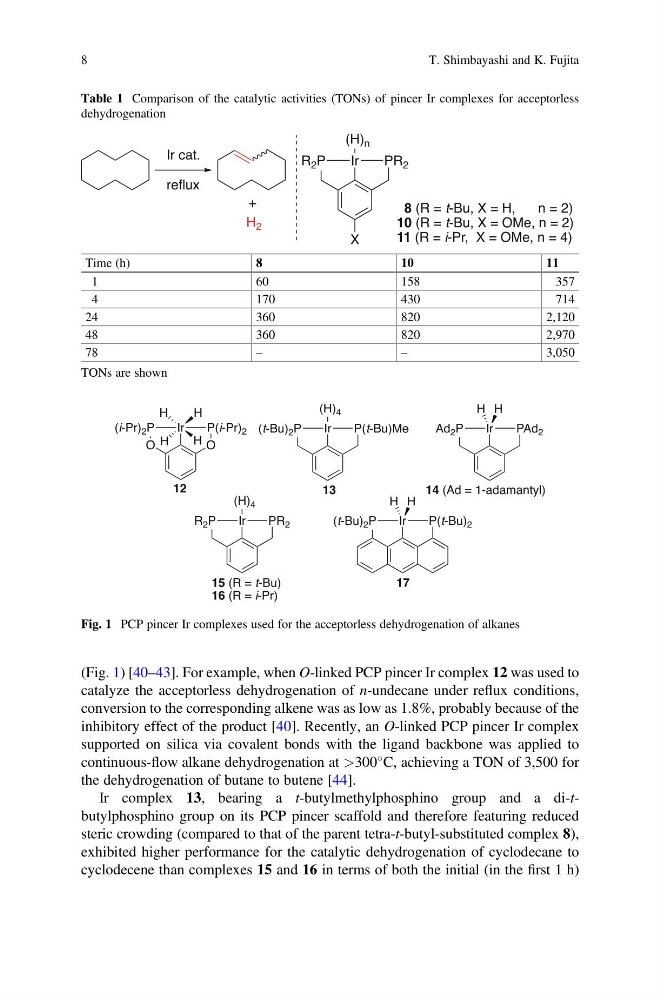
(Fig. 1) [40–43]. For example, when O-linked PCP pincer Ir complex 12 was used to
catalyze the acceptorless dehydrogenation of n-undecane under reflux conditions,
conversion to the corresponding alkene was as low as 1.8%, probably because of the
inhibitory effect of the product [40]. Recently, an O-linked PCP pincer Ir complex
supported on silica via covalent bonds with the ligand backbone was applied to
continuous-flow alkane dehydrogenation at >300
C, achieving a TON of 3,500 for
the dehydrogenation of butane to butene [44].
Ir complex 13, bearing a t-butylmethylphosphino group and a di-tbutylphosphino group on its PCP pincer scaffold and therefore featuring reduced
steric crowding (compared to that of the parent tetra-t-butyl-substituted complex 8),
exhibited higher performance for the catalytic dehydrogenation of cyclodecane to
cyclodecene than complexes 15 and 16 in terms of both the initial (in the first 1 h)
Table 1 Comparison of the catalytic activities (TONs) of pincer Ir complexes for acceptorless
dehydrogenation
Time (h)
8
1 0
1 1
1
60
158
357
4
170
430
714
24
360
820
2,120
48
360
820
2,970
78
–
–
3,050
TONs are shown
Fig. 1 PCP pincer Ir complexes used for the acceptorless dehydrogenation of alkanes
8
T. Shimbayashi and K. Fujita
catalyze the acceptorless dehydrogenation of n-undecane under reflux conditions,
conversion to the corresponding alkene was as low as 1.8%, probably because of the
inhibitory effect of the product [40]. Recently, an O-linked PCP pincer Ir complex
supported on silica via covalent bonds with the ligand backbone was applied to
continuous-flow alkane dehydrogenation at >300
C, achieving a TON of 3,500 for
the dehydrogenation of butane to butene [44].
Ir complex 13, bearing a t-butylmethylphosphino group and a di-tbutylphosphino group on its PCP pincer scaffold and therefore featuring reduced
steric crowding (compared to that of the parent tetra-t-butyl-substituted complex 8),
exhibited higher performance for the catalytic dehydrogenation of cyclodecane to
cyclodecene than complexes 15 and 16 in terms of both the initial (in the first 1 h)
Table 1 Comparison of the catalytic activities (TONs) of pincer Ir complexes for acceptorless
dehydrogenation
Time (h)
8
1 0
1 1
1
60
158
357
4
170
430
714
24
360
820
2,120
48
360
820
2,970
78
–
–
3,050
TONs are shown
Fig. 1 PCP pincer Ir complexes used for the acceptorless dehydrogenation of alkanes
8
T. Shimbayashi and K. Fujita