

Cationic iridium complexes containing two N- or O-functionalised N-heterocyclic carbene ligands (60, Scheme 32) reduce cyclohexanone using 2-propanol as a
hydrogen source and KOH as a base. Under the optimised reaction conditions
(0.1 mol% catalyst, 5 equiv. of KOH, 80
C), good conversions were obtained
after 6–8 h of reaction. Neither the wingtip fragment of the carbenes nor the anion
(Br
À or PF 6
À ) has significant influence on the catalytic activity [152].
Iridium(III) complexes featuring methylene bridged bis-N-heterocyclic carbene
ligands 61 catalyse the reduction of a variety of ketones and imines in 2-propanol as
a hydrogen donor, tBuOK as a base (5 equiv. versus substrate) and at catalyst
loading of 1 mol%. Cyclohexanone and methyl aryl ketones B1, B3, B15, B18
and B20 were efficiently reduced. Conversions from 77 to 99% were obtained in
0.33–23 h of reaction with TOF of up to 615 h
À1 at 50% conversion. A remarkable
enhancement of the activity in the reduction of both ketones and imines was
observed for carbenes with N-substituents where an oxygen atom is present
[153]. N-benzylideneanilines C1–C4 were also efficiently hydrogenated. Conversions from 38 to 96% were obtained after 2–24 h of treatment [153].
Iridium complexes containing N-heterocyclic carbene ligands derived from a
chiral fused bicyclic scaffold (62, Scheme 32) have been explored in asymmetric
TH of ketones. Under the optimised reaction conditions (0.5 mol% of catalyst 62c,
iPrOH, 8 equiv. of tBuOK, 75
C), a variety of aryl ketones (B1, B2, B15, B16, B19,
B20-B22, B27, B28, B49, B50, B52, Scheme 4) were reduced. Moderate to high
yields (18–95%) and low e.r.’s, from 51.5/48.5 to 62/38 were obtained. Iridium
complex 62c performs better than its rhodium counterpart in terms of both yield and
enantioselectivity for most of the tried ketones [154].
An iridium(I) compound with a triazolylidene ligand that contains a pendant
methyl group (63, Scheme 32) efficiently catalyses the TH of ketones, aldehydes,
imines, allylic alcohol and olefins [155].
After screening it was established that the optimised reaction conditions are
0.5 mol% of catalyst and 5 mol% of iPrONa, in refluxing 2-propanol. Under these
conditions, ketones with different steric and electronic properties (B1, B3, B10, B13,
R
2
MW, 120 ºC, 5h
MeOH, KOH
N
R
1
R
2
HN
R
1
R
2
N
R
1
R
2
N
+
+
I
II
III
Yield (%)
I
>95
15
<1
<1
20
Yield (%)
II
>1
70
63
50
34
Yield (%)
III
-20
Ph
Bn
Me
nBu
H
H
H
H
H
Ph
R
1
R 2
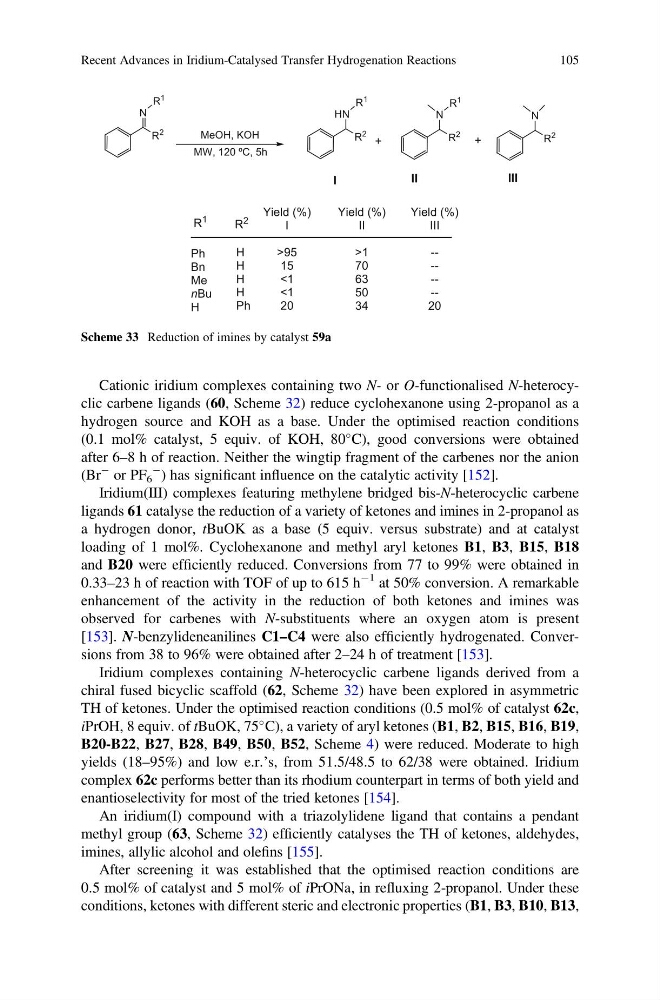
Scheme 33 Reduction of imines by catalyst 59a
Recent Advances in Iridium-Catalysed Transfer Hydrogenation Reactions
105
hydrogen source and KOH as a base. Under the optimised reaction conditions
(0.1 mol% catalyst, 5 equiv. of KOH, 80
C), good conversions were obtained
after 6–8 h of reaction. Neither the wingtip fragment of the carbenes nor the anion
(Br
À or PF 6
À ) has significant influence on the catalytic activity [152].
Iridium(III) complexes featuring methylene bridged bis-N-heterocyclic carbene
ligands 61 catalyse the reduction of a variety of ketones and imines in 2-propanol as
a hydrogen donor, tBuOK as a base (5 equiv. versus substrate) and at catalyst
loading of 1 mol%. Cyclohexanone and methyl aryl ketones B1, B3, B15, B18
and B20 were efficiently reduced. Conversions from 77 to 99% were obtained in
0.33–23 h of reaction with TOF of up to 615 h
À1 at 50% conversion. A remarkable
enhancement of the activity in the reduction of both ketones and imines was
observed for carbenes with N-substituents where an oxygen atom is present
[153]. N-benzylideneanilines C1–C4 were also efficiently hydrogenated. Conversions from 38 to 96% were obtained after 2–24 h of treatment [153].
Iridium complexes containing N-heterocyclic carbene ligands derived from a
chiral fused bicyclic scaffold (62, Scheme 32) have been explored in asymmetric
TH of ketones. Under the optimised reaction conditions (0.5 mol% of catalyst 62c,
iPrOH, 8 equiv. of tBuOK, 75
C), a variety of aryl ketones (B1, B2, B15, B16, B19,
B20-B22, B27, B28, B49, B50, B52, Scheme 4) were reduced. Moderate to high
yields (18–95%) and low e.r.’s, from 51.5/48.5 to 62/38 were obtained. Iridium
complex 62c performs better than its rhodium counterpart in terms of both yield and
enantioselectivity for most of the tried ketones [154].
An iridium(I) compound with a triazolylidene ligand that contains a pendant
methyl group (63, Scheme 32) efficiently catalyses the TH of ketones, aldehydes,
imines, allylic alcohol and olefins [155].
After screening it was established that the optimised reaction conditions are
0.5 mol% of catalyst and 5 mol% of iPrONa, in refluxing 2-propanol. Under these
conditions, ketones with different steric and electronic properties (B1, B3, B10, B13,
R
2
MW, 120 ºC, 5h
MeOH, KOH
N
R
1
R
2
HN
R
1
R
2
N
R
1
R
2
N
+
+
I
II
III
Yield (%)
I
>95
15
<1
<1
20
Yield (%)
II
>1
70
63
50
34
Yield (%)
III
-20
Ph
Bn
Me
nBu
H
H
H
H
H
Ph
R
1
R 2
Scheme 33 Reduction of imines by catalyst 59a
Recent Advances in Iridium-Catalysed Transfer Hydrogenation Reactions
105