

2.3 Chemical Composition
Canola/rapeseed belongs to the genus Brassica from Cruciferae family and, thus, is
close relative of mustard, turnip, cabbage, etc. Canola is a standard of rapeseed
containing low erucic acid in oil and low glucosinolates in meal. A wide range of
literature is available on the composition of rapeseed/canola oil and its meal.
Henceforth, to avoid confusion and to make it simpler, instead of “rapeseed,”
“canola” term would be used throughout the chapter. Canola is grown majorly for
its oil content, which has become third largest consumed vegetable oil (27.83) in the
world after palm (69.57) and soybean oil (57.05 million metric tons) (Statista 2019).
Proximate composition of any crop or oilseed depends upon the agro-climatic
conditions. Different cultivars of canola have been shown a wide variation in oil
content as well as its composition. Genetic modifications and plant-breeding techniques have produced several cultivars or varieties of canola containing varied
amount of glucosinolates, antinutritional factors, and so on. Canola seed contains
approximately 3–4.5% moisture, 40–45% oil, 19–28% crude proteins, 5–6% ash
content, 8–10% soluble sugars, and 14–15% crude fibers (Cakmakli and Ünal 1988;
Assadi et al. 2011; Carré et al. 2016). The proximate composition of canola seed is
given in Table 2.1, and the different constituents are discussed below:
2.3.1 Lipids
Oil is the most important constituent of canola seed for which it is grown worldwide.
Though, traditional high erucic acid rapeseed (HEAR) varieties are still grown for
industrial use, LEAR (low erucic acid rapeseed) cultivars are mainly produced for
0
2000000
4000000
6000000
8000000
10000000
12000000
14000000
16000000
2000 2002 2004 2006 2008 2010 2012 2014 2016
Tonnes
Years
Rapeseed
Sunflower
Soybean
Groundnut
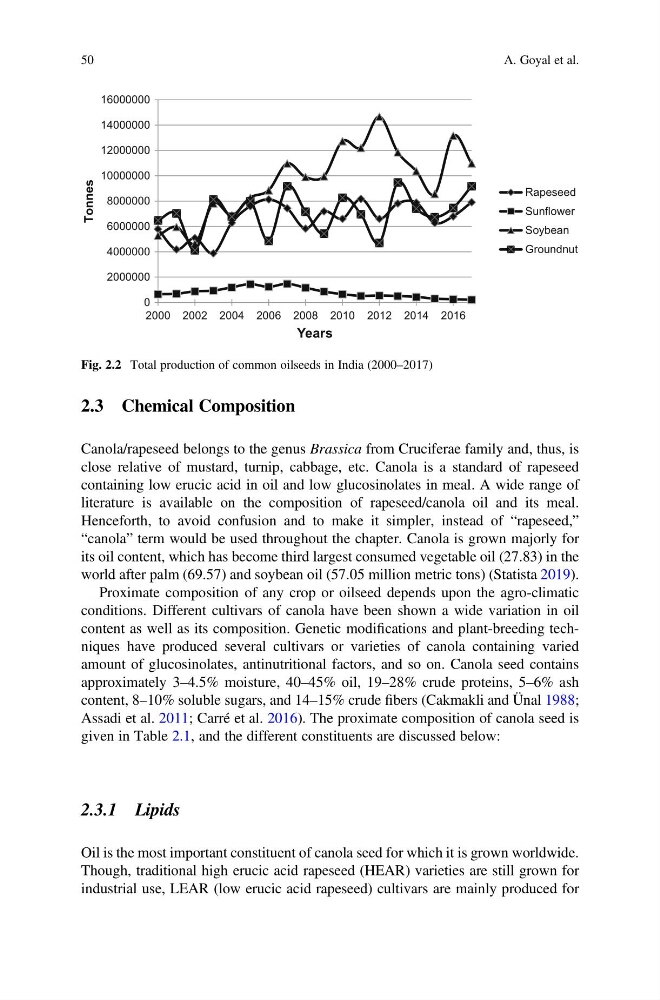
Fig. 2.2 Total production of common oilseeds in India (2000–2017)
50
A. Goyal et al.
Canola/rapeseed belongs to the genus Brassica from Cruciferae family and, thus, is
close relative of mustard, turnip, cabbage, etc. Canola is a standard of rapeseed
containing low erucic acid in oil and low glucosinolates in meal. A wide range of
literature is available on the composition of rapeseed/canola oil and its meal.
Henceforth, to avoid confusion and to make it simpler, instead of “rapeseed,”
“canola” term would be used throughout the chapter. Canola is grown majorly for
its oil content, which has become third largest consumed vegetable oil (27.83) in the
world after palm (69.57) and soybean oil (57.05 million metric tons) (Statista 2019).
Proximate composition of any crop or oilseed depends upon the agro-climatic
conditions. Different cultivars of canola have been shown a wide variation in oil
content as well as its composition. Genetic modifications and plant-breeding techniques have produced several cultivars or varieties of canola containing varied
amount of glucosinolates, antinutritional factors, and so on. Canola seed contains
approximately 3–4.5% moisture, 40–45% oil, 19–28% crude proteins, 5–6% ash
content, 8–10% soluble sugars, and 14–15% crude fibers (Cakmakli and Ünal 1988;
Assadi et al. 2011; Carré et al. 2016). The proximate composition of canola seed is
given in Table 2.1, and the different constituents are discussed below:
2.3.1 Lipids
Oil is the most important constituent of canola seed for which it is grown worldwide.
Though, traditional high erucic acid rapeseed (HEAR) varieties are still grown for
industrial use, LEAR (low erucic acid rapeseed) cultivars are mainly produced for
0
2000000
4000000
6000000
8000000
10000000
12000000
14000000
16000000
2000 2002 2004 2006 2008 2010 2012 2014 2016
Tonnes
Years
Rapeseed
Sunflower
Soybean
Groundnut
Fig. 2.2 Total production of common oilseeds in India (2000–2017)
50
A. Goyal et al.