

19.4.5 Minerals
According to Aliu et al. (2016), potassium (K) is found to be the most abundant
element in pumpkin seed. In radiochemical analysis of thin husked pumpkin
(Cucurbita pepo L.) seed oil and oil cake from Slovenia showed the selenium
content of 0.023–0.037 mg/kg in seeds and 0.034–0.047 mg/kg in oil cake. The
iodine content was reported as 0.005–0.013 mg/kg, 0.002–0.003, and
0.007–0.032 mg/kg in seeds, oil, and oil cake, respectively (Kreft et al. 2002).
Pumpkin seeds contain good amounts of zinc. However, the presence of phytate in
the seed may form complex with zinc in small intestine reducing zinc bioavailability
(Ovca et al. 2011). The mineral content of pumpkin seeds as reported by various
authors has been summarized in Table 19.4.
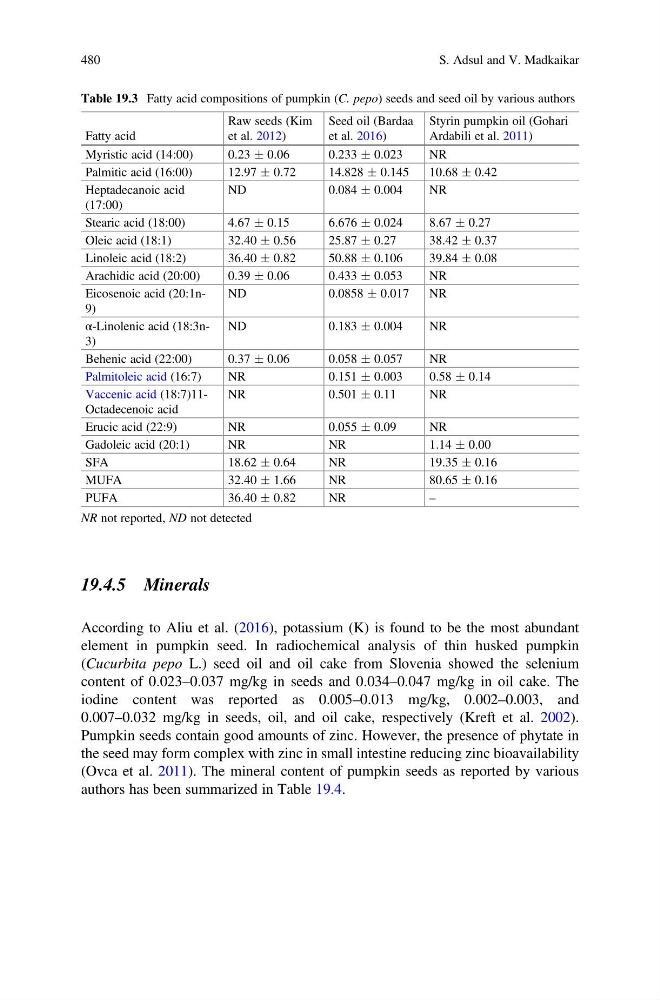
Table 19.3 Fatty acid compositions of pumpkin (C. pepo) seeds and seed oil by various authors
Fatty acid
Raw seeds (Kim
et al. 2012)
Seed oil (Bardaa
et al. 2016)
Styrin pumpkin oil (Gohari
Ardabili et al. 2011)
Myristic acid (14:00)
0.23 Æ 0.06
0.233 Æ 0.023
NR
Palmitic acid (16:00)
12.97 Æ 0.72
14.828 Æ 0.145
10.68 Æ 0.42
Heptadecanoic acid
(17:00)
ND
0.084 Æ 0.004
NR
Stearic acid (18:00)
4.67 Æ 0.15
6.676 Æ 0.024
8.67 Æ 0.27
Oleic acid (18:1)
32.40 Æ 0.56
25.87 Æ 0.27
38.42 Æ 0.37
Linoleic acid (18:2)
36.40 Æ 0.82
50.88 Æ 0.106
39.84 Æ 0.08
Arachidic acid (20:00)
0.39 Æ 0.06
0.433 Æ 0.053
NR
Eicosenoic acid (20:1n9)
ND
0.0858 Æ 0.017
NR
α-Linolenic acid (18:3n3)
ND
0.183 Æ 0.004
NR
Behenic acid (22:00)
0.37 Æ 0.06
0.058 Æ 0.057
NR
Palmitoleic acid (16:7)
NR
0.151 Æ 0.003
0.58 Æ 0.14
Vaccenic acid (18:7)11Octadecenoic acid
NR
0.501 Æ 0.11
NR
Erucic acid (22:9)
NR
0.055 Æ 0.09
NR
Gadoleic acid (20:1)
NR
NR
1.14 Æ 0.00
SFA
18.62 Æ 0.64
NR
19.35 Æ 0.16
MUFA
32.40 Æ 1.66
NR
80.65 Æ 0.16
PUFA
36.40 Æ 0.82
NR
–
NR not reported, ND not detected
480
S. Adsul and V. Madkaikar
According to Aliu et al. (2016), potassium (K) is found to be the most abundant
element in pumpkin seed. In radiochemical analysis of thin husked pumpkin
(Cucurbita pepo L.) seed oil and oil cake from Slovenia showed the selenium
content of 0.023–0.037 mg/kg in seeds and 0.034–0.047 mg/kg in oil cake. The
iodine content was reported as 0.005–0.013 mg/kg, 0.002–0.003, and
0.007–0.032 mg/kg in seeds, oil, and oil cake, respectively (Kreft et al. 2002).
Pumpkin seeds contain good amounts of zinc. However, the presence of phytate in
the seed may form complex with zinc in small intestine reducing zinc bioavailability
(Ovca et al. 2011). The mineral content of pumpkin seeds as reported by various
authors has been summarized in Table 19.4.
Table 19.3 Fatty acid compositions of pumpkin (C. pepo) seeds and seed oil by various authors
Fatty acid
Raw seeds (Kim
et al. 2012)
Seed oil (Bardaa
et al. 2016)
Styrin pumpkin oil (Gohari
Ardabili et al. 2011)
Myristic acid (14:00)
0.23 Æ 0.06
0.233 Æ 0.023
NR
Palmitic acid (16:00)
12.97 Æ 0.72
14.828 Æ 0.145
10.68 Æ 0.42
Heptadecanoic acid
(17:00)
ND
0.084 Æ 0.004
NR
Stearic acid (18:00)
4.67 Æ 0.15
6.676 Æ 0.024
8.67 Æ 0.27
Oleic acid (18:1)
32.40 Æ 0.56
25.87 Æ 0.27
38.42 Æ 0.37
Linoleic acid (18:2)
36.40 Æ 0.82
50.88 Æ 0.106
39.84 Æ 0.08
Arachidic acid (20:00)
0.39 Æ 0.06
0.433 Æ 0.053
NR
Eicosenoic acid (20:1n9)
ND
0.0858 Æ 0.017
NR
α-Linolenic acid (18:3n3)
ND
0.183 Æ 0.004
NR
Behenic acid (22:00)
0.37 Æ 0.06
0.058 Æ 0.057
NR
Palmitoleic acid (16:7)
NR
0.151 Æ 0.003
0.58 Æ 0.14
Vaccenic acid (18:7)11Octadecenoic acid
NR
0.501 Æ 0.11
NR
Erucic acid (22:9)
NR
0.055 Æ 0.09
NR
Gadoleic acid (20:1)
NR
NR
1.14 Æ 0.00
SFA
18.62 Æ 0.64
NR
19.35 Æ 0.16
MUFA
32.40 Æ 1.66
NR
80.65 Æ 0.16
PUFA
36.40 Æ 0.82
NR
–
NR not reported, ND not detected
480
S. Adsul and V. Madkaikar