

from 5.8 to 18.8, 8.1–8.8, 6.3–20.5, 15.0–16.1, 16.7 to 23.0, 4.6–15.4, and
6.7–19.4%, respectively (Yoshida et al. 2004) (Table 19.3).
19.4.4 Vitamins
A very little information is available on the vitamin content of pumpkin seeds.
Among B-complex vitamins, the concentration of niacin was found to be highest
(61.43 mg/kg) and least for riboflavin (2.47 mg/kg) in pumpkin seed meal (Mansour
et al. 1993). Total tocopherol in pumpkin seed oil was found to be ranging from
38.03 Æ 0.25 to 64.11 Æ 0.07 mg/100 g (Rabrenović et al. 2014). A great variation in
tocopherol content was observed, for example, γ-tocopherol has been reported
predominant (41–620 mg/kg) with 5–10 times more than α-tocopherol (140 mg/
kg) dry material. The concentrations of β-tocopherol and δ-tocopherol were comparatively low (Murkovic et al. 1996). Gohari Ardabili et al. (2011) reported total
tocopherols 882.65 Æ 18.32 mg/kg in styrin pumpkin seed oil. Carotenoid fraction
concentrations in pumpkin seed have been reported to be 17.46 Æ 18.29 mg of
β-carotene and 0.16 Æ 0.16 mg of β-cryptoxanthin per kg raw weight of seeds (Kim
et al. 2012). A few minor pigment fractions also have been isolated such as
luteoxanthin, chrysanthemaxanthin, auroxanthin epimers,
flavoxanthin,
α-cryptoxanthin, β-cryptoxanthin, violaxanthin, lutein epoxide, and α-carotene
(Matus et al. 1993).
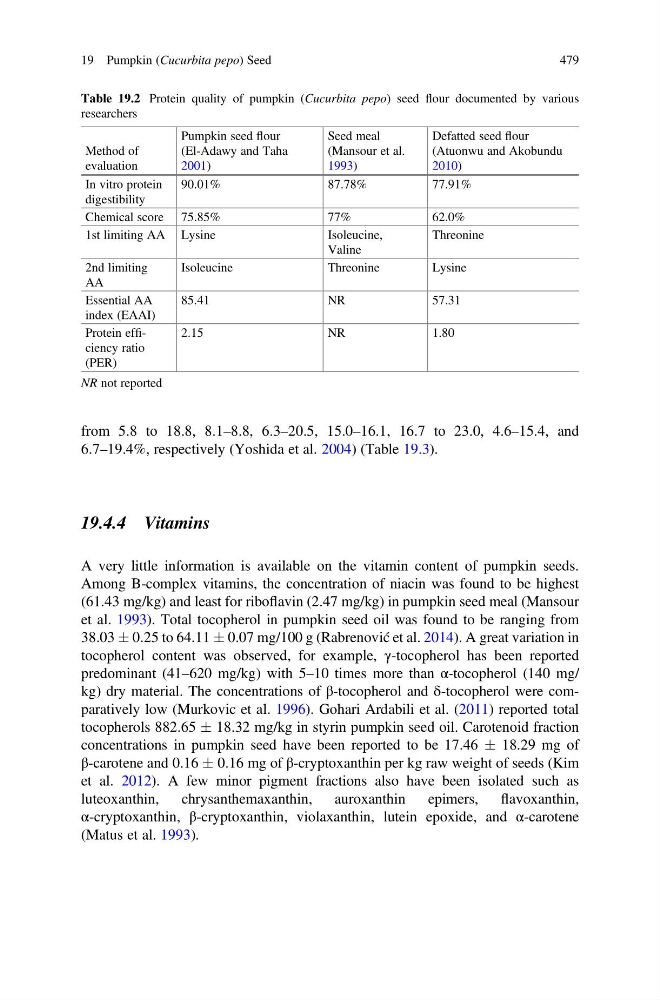
Table 19.2 Protein quality of pumpkin (Cucurbita pepo) seed flour documented by various
researchers
Method of
evaluation
Pumpkin seed flour
(El-Adawy and Taha
2001)
Seed meal
(Mansour et al.
1993)
Defatted seed flour
(Atuonwu and Akobundu
2010)
In vitro protein
digestibility
90.01%
87.78%
77.91%
Chemical score 75.85%
77%
62.0%
1st limiting AA Lysine
Isoleucine,
Valine
Threonine
2nd limiting
AA
Isoleucine
Threonine
Lysine
Essential AA
index (EAAI)
85.41
NR
57.31
Protein efficiency ratio
(PER)
2.15
NR
1.80
NR not reported
19 Pumpkin (Cucurbita pepo) Seed
479
6.7–19.4%, respectively (Yoshida et al. 2004) (Table 19.3).
19.4.4 Vitamins
A very little information is available on the vitamin content of pumpkin seeds.
Among B-complex vitamins, the concentration of niacin was found to be highest
(61.43 mg/kg) and least for riboflavin (2.47 mg/kg) in pumpkin seed meal (Mansour
et al. 1993). Total tocopherol in pumpkin seed oil was found to be ranging from
38.03 Æ 0.25 to 64.11 Æ 0.07 mg/100 g (Rabrenović et al. 2014). A great variation in
tocopherol content was observed, for example, γ-tocopherol has been reported
predominant (41–620 mg/kg) with 5–10 times more than α-tocopherol (140 mg/
kg) dry material. The concentrations of β-tocopherol and δ-tocopherol were comparatively low (Murkovic et al. 1996). Gohari Ardabili et al. (2011) reported total
tocopherols 882.65 Æ 18.32 mg/kg in styrin pumpkin seed oil. Carotenoid fraction
concentrations in pumpkin seed have been reported to be 17.46 Æ 18.29 mg of
β-carotene and 0.16 Æ 0.16 mg of β-cryptoxanthin per kg raw weight of seeds (Kim
et al. 2012). A few minor pigment fractions also have been isolated such as
luteoxanthin, chrysanthemaxanthin, auroxanthin epimers,
flavoxanthin,
α-cryptoxanthin, β-cryptoxanthin, violaxanthin, lutein epoxide, and α-carotene
(Matus et al. 1993).
Table 19.2 Protein quality of pumpkin (Cucurbita pepo) seed flour documented by various
researchers
Method of
evaluation
Pumpkin seed flour
(El-Adawy and Taha
2001)
Seed meal
(Mansour et al.
1993)
Defatted seed flour
(Atuonwu and Akobundu
2010)
In vitro protein
digestibility
90.01%
87.78%
77.91%
Chemical score 75.85%
77%
62.0%
1st limiting AA Lysine
Isoleucine,
Valine
Threonine
2nd limiting
AA
Isoleucine
Threonine
Lysine
Essential AA
index (EAAI)
85.41
NR
57.31
Protein efficiency ratio
(PER)
2.15
NR
1.80
NR not reported
19 Pumpkin (Cucurbita pepo) Seed
479