

antioxidants (such as gamma tocopherol or vitamin E) which inherently increases the
stability and shelf life of camelina oil (Dubois et al. 2007; Tripathi and Mishra 2007).
18.3.3 Camelina Meal Composition
Camelina meal that is obtained after the typical mechanical extraction contains
approximately 10% residual oil, 45% protein, 15% insoluble fiber, 10% soluble
carbohydrates, 5% minerals, 0.2% nucleic acids, and 10% of a mixture of phytochemicals comprising of terpenoids, phenolics, glycosylated glucosinolates, and
flavonoids (Berhow et al. 2014). Detailed explanation of the composition of
camelina meal is given below:
18.3.3.1 Carbohydrates
The carbohydrates present are mono-, di-, tri-, tetra-, and oligosaccharides (Berhow
et al. 2014). The mono- and di-saccharide levels are very low (sucrose content is
about 5.5%). Oligosaccharides namely raffinose and stachyose are below 1%
(Ibrahim and El Habbasha 2015). The polysaccharides present are pectin, starch,
and mucilage. The mucilage is produced after the addition of water, which forms a
gel and the content is about 6.7% (Berhow et al. 2014; Ibrahim and El Habbasha
2015). The starch and pectin content is less than 1% each (Ibrahim and El Habbasha
2015).
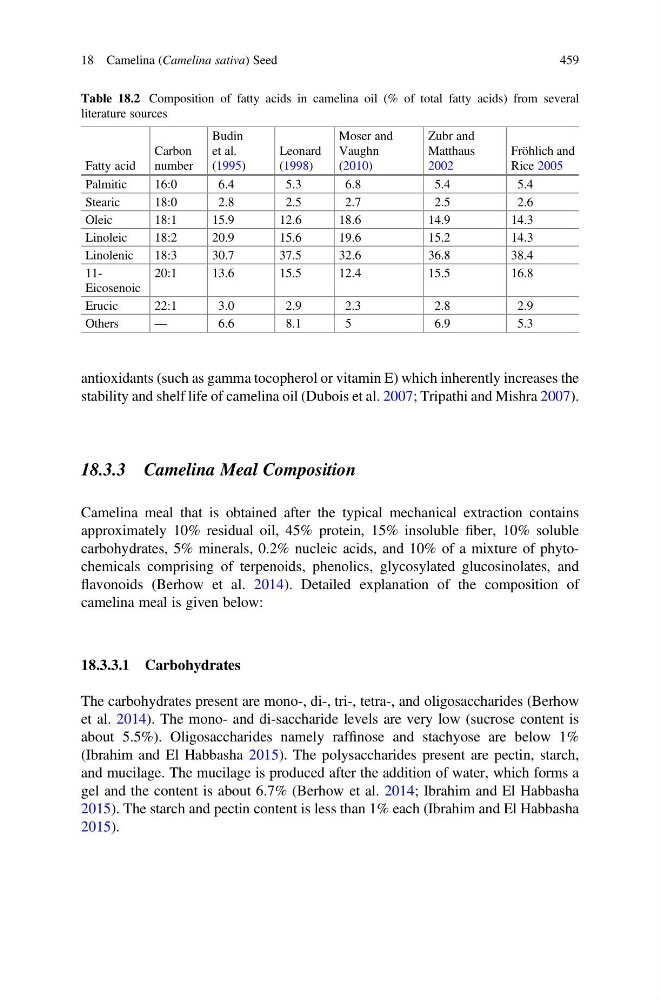
Table 18.2 Composition of fatty acids in camelina oil (% of total fatty acids) from several
literature sources
Fatty acid
Carbon
number
Budin
et al.
(1995)
Leonard
(1998)
Moser and
Vaughn
(2010)
Zubr and
Matthaus
2002
Fröhlich and
Rice 2005
Palmitic
16:0
6.4
5.3
6.8
5.4
5.4
Stearic
18:0
2.8
2.5
2.7
2.5
2.6
Oleic
18:1
15.9
12.6
18.6
14.9
14.3
Linoleic
18:2
20.9
15.6
19.6
15.2
14.3
Linolenic
18:3
30.7
37.5
32.6
36.8
38.4
11Eicosenoic
20:1
13.6
15.5
12.4
15.5
16.8
Erucic
22:1
3.0
2.9
2.3
2.8
2.9
Others
—
6.6
8.1
5
6.9
5.3
18 Camelina (Camelina sativa) Seed
459
stability and shelf life of camelina oil (Dubois et al. 2007; Tripathi and Mishra 2007).
18.3.3 Camelina Meal Composition
Camelina meal that is obtained after the typical mechanical extraction contains
approximately 10% residual oil, 45% protein, 15% insoluble fiber, 10% soluble
carbohydrates, 5% minerals, 0.2% nucleic acids, and 10% of a mixture of phytochemicals comprising of terpenoids, phenolics, glycosylated glucosinolates, and
flavonoids (Berhow et al. 2014). Detailed explanation of the composition of
camelina meal is given below:
18.3.3.1 Carbohydrates
The carbohydrates present are mono-, di-, tri-, tetra-, and oligosaccharides (Berhow
et al. 2014). The mono- and di-saccharide levels are very low (sucrose content is
about 5.5%). Oligosaccharides namely raffinose and stachyose are below 1%
(Ibrahim and El Habbasha 2015). The polysaccharides present are pectin, starch,
and mucilage. The mucilage is produced after the addition of water, which forms a
gel and the content is about 6.7% (Berhow et al. 2014; Ibrahim and El Habbasha
2015). The starch and pectin content is less than 1% each (Ibrahim and El Habbasha
2015).
Table 18.2 Composition of fatty acids in camelina oil (% of total fatty acids) from several
literature sources
Fatty acid
Carbon
number
Budin
et al.
(1995)
Leonard
(1998)
Moser and
Vaughn
(2010)
Zubr and
Matthaus
2002
Fröhlich and
Rice 2005
Palmitic
16:0
6.4
5.3
6.8
5.4
5.4
Stearic
18:0
2.8
2.5
2.7
2.5
2.6
Oleic
18:1
15.9
12.6
18.6
14.9
14.3
Linoleic
18:2
20.9
15.6
19.6
15.2
14.3
Linolenic
18:3
30.7
37.5
32.6
36.8
38.4
11Eicosenoic
20:1
13.6
15.5
12.4
15.5
16.8
Erucic
22:1
3.0
2.9
2.3
2.8
2.9
Others
—
6.6
8.1
5
6.9
5.3
18 Camelina (Camelina sativa) Seed
459