

shelf life of the oil, the common vegetable oil-refining process causes the loss of
bioactive components also. As a few speciality oils such as borage seed oil, evening
primrose oil and/or black currant oil are not used as conventional/cooking oils, they
are usually extracted using cold-pressed methods (Czaplicki et al. 2011), in order to
retain maximum bioactive components in oils.
14.6 Tocopherols
Tocopherols are natural antioxidants present in all the vegetable oils. Czaplicki et al.
(2011) characterised the bioactive components in various nonconventional oils and
reported the highest amount of tocopherols (1603 mg/kg of oil) in borage oil. It is
noteworthy that α- and β-tocopherols have not been detected in borage oil (Czaplicki
et al. 2011; Fabrikov et al. 2019), whereas δ-tocopherol has been observed at a very
high concentration, when compared to other nonconventional oils (Czaplicki et al.
2011). The content of different tocopherols in borage oil is represented in Table 14.3.
Similar results have been observed by Szterk et al. (2010), who analyzed the
chemical composition of selected plant oils (rapeseed oil, linseed oils, crude
Camelina sativa oil, crude primrose oil, crude borage oil, pumpkin seed oil and
crude amaranth oil) and detected highest level of tocopherols (including
δ-tocopherol) in borage oil. Tocopherols show antioxidant activity by free radical
mechanism. Mortensen and Skibsted (1997) demonstrated that among all the
tocopherols, δ-tocopherol shows the highest activity against free radicals, which
could be the possible reason behind the highest oxidative stability observed for
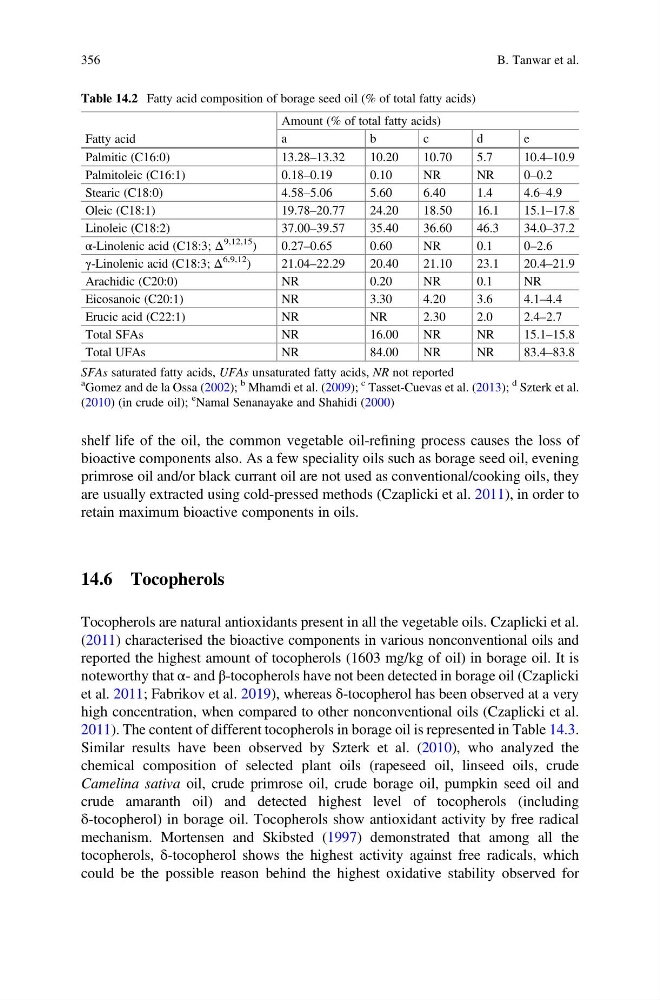
Table 14.2 Fatty acid composition of borage seed oil (% of total fatty acids)
Fatty acid
Amount (% of total fatty acids)
a
b
c
d
e
Palmitic (C16:0)
13.28–13.32
10.20
10.70
5.7
10.4–10.9
Palmitoleic (C16:1)
0.18–0.19
0.10
NR
NR
0–0.2
Stearic (C18:0)
4.58–5.06
5.60
6.40
1.4
4.6–4.9
Oleic (C18:1)
19.78–20.77
24.20
18.50
16.1
15.1–17.8
Linoleic (C18:2)
37.00–39.57
35.40
36.60
46.3
34.0–37.2
α-Linolenic acid (C18:3; Δ
9,12,15
)
0.27–0.65
0.60
NR
0.1
0–2.6
γ-Linolenic acid (C18:3; Δ
6,9,12
)
21.04–22.29
20.40
21.10
23.1
20.4–21.9
Arachidic (C20:0)
NR
0.20
NR
0.1
NR
Eicosanoic (C20:1)
NR
3.30
4.20
3.6
4.1–4.4
Erucic acid (C22:1)
NR
NR
2.30
2.0
2.4–2.7
Total SFAs
NR
16.00
NR
NR
15.1–15.8
Total UFAs
NR
84.00
NR
NR
83.4–83.8
SFAs saturated fatty acids, UFAs unsaturated fatty acids, NR not reported
a Gomez and de la Ossa (2002);
b Mhamdi et al. (2009);
c Tasset-Cuevas et al. (2013);
d Szterk et al.
(2010) (in crude oil);
e Namal Senanayake and Shahidi (2000)
356
B. Tanwar et al.
bioactive components also. As a few speciality oils such as borage seed oil, evening
primrose oil and/or black currant oil are not used as conventional/cooking oils, they
are usually extracted using cold-pressed methods (Czaplicki et al. 2011), in order to
retain maximum bioactive components in oils.
14.6 Tocopherols
Tocopherols are natural antioxidants present in all the vegetable oils. Czaplicki et al.
(2011) characterised the bioactive components in various nonconventional oils and
reported the highest amount of tocopherols (1603 mg/kg of oil) in borage oil. It is
noteworthy that α- and β-tocopherols have not been detected in borage oil (Czaplicki
et al. 2011; Fabrikov et al. 2019), whereas δ-tocopherol has been observed at a very
high concentration, when compared to other nonconventional oils (Czaplicki et al.
2011). The content of different tocopherols in borage oil is represented in Table 14.3.
Similar results have been observed by Szterk et al. (2010), who analyzed the
chemical composition of selected plant oils (rapeseed oil, linseed oils, crude
Camelina sativa oil, crude primrose oil, crude borage oil, pumpkin seed oil and
crude amaranth oil) and detected highest level of tocopherols (including
δ-tocopherol) in borage oil. Tocopherols show antioxidant activity by free radical
mechanism. Mortensen and Skibsted (1997) demonstrated that among all the
tocopherols, δ-tocopherol shows the highest activity against free radicals, which
could be the possible reason behind the highest oxidative stability observed for
Table 14.2 Fatty acid composition of borage seed oil (% of total fatty acids)
Fatty acid
Amount (% of total fatty acids)
a
b
c
d
e
Palmitic (C16:0)
13.28–13.32
10.20
10.70
5.7
10.4–10.9
Palmitoleic (C16:1)
0.18–0.19
0.10
NR
NR
0–0.2
Stearic (C18:0)
4.58–5.06
5.60
6.40
1.4
4.6–4.9
Oleic (C18:1)
19.78–20.77
24.20
18.50
16.1
15.1–17.8
Linoleic (C18:2)
37.00–39.57
35.40
36.60
46.3
34.0–37.2
α-Linolenic acid (C18:3; Δ
9,12,15
)
0.27–0.65
0.60
NR
0.1
0–2.6
γ-Linolenic acid (C18:3; Δ
6,9,12
)
21.04–22.29
20.40
21.10
23.1
20.4–21.9
Arachidic (C20:0)
NR
0.20
NR
0.1
NR
Eicosanoic (C20:1)
NR
3.30
4.20
3.6
4.1–4.4
Erucic acid (C22:1)
NR
NR
2.30
2.0
2.4–2.7
Total SFAs
NR
16.00
NR
NR
15.1–15.8
Total UFAs
NR
84.00
NR
NR
83.4–83.8
SFAs saturated fatty acids, UFAs unsaturated fatty acids, NR not reported
a Gomez and de la Ossa (2002);
b Mhamdi et al. (2009);
c Tasset-Cuevas et al. (2013);
d Szterk et al.
(2010) (in crude oil);
e Namal Senanayake and Shahidi (2000)
356
B. Tanwar et al.