

et al. 2006). Unsaponifiable fractions in sesame oil consist of sesamin (0.07–0.61%),
sesamolin (0.2–0.48%), sterols (16–40%), and tocopherol (10–12%). Sesamin and
sesamolin are the two natural antioxidants along with tocopherols. Low extent of
unsaturated fats of high molecular weight was seen because of the low amount of
saponification (1.87 mg KOH/g) and the iodine value (1.27 g T2/100g) suggesting
that oils of this value are good for consumption (Mbaebie et al. 2010). Asghar and
Majeed (2013) characterized the fatty acid profile of four sesame varieties (Till-90,
P-37, Till-93, and S-17) grown in Pakistan for the variation in oil content, oil yield,
chemical composition, and fatty acid composition. The oil content was reported to be
ranging between 49.5 and 53.9%; caprylic acid, linoleic acid, palmitic, and stearic
acids in the seed oil ranged from 16.9 to 21.8%, 4.7 to 12.5%, 16.0 to 19.3%, and
13.9 to 21.5%, respectively. Also, minor fatty acids, viz., oleic, linoleic acids, and
palmitoleic acids which enhance the suitability of the sesame oil for human consumption, were reported. El-Khier et al. (2008) determined the chemical composition and oil qualities of ten different sesame seed cultivars (3015, Kenana1, local
white, mixed, Aswad (Sudanese genotypes), and zirra2, zirra7, zirra9, hurria11, and
hurria 49 developed in Sudan). The iodine values of the sesame seed cultivars were
reported in the range of 101.52–114.85 g/100 g for the local cultivars and
97.70–111.30 g/100 g for the introduced cultivars, and all the values were consistent
with those stated by FAO. Iodine value is used to determine the amount of
unsaturation in fatty acids. Oil was extracted from sesame cultivars, mixed (local),
zirra2, zirra7, and huria11, for the fatty acid composition. Oleic, linoleic, palmitic,
and stearic acids were found in abundant amounts. Compared to huria11, the mixed
cultivar had almost similar oleic acids (47.50 against 48.40%) and linoleic acids
(36.40 against 35.80%). It was also observed that local cultivars had average high
content of calcium but low protein content. Nzikou et al. (2009) studied the
physicochemical properties of the sesame seed oil extracts and reported that the oil
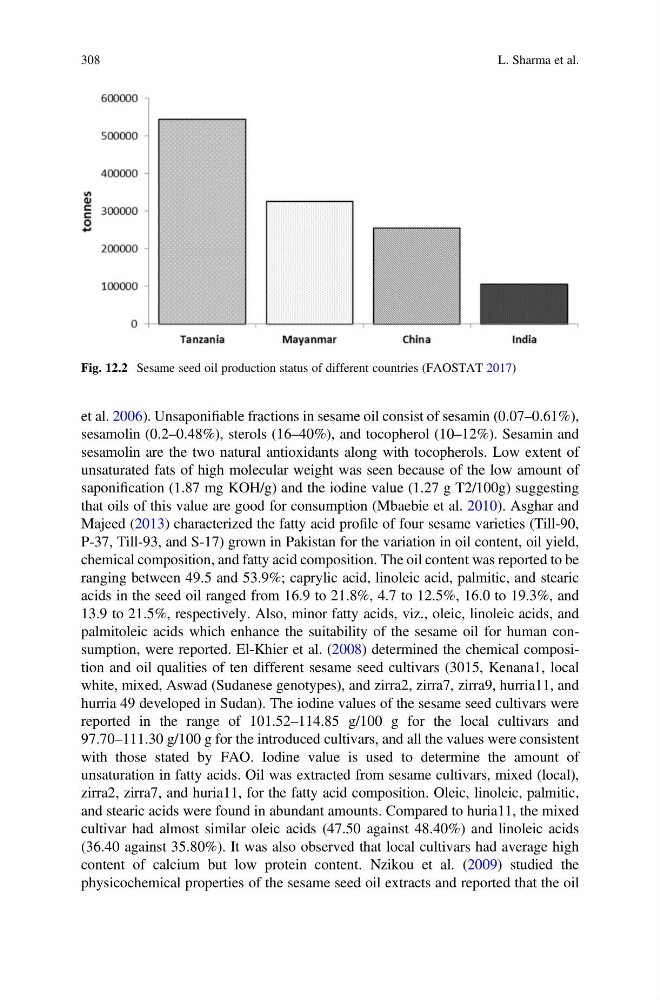
Fig. 12.2 Sesame seed oil production status of different countries (FAOSTAT 2017)
308
L. Sharma et al.
sesamolin (0.2–0.48%), sterols (16–40%), and tocopherol (10–12%). Sesamin and
sesamolin are the two natural antioxidants along with tocopherols. Low extent of
unsaturated fats of high molecular weight was seen because of the low amount of
saponification (1.87 mg KOH/g) and the iodine value (1.27 g T2/100g) suggesting
that oils of this value are good for consumption (Mbaebie et al. 2010). Asghar and
Majeed (2013) characterized the fatty acid profile of four sesame varieties (Till-90,
P-37, Till-93, and S-17) grown in Pakistan for the variation in oil content, oil yield,
chemical composition, and fatty acid composition. The oil content was reported to be
ranging between 49.5 and 53.9%; caprylic acid, linoleic acid, palmitic, and stearic
acids in the seed oil ranged from 16.9 to 21.8%, 4.7 to 12.5%, 16.0 to 19.3%, and
13.9 to 21.5%, respectively. Also, minor fatty acids, viz., oleic, linoleic acids, and
palmitoleic acids which enhance the suitability of the sesame oil for human consumption, were reported. El-Khier et al. (2008) determined the chemical composition and oil qualities of ten different sesame seed cultivars (3015, Kenana1, local
white, mixed, Aswad (Sudanese genotypes), and zirra2, zirra7, zirra9, hurria11, and
hurria 49 developed in Sudan). The iodine values of the sesame seed cultivars were
reported in the range of 101.52–114.85 g/100 g for the local cultivars and
97.70–111.30 g/100 g for the introduced cultivars, and all the values were consistent
with those stated by FAO. Iodine value is used to determine the amount of
unsaturation in fatty acids. Oil was extracted from sesame cultivars, mixed (local),
zirra2, zirra7, and huria11, for the fatty acid composition. Oleic, linoleic, palmitic,
and stearic acids were found in abundant amounts. Compared to huria11, the mixed
cultivar had almost similar oleic acids (47.50 against 48.40%) and linoleic acids
(36.40 against 35.80%). It was also observed that local cultivars had average high
content of calcium but low protein content. Nzikou et al. (2009) studied the
physicochemical properties of the sesame seed oil extracts and reported that the oil
Fig. 12.2 Sesame seed oil production status of different countries (FAOSTAT 2017)
308
L. Sharma et al.