

linoleic acid (12–17%), oleic acid (13–19%), palmitic acid (5–8%), and stearic acid
(2–4.5%) are the major fatty acids present in flaxseed oil. As an exclusive source of
ω-3 fatty acids, flaxseed contributes alpha-linolenic acid (ALA) to vegetarian diets
(Riediger et al. 2009). The ratio of ω 6 :ω 3 in flaxseed is about 0.3 (Pellizzon et al.
2007). Monoglycerides, diaglycerides, tocopherols, and sterols and their esters,
phospholipids, waxes, cyclolinopeptides (CL s ), free fatty acid (FFAs), carotenoids,
chlorophyll, etc. are the minor lipid and lipid-soluble compounds present in flaxseed
(Shim et al. 2014). Depending on the source, the bioavailability of ALA may vary.
As compared to the whole seed, oil and milled seeds have shown higher bioavailability of ALA (Austria et al. 2008).
10.4.2 Protein
Protein content of flaxseed ranged between 20% and 30% (Hall et al. 2006), majority
of which (56–70%) is found in cotyledons, whereas seed coat and endosperm
contains the remaining 30% (Dev et al. 1986). Globulins (80%) containing linin
and conlinin fractions are the major storage proteins of flaxseed (Madhusudhan
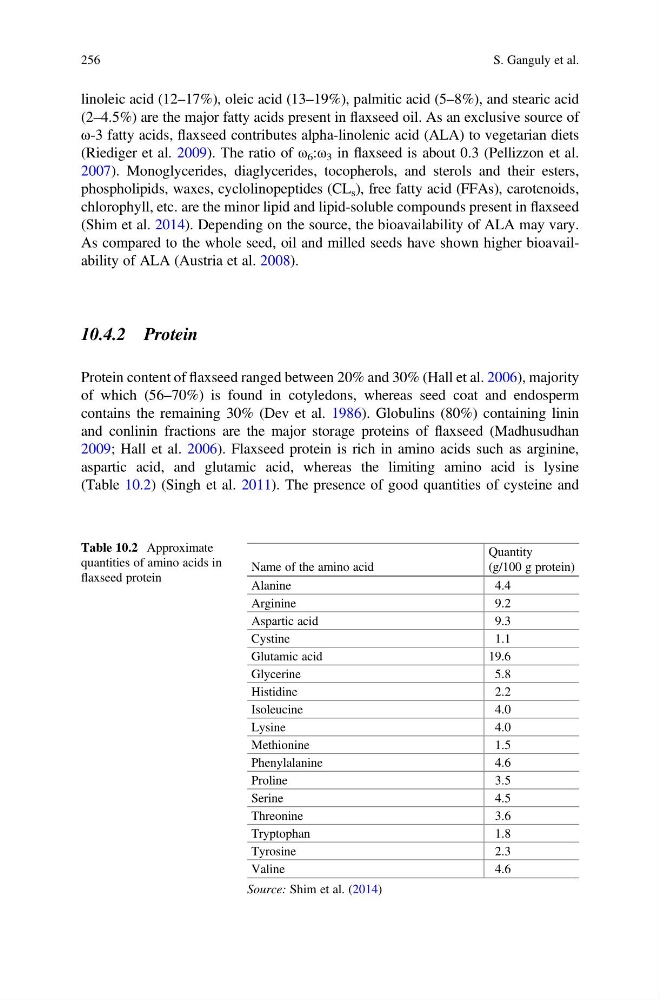
2009; Hall et al. 2006). Flaxseed protein is rich in amino acids such as arginine,
aspartic acid, and glutamic acid, whereas the limiting amino acid is lysine
(Table 10.2) (Singh et al. 2011). The presence of good quantities of cysteine and
Table 10.2 Approximate
quantities of amino acids in
flaxseed protein
Name of the amino acid
Quantity
(g/100 g protein)
Alanine
4.4
Arginine
9.2
Aspartic acid
9.3
Cystine
1.1
Glutamic acid
19.6
Glycerine
5.8
Histidine
2.2
Isoleucine
4.0
Lysine
4.0
Methionine
1.5
Phenylalanine
4.6
Proline
3.5
Serine
4.5
Threonine
3.6
Tryptophan
1.8
Tyrosine
2.3
Valine
4.6
Source: Shim et al. (2014)
256
S. Ganguly et al.
(2–4.5%) are the major fatty acids present in flaxseed oil. As an exclusive source of
ω-3 fatty acids, flaxseed contributes alpha-linolenic acid (ALA) to vegetarian diets
(Riediger et al. 2009). The ratio of ω 6 :ω 3 in flaxseed is about 0.3 (Pellizzon et al.
2007). Monoglycerides, diaglycerides, tocopherols, and sterols and their esters,
phospholipids, waxes, cyclolinopeptides (CL s ), free fatty acid (FFAs), carotenoids,
chlorophyll, etc. are the minor lipid and lipid-soluble compounds present in flaxseed
(Shim et al. 2014). Depending on the source, the bioavailability of ALA may vary.
As compared to the whole seed, oil and milled seeds have shown higher bioavailability of ALA (Austria et al. 2008).
10.4.2 Protein
Protein content of flaxseed ranged between 20% and 30% (Hall et al. 2006), majority
of which (56–70%) is found in cotyledons, whereas seed coat and endosperm
contains the remaining 30% (Dev et al. 1986). Globulins (80%) containing linin
and conlinin fractions are the major storage proteins of flaxseed (Madhusudhan
2009; Hall et al. 2006). Flaxseed protein is rich in amino acids such as arginine,
aspartic acid, and glutamic acid, whereas the limiting amino acid is lysine
(Table 10.2) (Singh et al. 2011). The presence of good quantities of cysteine and
Table 10.2 Approximate
quantities of amino acids in
flaxseed protein
Name of the amino acid
Quantity
(g/100 g protein)
Alanine
4.4
Arginine
9.2
Aspartic acid
9.3
Cystine
1.1
Glutamic acid
19.6
Glycerine
5.8
Histidine
2.2
Isoleucine
4.0
Lysine
4.0
Methionine
1.5
Phenylalanine
4.6
Proline
3.5
Serine
4.5
Threonine
3.6
Tryptophan
1.8
Tyrosine
2.3
Valine
4.6
Source: Shim et al. (2014)
256
S. Ganguly et al.