

double of the total lipids present in kernel (Bora et al. 2003). Akpanabiatu et al.
(2001) evaluated the nutrient composition of Nigerian palm kernel from the dura and
tenera varieties of the oil palm and reported approximately 6–14% moisture content,
41–49% lipids and 7.5–8.1% crude proteins content on dry basis.
6.4.1 Lipids
Palm oil is a yellowish orange colour with the characteristic palm fruit flavour. Palm
oil is obtained from fleshy pulp (mesocarp) of the palm fruit, while the kernel is the
source of kernel oil. Oil content varies from 68.0% to 73.2% and 32.6% to 49.4% in
palm fruit and palm kernel oil, respectively. Bora et al. (2003) characterized the
Brazilian oil palm fruits and observed approximately 24 and 18 fatty acids in palm
and palm kernel oil, respectively. The fatty acid composition of both types of oils is
presented in Table 6.2. Palm kernel oil has been reported to contain a very high
amount of saturated fatty acids (>80% of total fatty acids), even higher than palm oil
58.80
36.00
21.00
2.20
1.32
0.97
0.00
10.00
20.00
30.00
40.00
50.00
60.00
70.00
Production (Million metric tonnes)
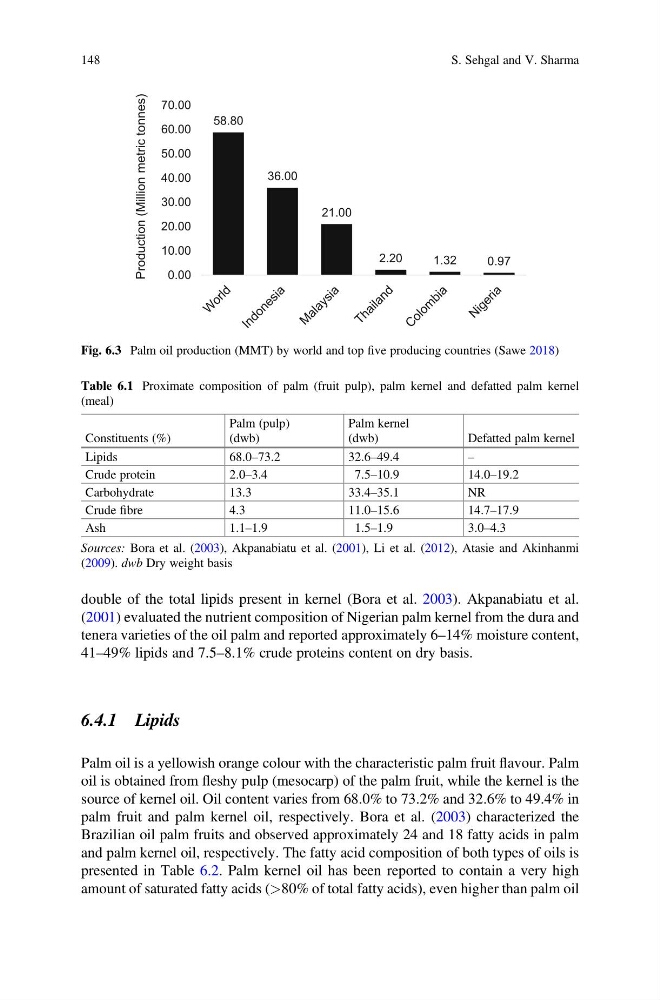
Fig. 6.3 Palm oil production (MMT) by world and top five producing countries (Sawe 2018)
Table 6.1 Proximate composition of palm (fruit pulp), palm kernel and defatted palm kernel
(meal)
Constituents (%)
Palm (pulp)
(dwb)
Palm kernel
(dwb)
Defatted palm kernel
Lipids
68.0–73.2
32.6–49.4
–
Crude protein
2.0–3.4
7.5–10.9
14.0–19.2
Carbohydrate
13.3
33.4–35.1
NR
Crude fibre
4.3
11.0–15.6
14.7–17.9
Ash
1.1–1.9
1.5–1.9
3.0–4.3
Sources: Bora et al. (2003), Akpanabiatu et al. (2001), Li et al. (2012), Atasie and Akinhanmi
(2009). dwb Dry weight basis
148
S. Sehgal and V. Sharma
(2001) evaluated the nutrient composition of Nigerian palm kernel from the dura and
tenera varieties of the oil palm and reported approximately 6–14% moisture content,
41–49% lipids and 7.5–8.1% crude proteins content on dry basis.
6.4.1 Lipids
Palm oil is a yellowish orange colour with the characteristic palm fruit flavour. Palm
oil is obtained from fleshy pulp (mesocarp) of the palm fruit, while the kernel is the
source of kernel oil. Oil content varies from 68.0% to 73.2% and 32.6% to 49.4% in
palm fruit and palm kernel oil, respectively. Bora et al. (2003) characterized the
Brazilian oil palm fruits and observed approximately 24 and 18 fatty acids in palm
and palm kernel oil, respectively. The fatty acid composition of both types of oils is
presented in Table 6.2. Palm kernel oil has been reported to contain a very high
amount of saturated fatty acids (>80% of total fatty acids), even higher than palm oil
58.80
36.00
21.00
2.20
1.32
0.97
0.00
10.00
20.00
30.00
40.00
50.00
60.00
70.00
Production (Million metric tonnes)
Fig. 6.3 Palm oil production (MMT) by world and top five producing countries (Sawe 2018)
Table 6.1 Proximate composition of palm (fruit pulp), palm kernel and defatted palm kernel
(meal)
Constituents (%)
Palm (pulp)
(dwb)
Palm kernel
(dwb)
Defatted palm kernel
Lipids
68.0–73.2
32.6–49.4
–
Crude protein
2.0–3.4
7.5–10.9
14.0–19.2
Carbohydrate
13.3
33.4–35.1
NR
Crude fibre
4.3
11.0–15.6
14.7–17.9
Ash
1.1–1.9
1.5–1.9
3.0–4.3
Sources: Bora et al. (2003), Akpanabiatu et al. (2001), Li et al. (2012), Atasie and Akinhanmi
(2009). dwb Dry weight basis
148
S. Sehgal and V. Sharma