

vitamin E’. Vitamin E is not only thought to help prevent Alzheimer’s disease and
dementia but also a natural antioxidant that may protect against heart diseases by
scavenging the free radicals (the harmful molecules). Furthermore, owing to the
presence of high amount of vitamin E (α-tocopherol), sunflower oil is naturally
resistant to photo-oxidation. However, since low levels of γ-tocopherols are present
in oil, it is not stable against autoxidation.
5.4.5 Minerals
Sunflower seeds are loaded with many essential minerals, viz. iron, zinc, manganese,
copper, selenium and calcium (Anjum et al. 2010) (Table 5.6). These important
minerals play a crucial role in hormone production, enzyme synthesis, red blood cell
production, bone mineralization as well as regulation of metabolic, cardiac and
skeletal muscle activities. Around 25% of the daily needs for selenium can be met
by consuming 1 ounce of sunflower seeds. Selenium is a rare antioxidant, which acts
synergistically with vitamin E and prevent cell damage that may cause cancer, heart
disease or other health problems (Vogt et al. 2003).
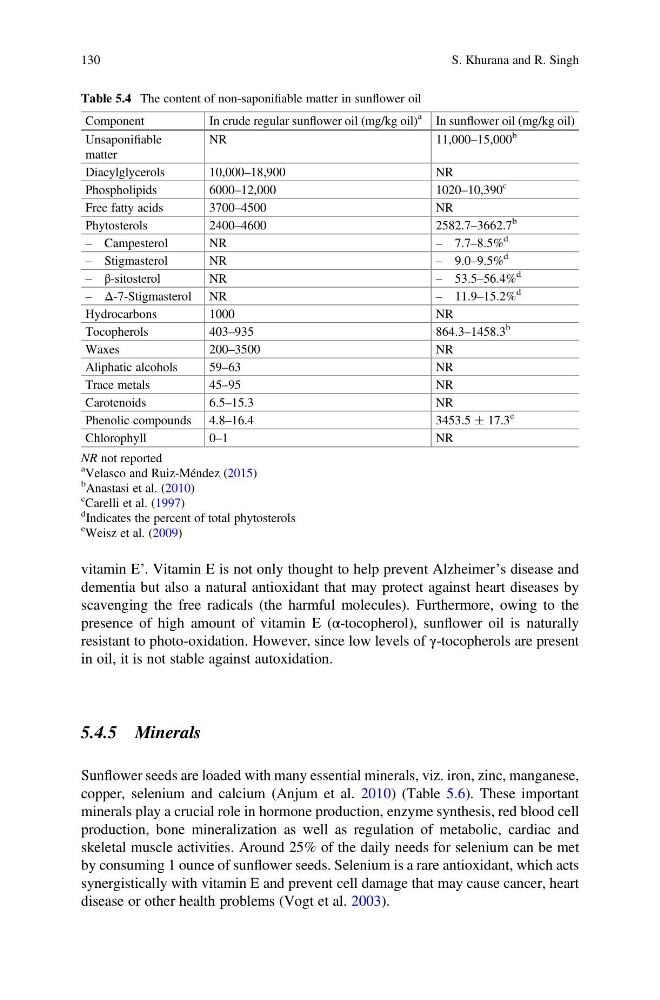
Table 5.4 The content of non-saponifiable matter in sunflower oil
Component
In crude regular sunflower oil (mg/kg oil)
a
In sunflower oil (mg/kg oil)
Unsaponifiable
matter
NR
11,000–15,000
b
Diacylglycerols
10,000–18,900
NR
Phospholipids
6000–12,000
1020–10,390
c
Free fatty acids
3700–4500
NR
Phytosterols
2400–4600
2582.7–3662.7
b
– Campesterol
NR
– 7.7–8.5%
d
– Stigmasterol
NR
– 9.0–9.5%
d
– β-sitosterol
NR
– 53.5–56.4%
d
– Δ-7-Stigmasterol NR
– 11.9–15.2%
d
Hydrocarbons
1000
NR
Tocopherols
403–935
864.3–1458.3
b
Waxes
200–3500
NR
Aliphatic alcohols
59–63
NR
Trace metals
45–95
NR
Carotenoids
6.5–15.3
NR
Phenolic compounds 4.8–16.4
3453.5 Æ 17.3
e
Chlorophyll
0–1
N R
NR not reported
a Velasco and Ruiz-Méndez (2015)
b
Anastasi et al. (2010)
c Carelli et al. (1997)
d
Indicates the percent of total phytosterols
e Weisz et al. (2009)
130
S. Khurana and R. Singh
dementia but also a natural antioxidant that may protect against heart diseases by
scavenging the free radicals (the harmful molecules). Furthermore, owing to the
presence of high amount of vitamin E (α-tocopherol), sunflower oil is naturally
resistant to photo-oxidation. However, since low levels of γ-tocopherols are present
in oil, it is not stable against autoxidation.
5.4.5 Minerals
Sunflower seeds are loaded with many essential minerals, viz. iron, zinc, manganese,
copper, selenium and calcium (Anjum et al. 2010) (Table 5.6). These important
minerals play a crucial role in hormone production, enzyme synthesis, red blood cell
production, bone mineralization as well as regulation of metabolic, cardiac and
skeletal muscle activities. Around 25% of the daily needs for selenium can be met
by consuming 1 ounce of sunflower seeds. Selenium is a rare antioxidant, which acts
synergistically with vitamin E and prevent cell damage that may cause cancer, heart
disease or other health problems (Vogt et al. 2003).
Table 5.4 The content of non-saponifiable matter in sunflower oil
Component
In crude regular sunflower oil (mg/kg oil)
a
In sunflower oil (mg/kg oil)
Unsaponifiable
matter
NR
11,000–15,000
b
Diacylglycerols
10,000–18,900
NR
Phospholipids
6000–12,000
1020–10,390
c
Free fatty acids
3700–4500
NR
Phytosterols
2400–4600
2582.7–3662.7
b
– Campesterol
NR
– 7.7–8.5%
d
– Stigmasterol
NR
– 9.0–9.5%
d
– β-sitosterol
NR
– 53.5–56.4%
d
– Δ-7-Stigmasterol NR
– 11.9–15.2%
d
Hydrocarbons
1000
NR
Tocopherols
403–935
864.3–1458.3
b
Waxes
200–3500
NR
Aliphatic alcohols
59–63
NR
Trace metals
45–95
NR
Carotenoids
6.5–15.3
NR
Phenolic compounds 4.8–16.4
3453.5 Æ 17.3
e
Chlorophyll
0–1
N R
NR not reported
a Velasco and Ruiz-Méndez (2015)
b
Anastasi et al. (2010)
c Carelli et al. (1997)
d
Indicates the percent of total phytosterols
e Weisz et al. (2009)
130
S. Khurana and R. Singh