

1.3 Nutritional Composition
Among legume seeds, soybeans contain not only the maximum crude protein but
also the best amino acid composition and, hence, are considered the best vegetable
protein source for humans as well as animals. However, it is important to note that
the composition of whole soybean and its structural parts is highly dependent on
geographic location, growing season, environmental stress, and variety of the seed.
1.3.1 Carbohydrates
Carbohydrates are the second largest component (22.11–33.18%) in soybeans
(Warle et al. 2015; Alghamdi et al. 2018). Previously, soy carbohydrates held
much less economic importance than soy protein and oil due to the thought that it
just provides calories. Also, its digestion was better in monogastric animals and,
hence, was primarily used in ruminant feeds. However, the picture is changing now
due to the recent emphasis on the role of dietary oligosaccharides and dietary fiber in
preventing colon cancer and other diseases (Benito-González et al. 2019).
The hull comprises 8% of the seed and contains approximately 86% carbohydrates, whereas hypocotyl axis and cotyledons comprise 2% and 90% of the whole
seeds and contain 43% and 29% of carbohydrates, respectively (Liu 1997). Soybeans contain sucrose (2.5–8.2%), raffinose (0.1–0.9%), stachyose (1.4–4.1%), and
trace amounts of glucose and arabinose (Hymowitz et al. 1972). Raffinose and
stachyose are the limiting factors for its utilization as food due to their poor
56%
29%
3.70%
3.70%
2.30%
1.40%
0.90%
0.70%
0.50% 0.20%
Brazil
United States
Canada
Paraguay
Argentina
Ukraine
Uruguay
Netherlands
Russia
Belgium
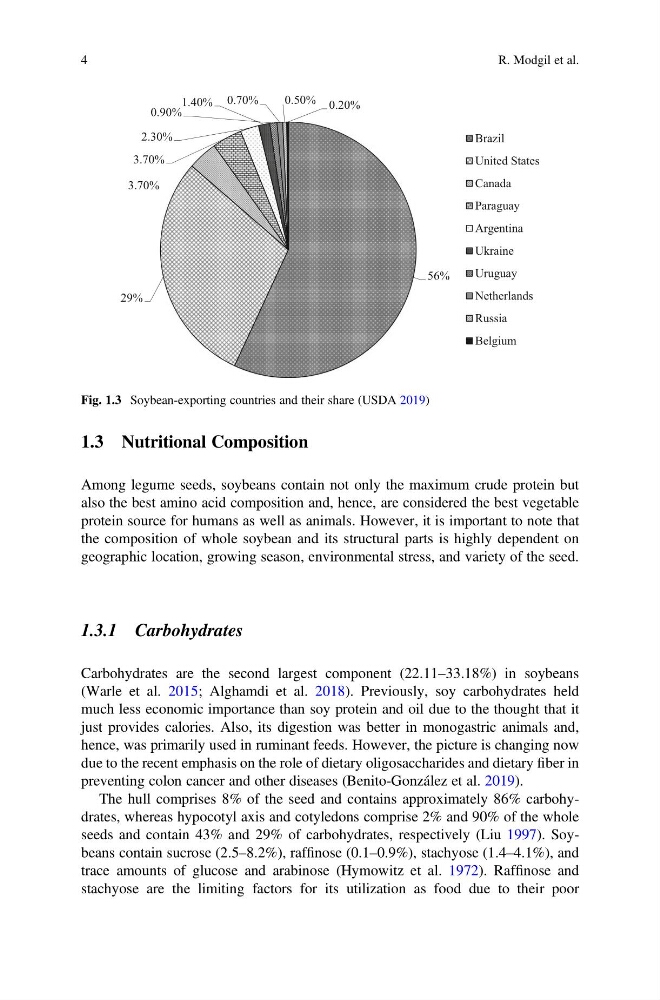
Fig. 1.3 Soybean-exporting countries and their share (USDA 2019)
4
R. Modgil et al.
Among legume seeds, soybeans contain not only the maximum crude protein but
also the best amino acid composition and, hence, are considered the best vegetable
protein source for humans as well as animals. However, it is important to note that
the composition of whole soybean and its structural parts is highly dependent on
geographic location, growing season, environmental stress, and variety of the seed.
1.3.1 Carbohydrates
Carbohydrates are the second largest component (22.11–33.18%) in soybeans
(Warle et al. 2015; Alghamdi et al. 2018). Previously, soy carbohydrates held
much less economic importance than soy protein and oil due to the thought that it
just provides calories. Also, its digestion was better in monogastric animals and,
hence, was primarily used in ruminant feeds. However, the picture is changing now
due to the recent emphasis on the role of dietary oligosaccharides and dietary fiber in
preventing colon cancer and other diseases (Benito-González et al. 2019).
The hull comprises 8% of the seed and contains approximately 86% carbohydrates, whereas hypocotyl axis and cotyledons comprise 2% and 90% of the whole
seeds and contain 43% and 29% of carbohydrates, respectively (Liu 1997). Soybeans contain sucrose (2.5–8.2%), raffinose (0.1–0.9%), stachyose (1.4–4.1%), and
trace amounts of glucose and arabinose (Hymowitz et al. 1972). Raffinose and
stachyose are the limiting factors for its utilization as food due to their poor
56%
29%
3.70%
3.70%
2.30%
1.40%
0.90%
0.70%
0.50% 0.20%
Brazil
United States
Canada
Paraguay
Argentina
Ukraine
Uruguay
Netherlands
Russia
Belgium
Fig. 1.3 Soybean-exporting countries and their share (USDA 2019)
4
R. Modgil et al.