

4.1.3.5 Minerals
Peanuts contain adequate levels of various minerals that play an important role in
body functions. Peanuts can be a good source of magnesium, and regular consumption of peanuts ensures adequate levels in the body. Magnesium maintains proper
functioning of nerves and muscle cells and supports a good immune system. It
regulates blood sugar, maintains bone strength, and balances the blood sugar levels
(Jahnen-Dechent and Ketteler 2012). Adequate levels of calcium are also found in
peanuts. Peanuts contain 50% of the required daily allowance of phosphorus.
Peanuts also contain potassium which is an electrolyte and supports neuronal health.
Additionally, it is also required for proper muscle development (He and MacGregor
2008). Peanuts contain adequate levels of this mineral and, thus, can be used as a
supplement for potassium. Zinc is present in sufficient quantities in peanuts (31 mg
per 100 g). Another essential mineral found in peanuts (2.26 mg per 100 g) is iron
and is necessary for red blood cell production. It is also a cofactor for various
enzymes (catalase, oxidase, and ferrochelatase) involved in metabolism. Iron also
maintains cell differentiation and proliferation. Copper is also present in peanuts
(0.671 mg per 100 g) and helps in synthesis of proteins including hemoglobin and
collagen. Selenium is a micronutrient found in peanuts (7.5 μg per 100 g) and is a
potent antioxidant, boosts metabolism, and is also known to prevent cancer.
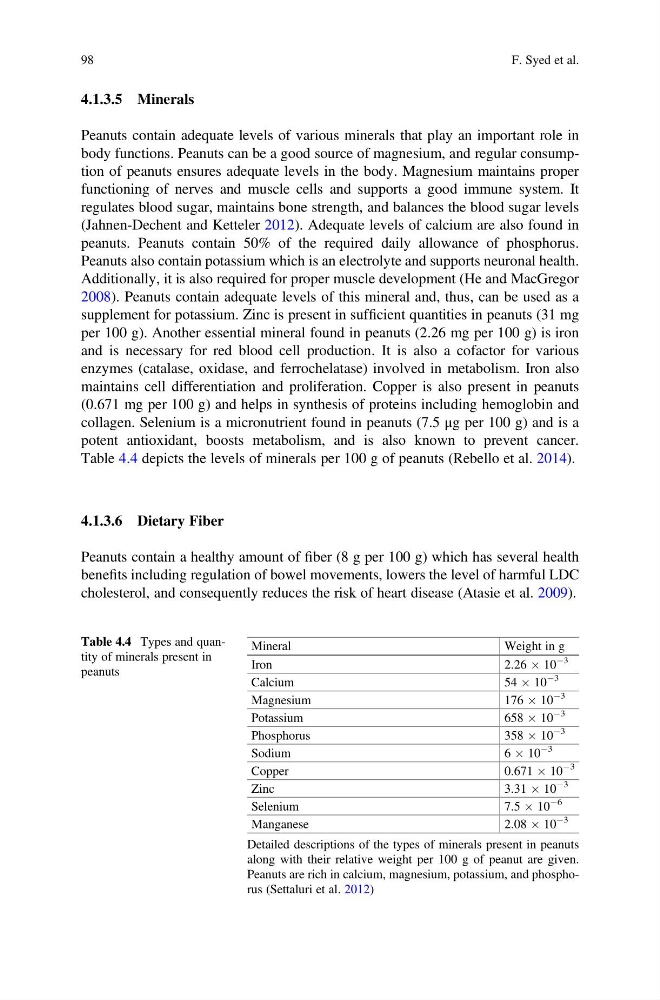
Table 4.4 depicts the levels of minerals per 100 g of peanuts (Rebello et al. 2014).
4.1.3.6 Dietary Fiber
Peanuts contain a healthy amount of fiber (8 g per 100 g) which has several health
benefits including regulation of bowel movements, lowers the level of harmful LDC
cholesterol, and consequently reduces the risk of heart disease (Atasie et al. 2009).
Table 4.4 Types and quantity of minerals present in
peanuts
Mineral
Weight in g
Iron
2.26 Â 10
À3
Calcium
54 Â 10
À3
Magnesium
176 Â 10
À3
Potassium
658 Â 10
À3
Phosphorus
358 Â 10
À3
Sodium
6 Â 10
À3
Copper
0.671 Â 10
À3
Zinc
3.31 Â 10
À3
Selenium
7.5 Â 10
À6
Manganese
2.08 Â 10
À3
Detailed descriptions of the types of minerals present in peanuts
along with their relative weight per 100 g of peanut are given.
Peanuts are rich in calcium, magnesium, potassium, and phosphorus (Settaluri et al. 2012)
98
F. Syed et al.
Peanuts contain adequate levels of various minerals that play an important role in
body functions. Peanuts can be a good source of magnesium, and regular consumption of peanuts ensures adequate levels in the body. Magnesium maintains proper
functioning of nerves and muscle cells and supports a good immune system. It
regulates blood sugar, maintains bone strength, and balances the blood sugar levels
(Jahnen-Dechent and Ketteler 2012). Adequate levels of calcium are also found in
peanuts. Peanuts contain 50% of the required daily allowance of phosphorus.
Peanuts also contain potassium which is an electrolyte and supports neuronal health.
Additionally, it is also required for proper muscle development (He and MacGregor
2008). Peanuts contain adequate levels of this mineral and, thus, can be used as a
supplement for potassium. Zinc is present in sufficient quantities in peanuts (31 mg
per 100 g). Another essential mineral found in peanuts (2.26 mg per 100 g) is iron
and is necessary for red blood cell production. It is also a cofactor for various
enzymes (catalase, oxidase, and ferrochelatase) involved in metabolism. Iron also
maintains cell differentiation and proliferation. Copper is also present in peanuts
(0.671 mg per 100 g) and helps in synthesis of proteins including hemoglobin and
collagen. Selenium is a micronutrient found in peanuts (7.5 μg per 100 g) and is a
potent antioxidant, boosts metabolism, and is also known to prevent cancer.
Table 4.4 depicts the levels of minerals per 100 g of peanuts (Rebello et al. 2014).
4.1.3.6 Dietary Fiber
Peanuts contain a healthy amount of fiber (8 g per 100 g) which has several health
benefits including regulation of bowel movements, lowers the level of harmful LDC
cholesterol, and consequently reduces the risk of heart disease (Atasie et al. 2009).
Table 4.4 Types and quantity of minerals present in
peanuts
Mineral
Weight in g
Iron
2.26 Â 10
À3
Calcium
54 Â 10
À3
Magnesium
176 Â 10
À3
Potassium
658 Â 10
À3
Phosphorus
358 Â 10
À3
Sodium
6 Â 10
À3
Copper
0.671 Â 10
À3
Zinc
3.31 Â 10
À3
Selenium
7.5 Â 10
À6
Manganese
2.08 Â 10
À3
Detailed descriptions of the types of minerals present in peanuts
along with their relative weight per 100 g of peanut are given.
Peanuts are rich in calcium, magnesium, potassium, and phosphorus (Settaluri et al. 2012)
98
F. Syed et al.