

3.4 The Fallacies of Household and Rural Electrification
89
0.00
20.00
40.00
60.00
80.00
100.00
120.00
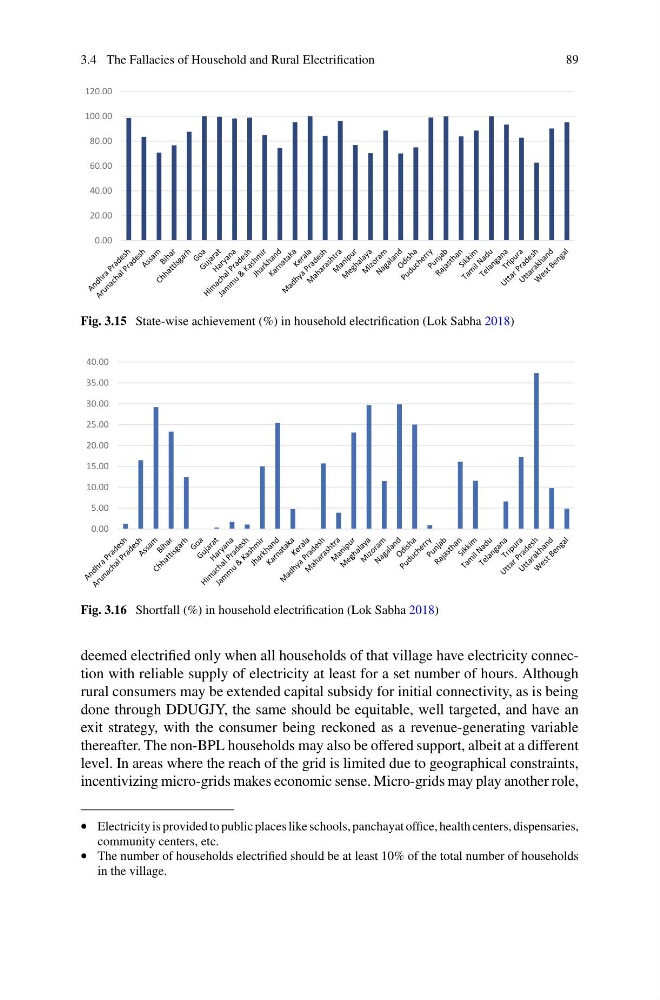
Fig. 3.15 State-wise achievement (%) in household electrification (Lok Sabha 2018)
0.00
5.00
10.00
15.00
20.00
25.00
30.00
35.00
40.00
Fig. 3.16 Shortfall (%) in household electrification (Lok Sabha 2018)
deemed electrified only when all households of that village have electricity connection with reliable supply of electricity at least for a set number of hours. Although
rural consumers may be extended capital subsidy for initial connectivity, as is being
done through DDUGJY, the same should be equitable, well targeted, and have an
exit strategy, with the consumer being reckoned as a revenue-generating variable
thereafter. The non-BPL households may also be offered support, albeit at a different
level. In areas where the reach of the grid is limited due to geographical constraints,
incentivizing micro-grids makes economic sense. Micro-grids may play another role,
• Electricity is provided to public places like schools, panchayat office, health centers, dispensaries,
community centers, etc.
• The number of households electrified should be at least 10% of the total number of households
in the village.
89
0.00
20.00
40.00
60.00
80.00
100.00
120.00
Fig. 3.15 State-wise achievement (%) in household electrification (Lok Sabha 2018)
0.00
5.00
10.00
15.00
20.00
25.00
30.00
35.00
40.00
Fig. 3.16 Shortfall (%) in household electrification (Lok Sabha 2018)
deemed electrified only when all households of that village have electricity connection with reliable supply of electricity at least for a set number of hours. Although
rural consumers may be extended capital subsidy for initial connectivity, as is being
done through DDUGJY, the same should be equitable, well targeted, and have an
exit strategy, with the consumer being reckoned as a revenue-generating variable
thereafter. The non-BPL households may also be offered support, albeit at a different
level. In areas where the reach of the grid is limited due to geographical constraints,
incentivizing micro-grids makes economic sense. Micro-grids may play another role,
• Electricity is provided to public places like schools, panchayat office, health centers, dispensaries,
community centers, etc.
• The number of households electrified should be at least 10% of the total number of households
in the village.