

2.4 Part III (Emergence of Renewable Sources)
55
5240
2247
6798
1409
7743
11104
4504
6779
546
440
420
470
NORTHERN REGION
WESTERN REGION
SOUTHERN REGION
EASTERN REGION
N.E. REGION
Hydel
Thermal
Nuclear
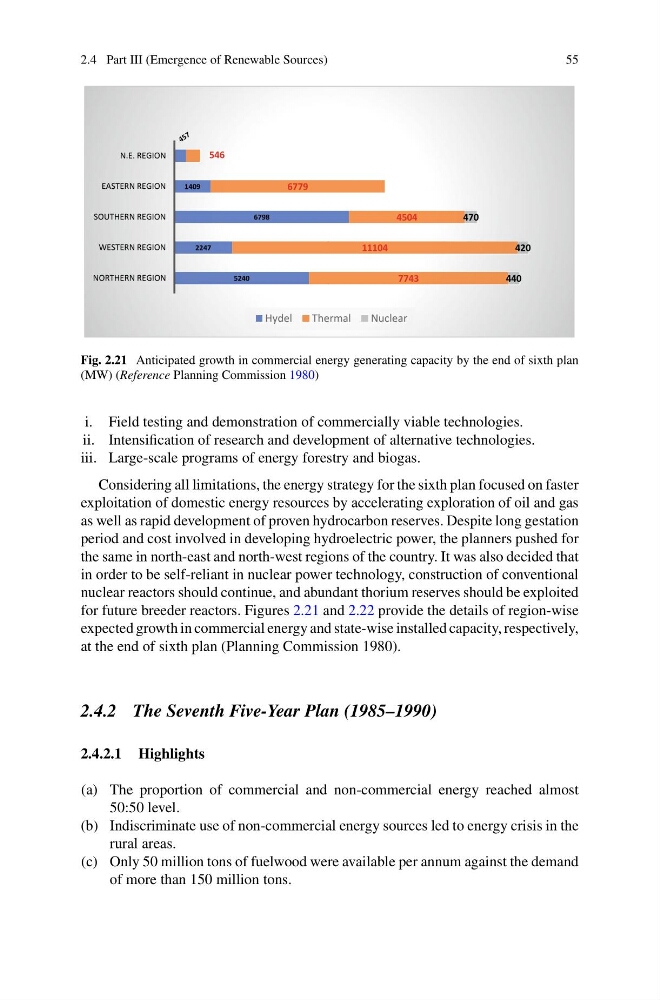
Fig. 2.21 Anticipated growth in commercial energy generating capacity by the end of sixth plan
(MW) (Reference Planning Commission 1980)
i. Field testing and demonstration of commercially viable technologies.
ii. Intensification of research and development of alternative technologies.
iii. Large-scale programs of energy forestry and biogas.
Considering all limitations, the energy strategy for the sixth plan focused on faster
exploitation of domestic energy resources by accelerating exploration of oil and gas
as well as rapid development of proven hydrocarbon reserves. Despite long gestation
period and cost involved in developing hydroelectric power, the planners pushed for
the same in north-east and north-west regions of the country. It was also decided that
in order to be self-reliant in nuclear power technology, construction of conventional
nuclear reactors should continue, and abundant thorium reserves should be exploited
for future breeder reactors. Figures 2.21 and 2.22 provide the details of region-wise
expected growth in commercial energy and state-wise installed capacity, respectively,
at the end of sixth plan (Planning Commission 1980).
2.4.2 The Seventh Five-Year Plan (1985–1990)
2.4.2.1 Highlights
(a) The proportion of commercial and non-commercial energy reached almost
50:50 level.
(b) Indiscriminate use of non-commercial energy sources led to energy crisis in the
rural areas.
(c) Only 50 million tons of fuelwood were available per annum against the demand
of more than 150 million tons.
55
5240
2247
6798
1409
7743
11104
4504
6779
546
440
420
470
NORTHERN REGION
WESTERN REGION
SOUTHERN REGION
EASTERN REGION
N.E. REGION
Hydel
Thermal
Nuclear
Fig. 2.21 Anticipated growth in commercial energy generating capacity by the end of sixth plan
(MW) (Reference Planning Commission 1980)
i. Field testing and demonstration of commercially viable technologies.
ii. Intensification of research and development of alternative technologies.
iii. Large-scale programs of energy forestry and biogas.
Considering all limitations, the energy strategy for the sixth plan focused on faster
exploitation of domestic energy resources by accelerating exploration of oil and gas
as well as rapid development of proven hydrocarbon reserves. Despite long gestation
period and cost involved in developing hydroelectric power, the planners pushed for
the same in north-east and north-west regions of the country. It was also decided that
in order to be self-reliant in nuclear power technology, construction of conventional
nuclear reactors should continue, and abundant thorium reserves should be exploited
for future breeder reactors. Figures 2.21 and 2.22 provide the details of region-wise
expected growth in commercial energy and state-wise installed capacity, respectively,
at the end of sixth plan (Planning Commission 1980).
2.4.2 The Seventh Five-Year Plan (1985–1990)
2.4.2.1 Highlights
(a) The proportion of commercial and non-commercial energy reached almost
50:50 level.
(b) Indiscriminate use of non-commercial energy sources led to energy crisis in the
rural areas.
(c) Only 50 million tons of fuelwood were available per annum against the demand
of more than 150 million tons.