

2.3 Part II—The Nuclear Energy Phase
51
0
1000
2000
3000
4000
5000
6000
7000
8000
01-Jan-74
01-Jan-76
01-Jan-78
01-Jan-80
01-Jan-82
01-Jan-84
01-Jan-86
01-Jan-88
01-Jan-90
01-Jan-92
01-Jan-94
01-Jan-96
01-Jan-98
01-Jan-00
01-Jan-02
01-Jan-04
01-Jan-06
01-Jan-08
01-Jan-10
01-Jan-12
01-Jan-14
01-Jan-16
01-Jan-18
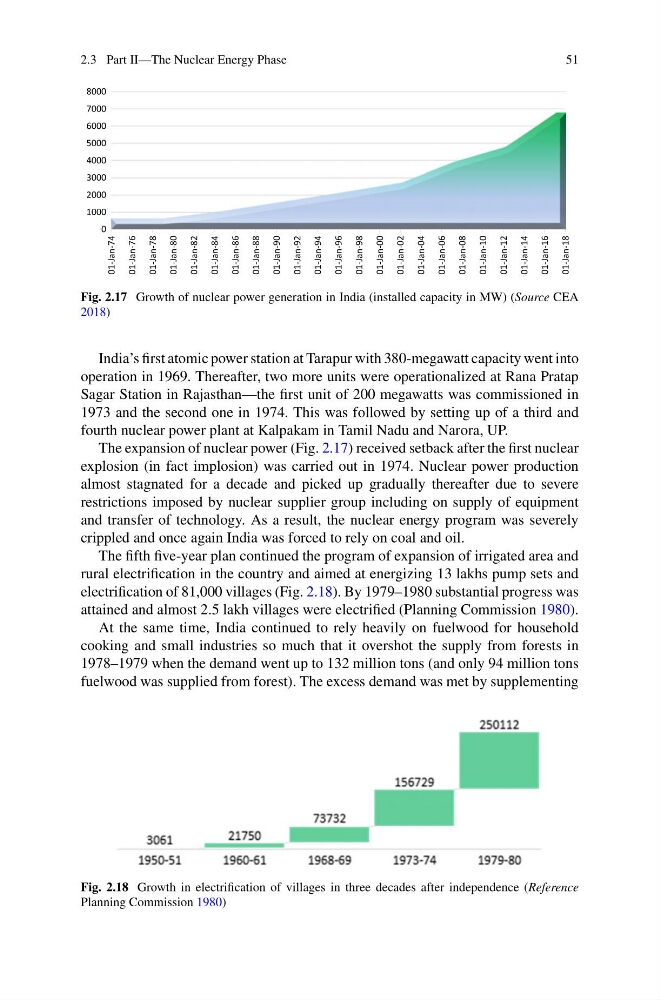
Fig. 2.17 Growth of nuclear power generation in India (installed capacity in MW) (Source CEA
2018)
India’s first atomic power station at Tarapur with 380-megawatt capacity went into
operation in 1969. Thereafter, two more units were operationalized at Rana Pratap
Sagar Station in Rajasthan—the first unit of 200 megawatts was commissioned in
1973 and the second one in 1974. This was followed by setting up of a third and
fourth nuclear power plant at Kalpakam in Tamil Nadu and Narora, UP.
The expansion of nuclear power (Fig. 2.17) received setback after the first nuclear
explosion (in fact implosion) was carried out in 1974. Nuclear power production
almost stagnated for a decade and picked up gradually thereafter due to severe
restrictions imposed by nuclear supplier group including on supply of equipment
and transfer of technology. As a result, the nuclear energy program was severely
crippled and once again India was forced to rely on coal and oil.
The fifth five-year plan continued the program of expansion of irrigated area and
rural electrification in the country and aimed at energizing 13 lakhs pump sets and
electrification of 81,000 villages (Fig. 2.18). By 1979–1980 substantial progress was
attained and almost 2.5 lakh villages were electrified (Planning Commission 1980).
At the same time, India continued to rely heavily on fuelwood for household
cooking and small industries so much that it overshot the supply from forests in
1978–1979 when the demand went up to 132 million tons (and only 94 million tons
fuelwood was supplied from forest). The excess demand was met by supplementing
Fig. 2.18 Growth in electrification of villages in three decades after independence (Reference
Planning Commission 1980)
51
0
1000
2000
3000
4000
5000
6000
7000
8000
01-Jan-74
01-Jan-76
01-Jan-78
01-Jan-80
01-Jan-82
01-Jan-84
01-Jan-86
01-Jan-88
01-Jan-90
01-Jan-92
01-Jan-94
01-Jan-96
01-Jan-98
01-Jan-00
01-Jan-02
01-Jan-04
01-Jan-06
01-Jan-08
01-Jan-10
01-Jan-12
01-Jan-14
01-Jan-16
01-Jan-18
Fig. 2.17 Growth of nuclear power generation in India (installed capacity in MW) (Source CEA
2018)
India’s first atomic power station at Tarapur with 380-megawatt capacity went into
operation in 1969. Thereafter, two more units were operationalized at Rana Pratap
Sagar Station in Rajasthan—the first unit of 200 megawatts was commissioned in
1973 and the second one in 1974. This was followed by setting up of a third and
fourth nuclear power plant at Kalpakam in Tamil Nadu and Narora, UP.
The expansion of nuclear power (Fig. 2.17) received setback after the first nuclear
explosion (in fact implosion) was carried out in 1974. Nuclear power production
almost stagnated for a decade and picked up gradually thereafter due to severe
restrictions imposed by nuclear supplier group including on supply of equipment
and transfer of technology. As a result, the nuclear energy program was severely
crippled and once again India was forced to rely on coal and oil.
The fifth five-year plan continued the program of expansion of irrigated area and
rural electrification in the country and aimed at energizing 13 lakhs pump sets and
electrification of 81,000 villages (Fig. 2.18). By 1979–1980 substantial progress was
attained and almost 2.5 lakh villages were electrified (Planning Commission 1980).
At the same time, India continued to rely heavily on fuelwood for household
cooking and small industries so much that it overshot the supply from forests in
1978–1979 when the demand went up to 132 million tons (and only 94 million tons
fuelwood was supplied from forest). The excess demand was met by supplementing
Fig. 2.18 Growth in electrification of villages in three decades after independence (Reference
Planning Commission 1980)