

40
2 Energy Sector Progression in India
100.00
100.00
86.64
42.83
10.90
0.50
Above 100000 PopulaƟon
50000 - 100000
PopulaƟon
20000 - 50000 PopulaƟon
10000 - 20000
PopulaƟon
5000 - 10000 PopulaƟon Below 5000 PopulaƟon
Number of towns/ villages
Number of towns/villages having electricity supply
Percent achievement in electrificaƟon
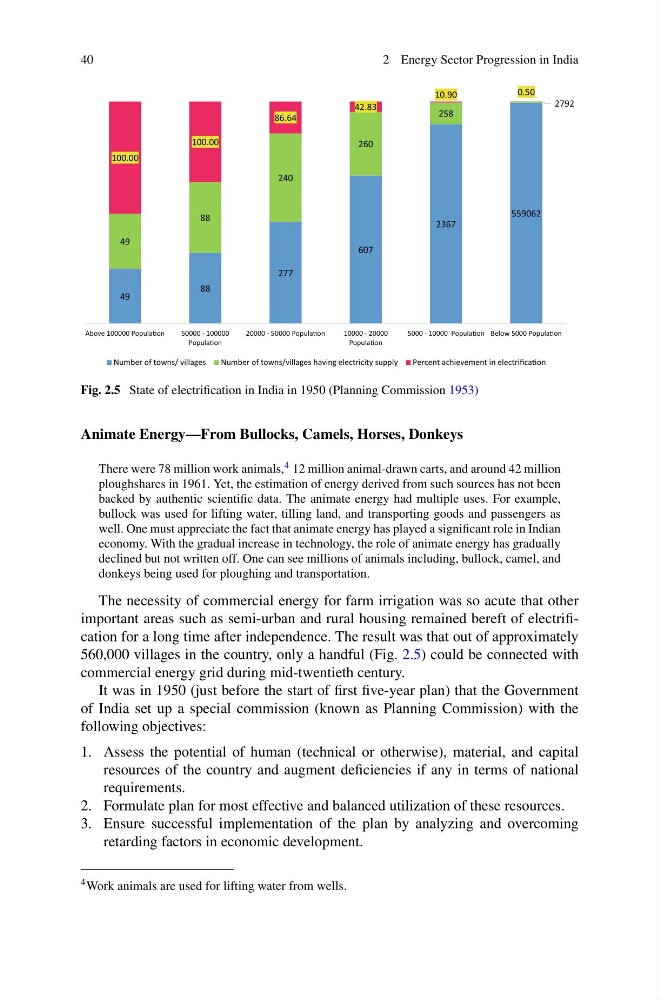
Fig. 2.5 State of electrification in India in 1950 (Planning Commission 1953)
Animate Energy—From Bullocks, Camels, Horses, Donkeys
There were 78 million work animals, 4 12 million animal-drawn carts, and around 42 million
ploughshares in 1961. Yet, the estimation of energy derived from such sources has not been
backed by authentic scientific data. The animate energy had multiple uses. For example,
bullock was used for lifting water, tilling land, and transporting goods and passengers as
well. One must appreciate the fact that animate energy has played a significant role in Indian
economy. With the gradual increase in technology, the role of animate energy has gradually
declined but not written off. One can see millions of animals including, bullock, camel, and
donkeys being used for ploughing and transportation.
The necessity of commercial energy for farm irrigation was so acute that other
important areas such as semi-urban and rural housing remained bereft of electrification for a long time after independence. The result was that out of approximately
560,000 villages in the country, only a handful (Fig. 2.5) could be connected with
commercial energy grid during mid-twentieth century.
It was in 1950 (just before the start of first five-year plan) that the Government
of India set up a special commission (known as Planning Commission) with the
following objectives:
1. Assess the potential of human (technical or otherwise), material, and capital
resources of the country and augment deficiencies if any in terms of national
requirements.
2. Formulate plan for most effective and balanced utilization of these resources.
3. Ensure successful implementation of the plan by analyzing and overcoming
retarding factors in economic development.
4 Work animals are used for lifting water from wells.
2 Energy Sector Progression in India
100.00
100.00
86.64
42.83
10.90
0.50
Above 100000 PopulaƟon
50000 - 100000
PopulaƟon
20000 - 50000 PopulaƟon
10000 - 20000
PopulaƟon
5000 - 10000 PopulaƟon Below 5000 PopulaƟon
Number of towns/ villages
Number of towns/villages having electricity supply
Percent achievement in electrificaƟon
Fig. 2.5 State of electrification in India in 1950 (Planning Commission 1953)
Animate Energy—From Bullocks, Camels, Horses, Donkeys
There were 78 million work animals, 4 12 million animal-drawn carts, and around 42 million
ploughshares in 1961. Yet, the estimation of energy derived from such sources has not been
backed by authentic scientific data. The animate energy had multiple uses. For example,
bullock was used for lifting water, tilling land, and transporting goods and passengers as
well. One must appreciate the fact that animate energy has played a significant role in Indian
economy. With the gradual increase in technology, the role of animate energy has gradually
declined but not written off. One can see millions of animals including, bullock, camel, and
donkeys being used for ploughing and transportation.
The necessity of commercial energy for farm irrigation was so acute that other
important areas such as semi-urban and rural housing remained bereft of electrification for a long time after independence. The result was that out of approximately
560,000 villages in the country, only a handful (Fig. 2.5) could be connected with
commercial energy grid during mid-twentieth century.
It was in 1950 (just before the start of first five-year plan) that the Government
of India set up a special commission (known as Planning Commission) with the
following objectives:
1. Assess the potential of human (technical or otherwise), material, and capital
resources of the country and augment deficiencies if any in terms of national
requirements.
2. Formulate plan for most effective and balanced utilization of these resources.
3. Ensure successful implementation of the plan by analyzing and overcoming
retarding factors in economic development.
4 Work animals are used for lifting water from wells.