

2 Energy Sector Progression in India
35
DUG WELLS
SHALLOW TUBE WELLS
PUBLIC TUBE WELLS
ELECTRIC PUMPS
DIESEL PUMPS
3860000
3000
2400
21000
65700
9490000
4750000
63000
8220000
4360000
1990
1951
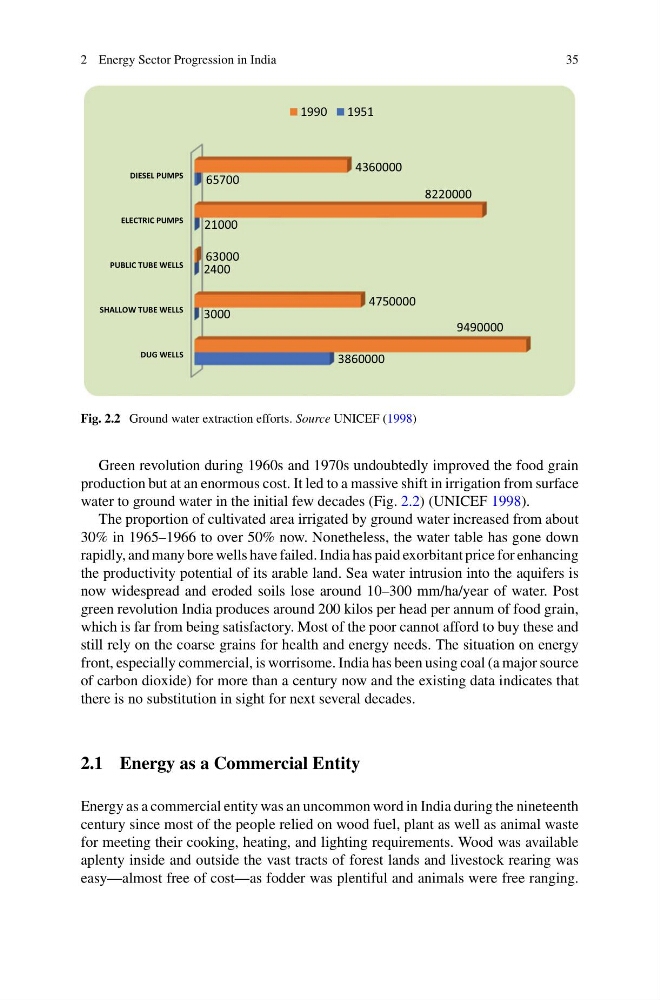
Fig. 2.2 Ground water extraction efforts. Source UNICEF (1998)
Green revolution during 1960s and 1970s undoubtedly improved the food grain
production but at an enormous cost. It led to a massive shift in irrigation from surface
water to ground water in the initial few decades (Fig. 2.2) (UNICEF 1998).
The proportion of cultivated area irrigated by ground water increased from about
30% in 1965–1966 to over 50% now. Nonetheless, the water table has gone down
rapidly, and many bore wells have failed. India has paid exorbitant price for enhancing
the productivity potential of its arable land. Sea water intrusion into the aquifers is
now widespread and eroded soils lose around 10–300 mm/ha/year of water. Post
green revolution India produces around 200 kilos per head per annum of food grain,
which is far from being satisfactory. Most of the poor cannot afford to buy these and
still rely on the coarse grains for health and energy needs. The situation on energy
front, especially commercial, is worrisome. India has been using coal (a major source
of carbon dioxide) for more than a century now and the existing data indicates that
there is no substitution in sight for next several decades.
2.1 Energy as a Commercial Entity
Energy as a commercial entity was an uncommon word in India during the nineteenth
century since most of the people relied on wood fuel, plant as well as animal waste
for meeting their cooking, heating, and lighting requirements. Wood was available
aplenty inside and outside the vast tracts of forest lands and livestock rearing was
easy—almost free of cost—as fodder was plentiful and animals were free ranging.
35
DUG WELLS
SHALLOW TUBE WELLS
PUBLIC TUBE WELLS
ELECTRIC PUMPS
DIESEL PUMPS
3860000
3000
2400
21000
65700
9490000
4750000
63000
8220000
4360000
1990
1951
Fig. 2.2 Ground water extraction efforts. Source UNICEF (1998)
Green revolution during 1960s and 1970s undoubtedly improved the food grain
production but at an enormous cost. It led to a massive shift in irrigation from surface
water to ground water in the initial few decades (Fig. 2.2) (UNICEF 1998).
The proportion of cultivated area irrigated by ground water increased from about
30% in 1965–1966 to over 50% now. Nonetheless, the water table has gone down
rapidly, and many bore wells have failed. India has paid exorbitant price for enhancing
the productivity potential of its arable land. Sea water intrusion into the aquifers is
now widespread and eroded soils lose around 10–300 mm/ha/year of water. Post
green revolution India produces around 200 kilos per head per annum of food grain,
which is far from being satisfactory. Most of the poor cannot afford to buy these and
still rely on the coarse grains for health and energy needs. The situation on energy
front, especially commercial, is worrisome. India has been using coal (a major source
of carbon dioxide) for more than a century now and the existing data indicates that
there is no substitution in sight for next several decades.
2.1 Energy as a Commercial Entity
Energy as a commercial entity was an uncommon word in India during the nineteenth
century since most of the people relied on wood fuel, plant as well as animal waste
for meeting their cooking, heating, and lighting requirements. Wood was available
aplenty inside and outside the vast tracts of forest lands and livestock rearing was
easy—almost free of cost—as fodder was plentiful and animals were free ranging.