

182
5 Fourth Industrial Revolution and India
2006
2007
2008
2009
2010
2011
2012
2013
2014
2015
2016
297.04 297.79 298.53 299.27 300.00 299.49 298.97 298.46 297.94 297.41 296.35
9.21
9.23
9.26
9.28
9.30
9.29
9.27
9.25
9.24
9.22
9.19
Non coniferous wood fuel (in million cubic metre)
Coniferous Wood fuel (million cubic metre)
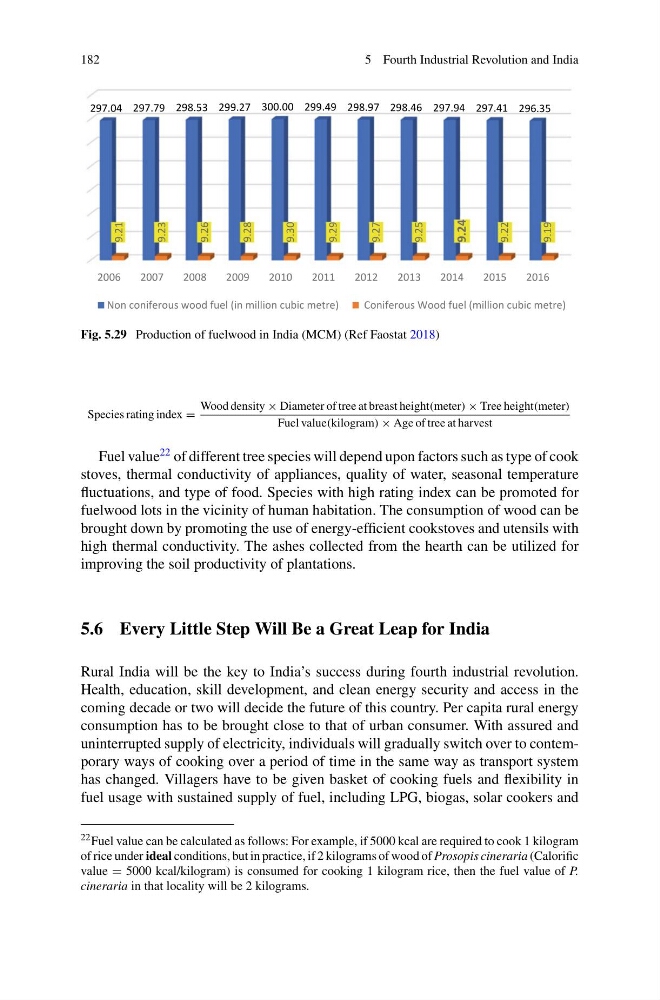
Fig. 5.29 Production of fuelwood in India (MCM) (Ref Faostat 2018)
Species rating index =
Wood density × Diameter of tree at breast height(meter) × Tree height(meter)
Fuel value(kilogram) × Age of tree at harvest
Fuel value
22 of different tree species will depend upon factors such as type of cook
stoves, thermal conductivity of appliances, quality of water, seasonal temperature
fluctuations, and type of food. Species with high rating index can be promoted for
fuelwood lots in the vicinity of human habitation. The consumption of wood can be
brought down by promoting the use of energy-efficient cookstoves and utensils with
high thermal conductivity. The ashes collected from the hearth can be utilized for
improving the soil productivity of plantations.
5.6 Every Little Step Will Be a Great Leap for India
Rural India will be the key to India’s success during fourth industrial revolution.
Health, education, skill development, and clean energy security and access in the
coming decade or two will decide the future of this country. Per capita rural energy
consumption has to be brought close to that of urban consumer. With assured and
uninterrupted supply of electricity, individuals will gradually switch over to contemporary ways of cooking over a period of time in the same way as transport system
has changed. Villagers have to be given basket of cooking fuels and flexibility in
fuel usage with sustained supply of fuel, including LPG, biogas, solar cookers and
22 Fuel value can be calculated as follows: For example, if 5000 kcal are required to cook 1 kilogram
of rice under ideal conditions, but in practice, if 2 kilograms of wood of Prosopis cineraria (Calorific
value = 5000 kcal/kilogram) is consumed for cooking 1 kilogram rice, then the fuel value of P.
cineraria in that locality will be 2 kilograms.
5 Fourth Industrial Revolution and India
2006
2007
2008
2009
2010
2011
2012
2013
2014
2015
2016
297.04 297.79 298.53 299.27 300.00 299.49 298.97 298.46 297.94 297.41 296.35
9.21
9.23
9.26
9.28
9.30
9.29
9.27
9.25
9.24
9.22
9.19
Non coniferous wood fuel (in million cubic metre)
Coniferous Wood fuel (million cubic metre)
Fig. 5.29 Production of fuelwood in India (MCM) (Ref Faostat 2018)
Species rating index =
Wood density × Diameter of tree at breast height(meter) × Tree height(meter)
Fuel value(kilogram) × Age of tree at harvest
Fuel value
22 of different tree species will depend upon factors such as type of cook
stoves, thermal conductivity of appliances, quality of water, seasonal temperature
fluctuations, and type of food. Species with high rating index can be promoted for
fuelwood lots in the vicinity of human habitation. The consumption of wood can be
brought down by promoting the use of energy-efficient cookstoves and utensils with
high thermal conductivity. The ashes collected from the hearth can be utilized for
improving the soil productivity of plantations.
5.6 Every Little Step Will Be a Great Leap for India
Rural India will be the key to India’s success during fourth industrial revolution.
Health, education, skill development, and clean energy security and access in the
coming decade or two will decide the future of this country. Per capita rural energy
consumption has to be brought close to that of urban consumer. With assured and
uninterrupted supply of electricity, individuals will gradually switch over to contemporary ways of cooking over a period of time in the same way as transport system
has changed. Villagers have to be given basket of cooking fuels and flexibility in
fuel usage with sustained supply of fuel, including LPG, biogas, solar cookers and
22 Fuel value can be calculated as follows: For example, if 5000 kcal are required to cook 1 kilogram
of rice under ideal conditions, but in practice, if 2 kilograms of wood of Prosopis cineraria (Calorific
value = 5000 kcal/kilogram) is consumed for cooking 1 kilogram rice, then the fuel value of P.
cineraria in that locality will be 2 kilograms.