

5.3 Carbon-Based Economies Will Eventually Prove Cataclysmic
161
Assessment
Framework
for Future of
producƟon
[Kearney,
2018]
Drivers of
producon
Innovaon and
technology
1 Availability and use of ICT
2 Digital security and privacy
Human capital
1 The number and capabilies of current labor force
2 Educaon , Migraon, and adapbility
Global trade and
investement
1 Trade - Openness and Facilitaon
2 - Investment
3 - Infrastructure - Transport and Electricty
Instuonal
Framework
1 Efficiency
2 Effecveness
3 Rule of Law
Sustainable
Resources
1 Energy
2 Emission
3 Water
Demand
Environment
1 Market size
2 Consumer Sophisca
Structure of
produc
Complexity
Uniqueness of Product
Scale
Total volume of output
Value addi
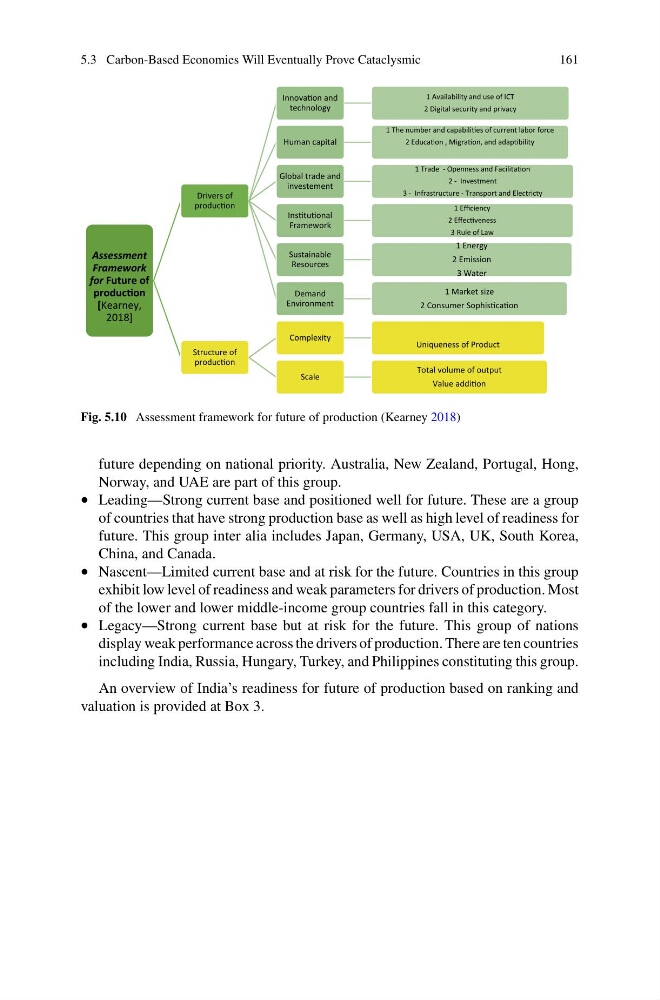
Fig. 5.10 Assessment framework for future of production (Kearney 2018)
future depending on national priority. Australia, New Zealand, Portugal, Hong,
Norway, and UAE are part of this group.
• Leading—Strong current base and positioned well for future. These are a group
of countries that have strong production base as well as high level of readiness for
future. This group inter alia includes Japan, Germany, USA, UK, South Korea,
China, and Canada.
• Nascent—Limited current base and at risk for the future. Countries in this group
exhibit low level of readiness and weak parameters for drivers of production. Most
of the lower and lower middle-income group countries fall in this category.
• Legacy—Strong current base but at risk for the future. This group of nations
display weak performance across the drivers of production. There are ten countries
including India, Russia, Hungary, Turkey, and Philippines constituting this group.
An overview of India’s readiness for future of production based on ranking and
valuation is provided at Box 3.
161
Assessment
Framework
for Future of
producƟon
[Kearney,
2018]
Drivers of
producon
Innovaon and
technology
1 Availability and use of ICT
2 Digital security and privacy
Human capital
1 The number and capabilies of current labor force
2 Educaon , Migraon, and adapbility
Global trade and
investement
1 Trade - Openness and Facilitaon
2 - Investment
3 - Infrastructure - Transport and Electricty
Instuonal
Framework
1 Efficiency
2 Effecveness
3 Rule of Law
Sustainable
Resources
1 Energy
2 Emission
3 Water
Demand
Environment
1 Market size
2 Consumer Sophisca
Structure of
produc
Complexity
Uniqueness of Product
Scale
Total volume of output
Value addi
Fig. 5.10 Assessment framework for future of production (Kearney 2018)
future depending on national priority. Australia, New Zealand, Portugal, Hong,
Norway, and UAE are part of this group.
• Leading—Strong current base and positioned well for future. These are a group
of countries that have strong production base as well as high level of readiness for
future. This group inter alia includes Japan, Germany, USA, UK, South Korea,
China, and Canada.
• Nascent—Limited current base and at risk for the future. Countries in this group
exhibit low level of readiness and weak parameters for drivers of production. Most
of the lower and lower middle-income group countries fall in this category.
• Legacy—Strong current base but at risk for the future. This group of nations
display weak performance across the drivers of production. There are ten countries
including India, Russia, Hungary, Turkey, and Philippines constituting this group.
An overview of India’s readiness for future of production based on ranking and
valuation is provided at Box 3.