

3.6 Biomass Fuels: A Threat to India’s Forests …
111
2007-08
2008-09
2009-10
2010-11
2011-12
2012-13
2013-14
2014-15
2015-16
2016-17(P)
97.8
98.2
97.8
97.7
97.8
98.0
97.8
97.6
97.4
96.4
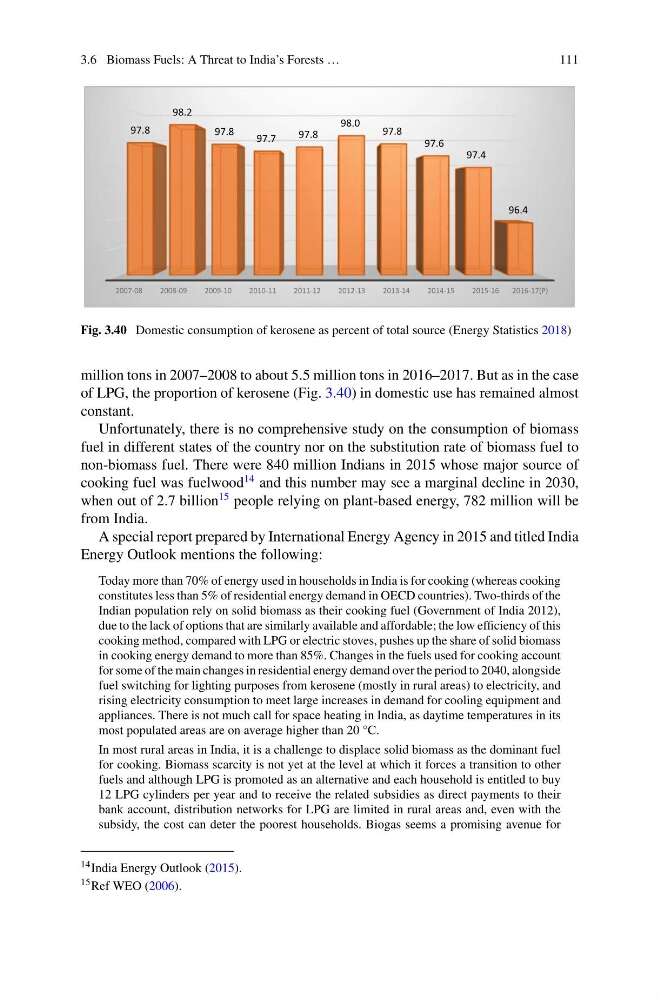
Fig. 3.40 Domestic consumption of kerosene as percent of total source (Energy Statistics 2018)
million tons in 2007–2008 to about 5.5 million tons in 2016–2017. But as in the case
of LPG, the proportion of kerosene (Fig. 3.40) in domestic use has remained almost
constant.
Unfortunately, there is no comprehensive study on the consumption of biomass
fuel in different states of the country nor on the substitution rate of biomass fuel to
non-biomass fuel. There were 840 million Indians in 2015 whose major source of
cooking fuel was fuelwood
14 and this number may see a marginal decline in 2030,
when out of 2.7 billion
15 people relying on plant-based energy, 782 million will be
from India.
A special report prepared by International Energy Agency in 2015 and titled India
Energy Outlook mentions the following:
Today more than 70% of energy used in households in India is for cooking (whereas cooking
constitutes less than 5% of residential energy demand in OECD countries). Two-thirds of the
Indian population rely on solid biomass as their cooking fuel (Government of India 2012),
due to the lack of options that are similarly available and affordable; the low efficiency of this
cooking method, compared with LPG or electric stoves, pushes up the share of solid biomass
in cooking energy demand to more than 85%. Changes in the fuels used for cooking account
for some of the main changes in residential energy demand over the period to 2040, alongside
fuel switching for lighting purposes from kerosene (mostly in rural areas) to electricity, and
rising electricity consumption to meet large increases in demand for cooling equipment and
appliances. There is not much call for space heating in India, as daytime temperatures in its
most populated areas are on average higher than 20 °C.
In most rural areas in India, it is a challenge to displace solid biomass as the dominant fuel
for cooking. Biomass scarcity is not yet at the level at which it forces a transition to other
fuels and although LPG is promoted as an alternative and each household is entitled to buy
12 LPG cylinders per year and to receive the related subsidies as direct payments to their
bank account, distribution networks for LPG are limited in rural areas and, even with the
subsidy, the cost can deter the poorest households. Biogas seems a promising avenue for
14 India Energy Outlook (2015).
15 Ref WEO (2006).
111
2007-08
2008-09
2009-10
2010-11
2011-12
2012-13
2013-14
2014-15
2015-16
2016-17(P)
97.8
98.2
97.8
97.7
97.8
98.0
97.8
97.6
97.4
96.4
Fig. 3.40 Domestic consumption of kerosene as percent of total source (Energy Statistics 2018)
million tons in 2007–2008 to about 5.5 million tons in 2016–2017. But as in the case
of LPG, the proportion of kerosene (Fig. 3.40) in domestic use has remained almost
constant.
Unfortunately, there is no comprehensive study on the consumption of biomass
fuel in different states of the country nor on the substitution rate of biomass fuel to
non-biomass fuel. There were 840 million Indians in 2015 whose major source of
cooking fuel was fuelwood
14 and this number may see a marginal decline in 2030,
when out of 2.7 billion
15 people relying on plant-based energy, 782 million will be
from India.
A special report prepared by International Energy Agency in 2015 and titled India
Energy Outlook mentions the following:
Today more than 70% of energy used in households in India is for cooking (whereas cooking
constitutes less than 5% of residential energy demand in OECD countries). Two-thirds of the
Indian population rely on solid biomass as their cooking fuel (Government of India 2012),
due to the lack of options that are similarly available and affordable; the low efficiency of this
cooking method, compared with LPG or electric stoves, pushes up the share of solid biomass
in cooking energy demand to more than 85%. Changes in the fuels used for cooking account
for some of the main changes in residential energy demand over the period to 2040, alongside
fuel switching for lighting purposes from kerosene (mostly in rural areas) to electricity, and
rising electricity consumption to meet large increases in demand for cooling equipment and
appliances. There is not much call for space heating in India, as daytime temperatures in its
most populated areas are on average higher than 20 °C.
In most rural areas in India, it is a challenge to displace solid biomass as the dominant fuel
for cooking. Biomass scarcity is not yet at the level at which it forces a transition to other
fuels and although LPG is promoted as an alternative and each household is entitled to buy
12 LPG cylinders per year and to receive the related subsidies as direct payments to their
bank account, distribution networks for LPG are limited in rural areas and, even with the
subsidy, the cost can deter the poorest households. Biogas seems a promising avenue for
14 India Energy Outlook (2015).
15 Ref WEO (2006).