

60
3 Modification of the Work Function
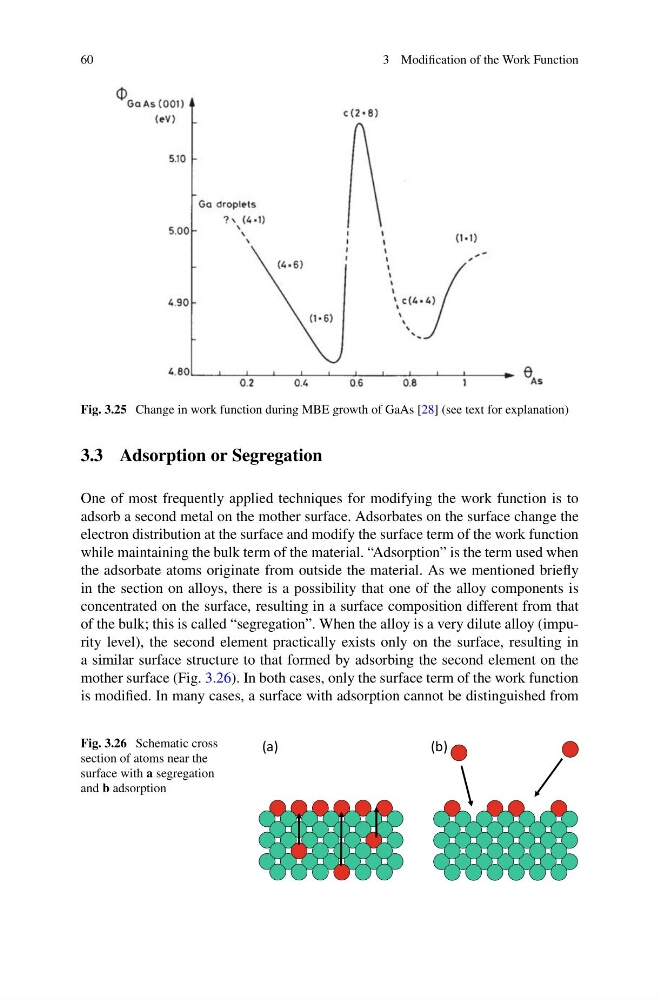
Fig. 3.25 Change in work function during MBE growth of GaAs [28] (see text for explanation)
3.3 Adsorption or Segregation
One of most frequently applied techniques for modifying the work function is to
adsorb a second metal on the mother surface. Adsorbates on the surface change the
electron distribution at the surface and modify the surface term of the work function
while maintaining the bulk term of the material. “Adsorption” is the term used when
the adsorbate atoms originate from outside the material. As we mentioned briefly
in the section on alloys, there is a possibility that one of the alloy components is
concentrated on the surface, resulting in a surface composition different from that
of the bulk; this is called “segregation”. When the alloy is a very dilute alloy (impurity level), the second element practically exists only on the surface, resulting in
a similar surface structure to that formed by adsorbing the second element on the
mother surface (Fig. 3.26). In both cases, only the surface term of the work function
is modified. In many cases, a surface with adsorption cannot be distinguished from
Fig. 3.26 Schematic cross
section of atoms near the
surface with a segregation
and b adsorption
(b)
(a)
3 Modification of the Work Function
Fig. 3.25 Change in work function during MBE growth of GaAs [28] (see text for explanation)
3.3 Adsorption or Segregation
One of most frequently applied techniques for modifying the work function is to
adsorb a second metal on the mother surface. Adsorbates on the surface change the
electron distribution at the surface and modify the surface term of the work function
while maintaining the bulk term of the material. “Adsorption” is the term used when
the adsorbate atoms originate from outside the material. As we mentioned briefly
in the section on alloys, there is a possibility that one of the alloy components is
concentrated on the surface, resulting in a surface composition different from that
of the bulk; this is called “segregation”. When the alloy is a very dilute alloy (impurity level), the second element practically exists only on the surface, resulting in
a similar surface structure to that formed by adsorbing the second element on the
mother surface (Fig. 3.26). In both cases, only the surface term of the work function
is modified. In many cases, a surface with adsorption cannot be distinguished from
Fig. 3.26 Schematic cross
section of atoms near the
surface with a segregation
and b adsorption
(b)
(a)