

2.2 Origin of the Work Function
11
atom
atom
valence band electrons
energy
atomic nucleus
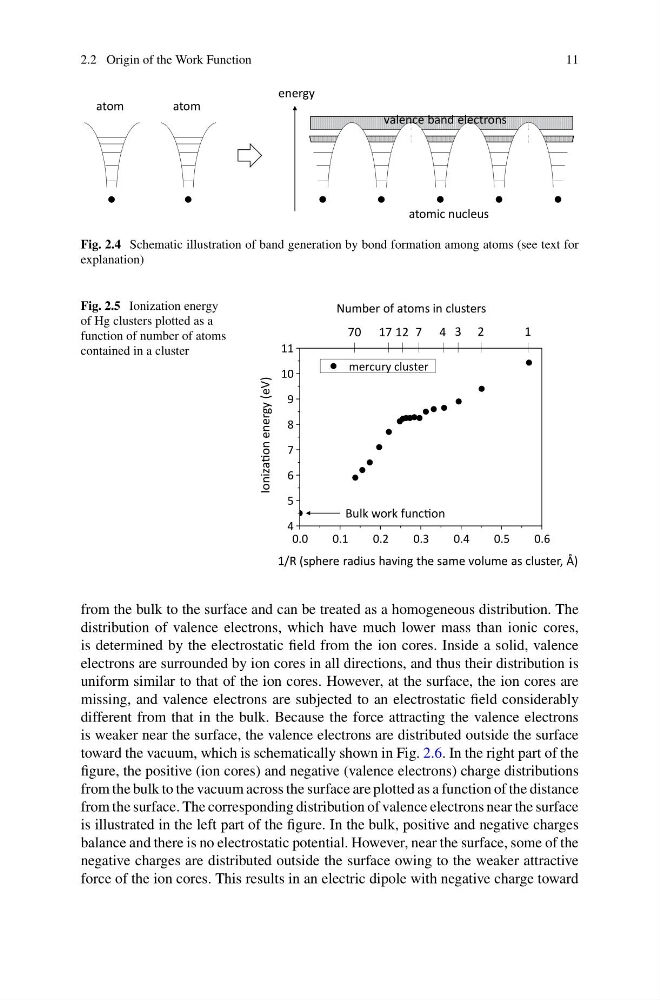
Fig. 2.4 Schematic illustration of band generation by bond formation among atoms (see text for
explanation)
Fig. 2.5 Ionization energy
of Hg clusters plotted as a
function of number of atoms
contained in a cluster
0.0
0.1
0.2
0.3
0.4
0.5
0.6
4
5
6
7
8
9
10
11
mercury cluster
Bulk work funccon
1
2
3
4
7
12
17
70
Number of atoms in clusters
1/R (sphere radius having the same volume as cluster, Å)
Ionizaaon energy (eV)
from the bulk to the surface and can be treated as a homogeneous distribution. The
distribution of valence electrons, which have much lower mass than ionic cores,
is determined by the electrostatic field from the ion cores. Inside a solid, valence
electrons are surrounded by ion cores in all directions, and thus their distribution is
uniform similar to that of the ion cores. However, at the surface, the ion cores are
missing, and valence electrons are subjected to an electrostatic field considerably
different from that in the bulk. Because the force attracting the valence electrons
is weaker near the surface, the valence electrons are distributed outside the surface
toward the vacuum, which is schematically shown in Fig. 2.6. In the right part of the
figure, the positive (ion cores) and negative (valence electrons) charge distributions
from the bulk to the vacuum across the surface are plotted as a function of the distance
from the surface. The corresponding distribution of valence electrons near the surface
is illustrated in the left part of the figure. In the bulk, positive and negative charges
balance and there is no electrostatic potential. However, near the surface, some of the
negative charges are distributed outside the surface owing to the weaker attractive
force of the ion cores. This results in an electric dipole with negative charge toward
11
atom
atom
valence band electrons
energy
atomic nucleus
Fig. 2.4 Schematic illustration of band generation by bond formation among atoms (see text for
explanation)
Fig. 2.5 Ionization energy
of Hg clusters plotted as a
function of number of atoms
contained in a cluster
0.0
0.1
0.2
0.3
0.4
0.5
0.6
4
5
6
7
8
9
10
11
mercury cluster
Bulk work funccon
1
2
3
4
7
12
17
70
Number of atoms in clusters
1/R (sphere radius having the same volume as cluster, Å)
Ionizaaon energy (eV)
from the bulk to the surface and can be treated as a homogeneous distribution. The
distribution of valence electrons, which have much lower mass than ionic cores,
is determined by the electrostatic field from the ion cores. Inside a solid, valence
electrons are surrounded by ion cores in all directions, and thus their distribution is
uniform similar to that of the ion cores. However, at the surface, the ion cores are
missing, and valence electrons are subjected to an electrostatic field considerably
different from that in the bulk. Because the force attracting the valence electrons
is weaker near the surface, the valence electrons are distributed outside the surface
toward the vacuum, which is schematically shown in Fig. 2.6. In the right part of the
figure, the positive (ion cores) and negative (valence electrons) charge distributions
from the bulk to the vacuum across the surface are plotted as a function of the distance
from the surface. The corresponding distribution of valence electrons near the surface
is illustrated in the left part of the figure. In the bulk, positive and negative charges
balance and there is no electrostatic potential. However, near the surface, some of the
negative charges are distributed outside the surface owing to the weaker attractive
force of the ion cores. This results in an electric dipole with negative charge toward