

46
M. Hiramoto
3.2.1 Substrate Temperature Control
The effects of the substrate temperature on the photovoltaic properties of singlelayered cells of C 60 :H 2 Pc co-deposited films sandwiched between ITO and Ag
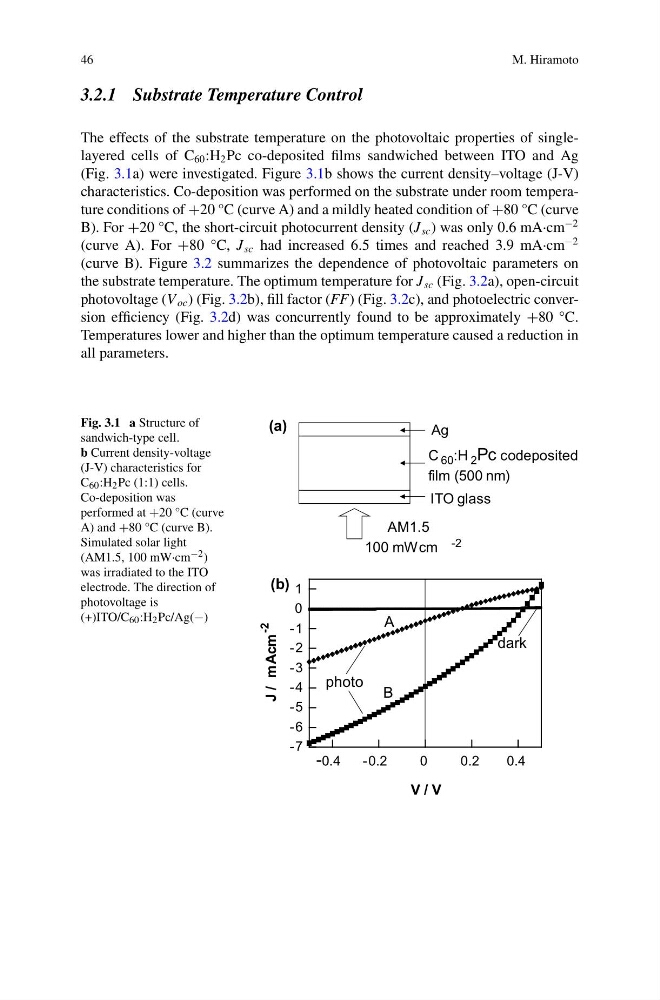
(Fig. 3.1a) were investigated. Figure 3.1b shows the current density–voltage (J-V)
characteristics. Co-deposition was performed on the substrate under room temperature conditions of +20 °C (curve A) and a mildly heated condition of +80 °C (curve
B). For +20 °C, the short-circuit photocurrent density (J sc ) was only 0.6 mA·cm
−2
(curve A). For +80 °C, J sc had increased 6.5 times and reached 3.9 mA·cm
−2
(curve B). Figure 3.2 summarizes the dependence of photovoltaic parameters on
the substrate temperature. The optimum temperature for J sc (Fig. 3.2a), open-circuit
photovoltage (V oc ) (Fig. 3.2b), fill factor (FF) (Fig. 3.2c), and photoelectric conversion efficiency (Fig. 3.2d) was concurrently found to be approximately +80 °C.
Temperatures lower and higher than the optimum temperature caused a reduction in
all parameters.
Fig. 3.1 a Structure of
sandwich-type cell.
b Current density-voltage
(J-V) characteristics for
C 60 :H 2 Pc (1:1) cells.
Co-deposition was
performed at +20 °C (curve
A) and +80 °C (curve B).
Simulated solar light
(AM1.5, 100 mW·cm −2 )
was irradiated to the ITO
electrode. The direction of
photovoltage is
(+)ITO/C 60 :H 2 Pc/Ag(−)
A
B
-7
-6
-5
-4
-3
-2
-1
0
1
-0.4 -0.2
0
0.2
0.4
J / mAcm
-2
V / V
dark
photo
Ag
C 60 :H 2 Pc codeposited
film (500 nm)
ITO glass
AM1.5
100 mWcm -2
(a)
(b)
M. Hiramoto
3.2.1 Substrate Temperature Control
The effects of the substrate temperature on the photovoltaic properties of singlelayered cells of C 60 :H 2 Pc co-deposited films sandwiched between ITO and Ag
(Fig. 3.1a) were investigated. Figure 3.1b shows the current density–voltage (J-V)
characteristics. Co-deposition was performed on the substrate under room temperature conditions of +20 °C (curve A) and a mildly heated condition of +80 °C (curve
B). For +20 °C, the short-circuit photocurrent density (J sc ) was only 0.6 mA·cm
−2
(curve A). For +80 °C, J sc had increased 6.5 times and reached 3.9 mA·cm
−2
(curve B). Figure 3.2 summarizes the dependence of photovoltaic parameters on
the substrate temperature. The optimum temperature for J sc (Fig. 3.2a), open-circuit
photovoltage (V oc ) (Fig. 3.2b), fill factor (FF) (Fig. 3.2c), and photoelectric conversion efficiency (Fig. 3.2d) was concurrently found to be approximately +80 °C.
Temperatures lower and higher than the optimum temperature caused a reduction in
all parameters.
Fig. 3.1 a Structure of
sandwich-type cell.
b Current density-voltage
(J-V) characteristics for
C 60 :H 2 Pc (1:1) cells.
Co-deposition was
performed at +20 °C (curve
A) and +80 °C (curve B).
Simulated solar light
(AM1.5, 100 mW·cm −2 )
was irradiated to the ITO
electrode. The direction of
photovoltage is
(+)ITO/C 60 :H 2 Pc/Ag(−)
A
B
-7
-6
-5
-4
-3
-2
-1
0
1
-0.4 -0.2
0
0.2
0.4
J / mAcm
-2
V / V
dark
photo
Ag
C 60 :H 2 Pc codeposited
film (500 nm)
ITO glass
AM1.5
100 mWcm -2
(a)
(b)