

2 A Path to the Blended Junction
31
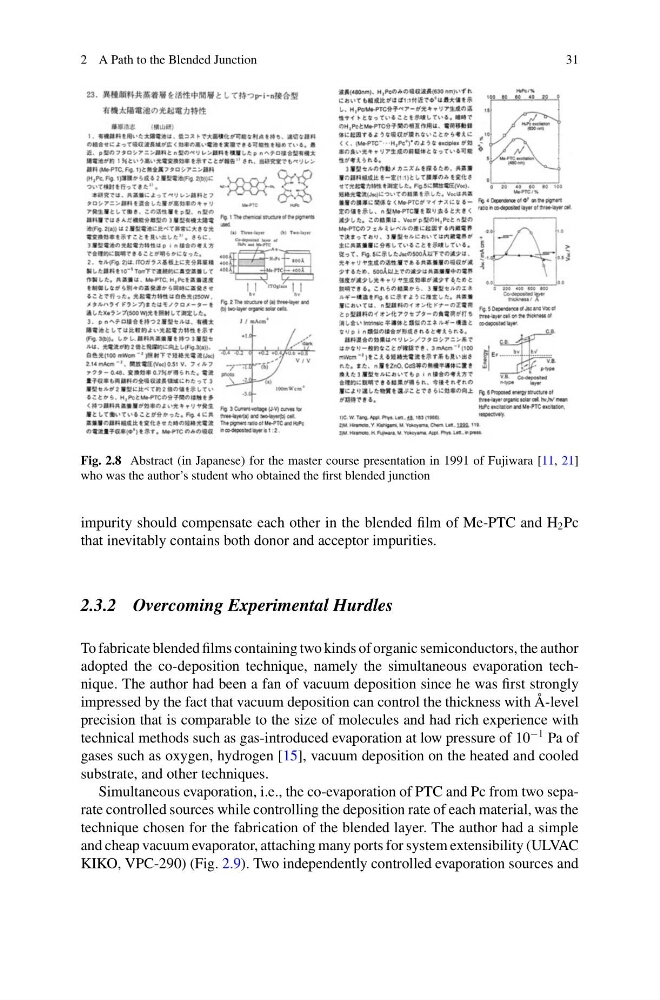
Fig. 2.8 Abstract (in Japanese) for the master course presentation in 1991 of Fujiwara [11, 21]
who was the author’s student who obtained the first blended junction
impurity should compensate each other in the blended film of Me-PTC and H 2 Pc
that inevitably contains both donor and acceptor impurities.
2.3.2 Overcoming Experimental Hurdles
To fabricate blended films containing two kinds of organic semiconductors, the author
adopted the co-deposition technique, namely the simultaneous evaporation technique. The author had been a fan of vacuum deposition since he was first strongly
impressed by the fact that vacuum deposition can control the thickness with Å-level
precision that is comparable to the size of molecules and had rich experience with
technical methods such as gas-introduced evaporation at low pressure of 10
−1 Pa of
gases such as oxygen, hydrogen [15], vacuum deposition on the heated and cooled
substrate, and other techniques.
Simultaneous evaporation, i.e., the co-evaporation of PTC and Pc from two separate controlled sources while controlling the deposition rate of each material, was the
technique chosen for the fabrication of the blended layer. The author had a simple
and cheap vacuum evaporator, attaching many ports for system extensibility (ULVAC
KIKO, VPC-290) (Fig. 2.9). Two independently controlled evaporation sources and
31
Fig. 2.8 Abstract (in Japanese) for the master course presentation in 1991 of Fujiwara [11, 21]
who was the author’s student who obtained the first blended junction
impurity should compensate each other in the blended film of Me-PTC and H 2 Pc
that inevitably contains both donor and acceptor impurities.
2.3.2 Overcoming Experimental Hurdles
To fabricate blended films containing two kinds of organic semiconductors, the author
adopted the co-deposition technique, namely the simultaneous evaporation technique. The author had been a fan of vacuum deposition since he was first strongly
impressed by the fact that vacuum deposition can control the thickness with Å-level
precision that is comparable to the size of molecules and had rich experience with
technical methods such as gas-introduced evaporation at low pressure of 10
−1 Pa of
gases such as oxygen, hydrogen [15], vacuum deposition on the heated and cooled
substrate, and other techniques.
Simultaneous evaporation, i.e., the co-evaporation of PTC and Pc from two separate controlled sources while controlling the deposition rate of each material, was the
technique chosen for the fabrication of the blended layer. The author had a simple
and cheap vacuum evaporator, attaching many ports for system extensibility (ULVAC
KIKO, VPC-290) (Fig. 2.9). Two independently controlled evaporation sources and