

16
M. Hiramoto
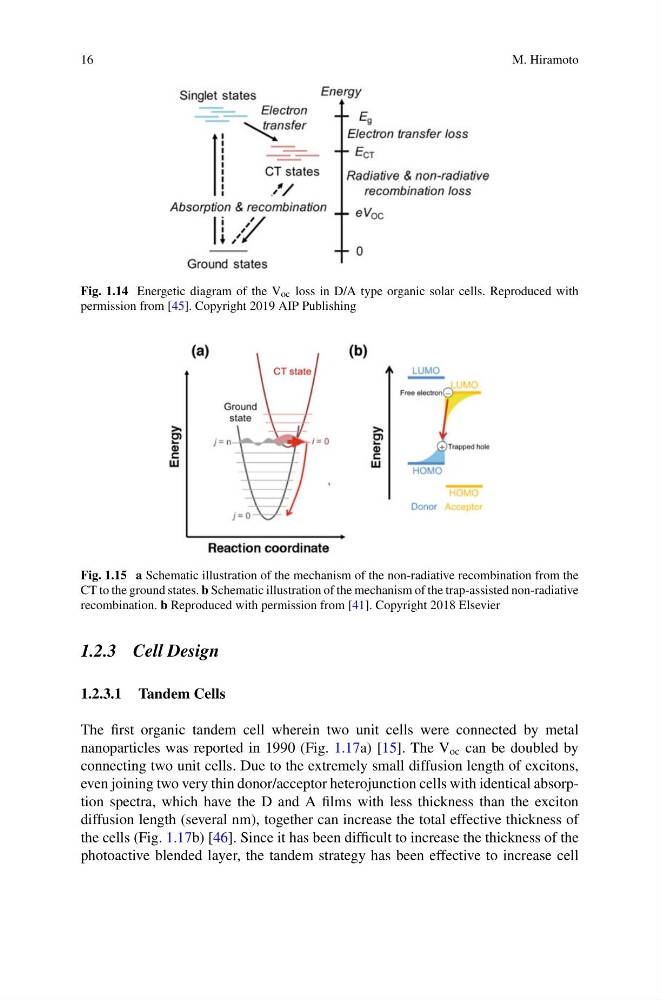
Fig. 1.14 Energetic diagram of the V oc loss in D/A type organic solar cells. Reproduced with
permission from [45]. Copyright 2019 AIP Publishing
Fig. 1.15 a Schematic illustration of the mechanism of the non-radiative recombination from the
CT to the ground states. b Schematic illustration of the mechanism of the trap-assisted non-radiative
recombination. b Reproduced with permission from [41]. Copyright 2018 Elsevier
1.2.3 Cell Design
1.2.3.1 Tandem Cells
The first organic tandem cell wherein two unit cells were connected by metal
nanoparticles was reported in 1990 (Fig. 1.17a) [15]. The V oc can be doubled by
connecting two unit cells. Due to the extremely small diffusion length of excitons,
even joining two very thin donor/acceptor heterojunction cells with identical absorption spectra, which have the D and A films with less thickness than the exciton
diffusion length (several nm), together can increase the total effective thickness of
the cells (Fig. 1.17b) [46]. Since it has been difficult to increase the thickness of the
photoactive blended layer, the tandem strategy has been effective to increase cell
M. Hiramoto
Fig. 1.14 Energetic diagram of the V oc loss in D/A type organic solar cells. Reproduced with
permission from [45]. Copyright 2019 AIP Publishing
Fig. 1.15 a Schematic illustration of the mechanism of the non-radiative recombination from the
CT to the ground states. b Schematic illustration of the mechanism of the trap-assisted non-radiative
recombination. b Reproduced with permission from [41]. Copyright 2018 Elsevier
1.2.3 Cell Design
1.2.3.1 Tandem Cells
The first organic tandem cell wherein two unit cells were connected by metal
nanoparticles was reported in 1990 (Fig. 1.17a) [15]. The V oc can be doubled by
connecting two unit cells. Due to the extremely small diffusion length of excitons,
even joining two very thin donor/acceptor heterojunction cells with identical absorption spectra, which have the D and A films with less thickness than the exciton
diffusion length (several nm), together can increase the total effective thickness of
the cells (Fig. 1.17b) [46]. Since it has been difficult to increase the thickness of the
photoactive blended layer, the tandem strategy has been effective to increase cell