

12
M. Hiramoto
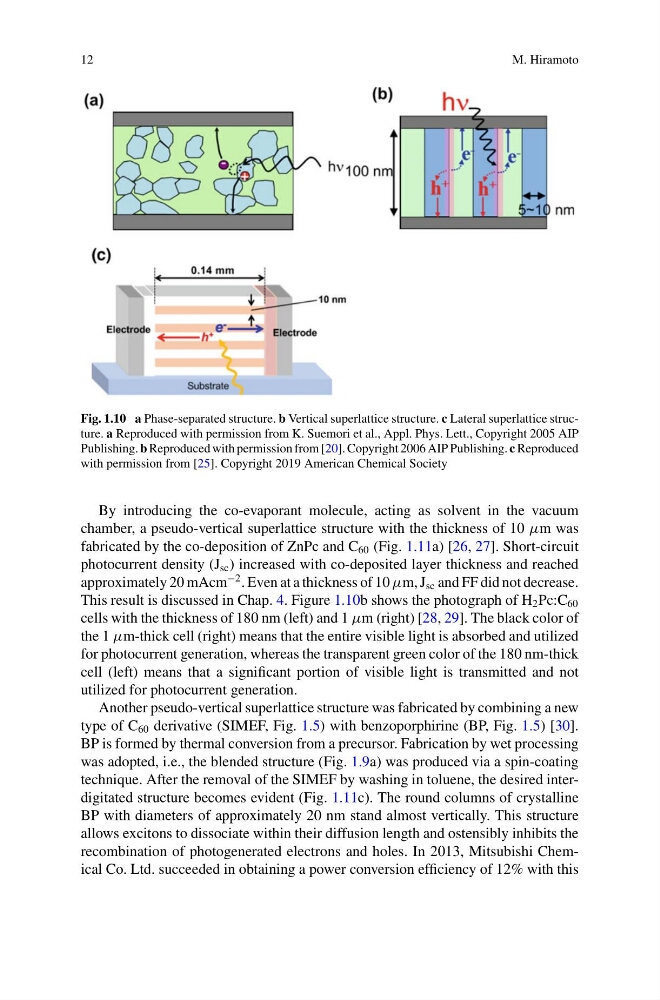
Fig. 1.10 a Phase-separated structure. b Vertical superlattice structure. c Lateral superlattice structure. a Reproduced with permission from K. Suemori et al., Appl. Phys. Lett., Copyright 2005 AIP
Publishing. b Reproduced with permission from [20]. Copyright 2006 AIP Publishing. c Reproduced
with permission from [25]. Copyright 2019 American Chemical Society
By introducing the co-evaporant molecule, acting as solvent in the vacuum
chamber, a pseudo-vertical superlattice structure with the thickness of 10 μm was
fabricated by the co-deposition of ZnPc and C 60 (Fig. 1.11a) [26, 27]. Short-circuit
photocurrent density (J sc ) increased with co-deposited layer thickness and reached
approximately 20 mAcm
−2 . Even at a thickness of 10 μm, J sc and FF did not decrease.
This result is discussed in Chap. 4. Figure 1.10b shows the photograph of H 2 Pc:C 60
cells with the thickness of 180 nm (left) and 1 μm (right) [28, 29]. The black color of
the 1 μm-thick cell (right) means that the entire visible light is absorbed and utilized
for photocurrent generation, whereas the transparent green color of the 180 nm-thick
cell (left) means that a significant portion of visible light is transmitted and not
utilized for photocurrent generation.
Another pseudo-vertical superlattice structure was fabricated by combining a new
type of C 60 derivative (SIMEF, Fig. 1.5) with benzoporphirine (BP, Fig. 1.5) [30].
BP is formed by thermal conversion from a precursor. Fabrication by wet processing
was adopted, i.e., the blended structure (Fig. 1.9a) was produced via a spin-coating
technique. After the removal of the SIMEF by washing in toluene, the desired interdigitated structure becomes evident (Fig. 1.11c). The round columns of crystalline
BP with diameters of approximately 20 nm stand almost vertically. This structure
allows excitons to dissociate within their diffusion length and ostensibly inhibits the
recombination of photogenerated electrons and holes. In 2013, Mitsubishi Chemical Co. Ltd. succeeded in obtaining a power conversion efficiency of 12% with this
M. Hiramoto
Fig. 1.10 a Phase-separated structure. b Vertical superlattice structure. c Lateral superlattice structure. a Reproduced with permission from K. Suemori et al., Appl. Phys. Lett., Copyright 2005 AIP
Publishing. b Reproduced with permission from [20]. Copyright 2006 AIP Publishing. c Reproduced
with permission from [25]. Copyright 2019 American Chemical Society
By introducing the co-evaporant molecule, acting as solvent in the vacuum
chamber, a pseudo-vertical superlattice structure with the thickness of 10 μm was
fabricated by the co-deposition of ZnPc and C 60 (Fig. 1.11a) [26, 27]. Short-circuit
photocurrent density (J sc ) increased with co-deposited layer thickness and reached
approximately 20 mAcm
−2 . Even at a thickness of 10 μm, J sc and FF did not decrease.
This result is discussed in Chap. 4. Figure 1.10b shows the photograph of H 2 Pc:C 60
cells with the thickness of 180 nm (left) and 1 μm (right) [28, 29]. The black color of
the 1 μm-thick cell (right) means that the entire visible light is absorbed and utilized
for photocurrent generation, whereas the transparent green color of the 180 nm-thick
cell (left) means that a significant portion of visible light is transmitted and not
utilized for photocurrent generation.
Another pseudo-vertical superlattice structure was fabricated by combining a new
type of C 60 derivative (SIMEF, Fig. 1.5) with benzoporphirine (BP, Fig. 1.5) [30].
BP is formed by thermal conversion from a precursor. Fabrication by wet processing
was adopted, i.e., the blended structure (Fig. 1.9a) was produced via a spin-coating
technique. After the removal of the SIMEF by washing in toluene, the desired interdigitated structure becomes evident (Fig. 1.11c). The round columns of crystalline
BP with diameters of approximately 20 nm stand almost vertically. This structure
allows excitons to dissociate within their diffusion length and ostensibly inhibits the
recombination of photogenerated electrons and holes. In 2013, Mitsubishi Chemical Co. Ltd. succeeded in obtaining a power conversion efficiency of 12% with this