

176
T. Fujita
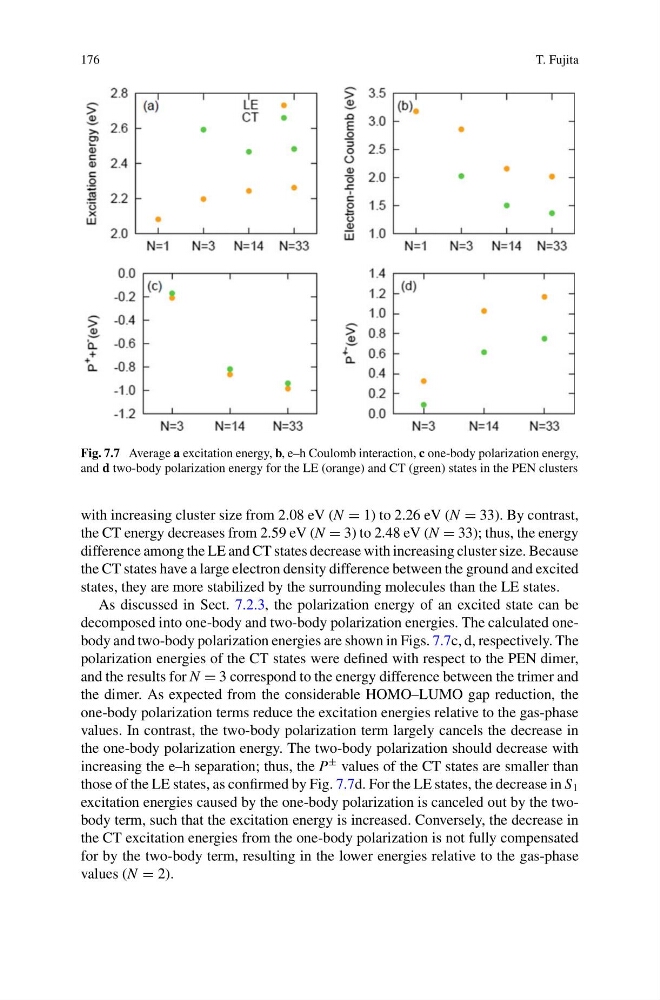
Fig. 7.7 Average a excitation energy, b, e–h Coulomb interaction, c one-body polarization energy,
and d two-body polarization energy for the LE (orange) and CT (green) states in the PEN clusters
with increasing cluster size from 2.08 eV (N = 1) to 2.26 eV (N = 33). By contrast,
the CT energy decreases from 2.59 eV (N = 3) to 2.48 eV (N = 33); thus, the energy
difference among the LE and CT states decrease with increasing cluster size. Because
the CT states have a large electron density difference between the ground and excited
states, they are more stabilized by the surrounding molecules than the LE states.
As discussed in Sect. 7.2.3, the polarization energy of an excited state can be
decomposed into one-body and two-body polarization energies. The calculated onebody and two-body polarization energies are shown in Figs. 7.7c, d, respectively. The
polarization energies of the CT states were defined with respect to the PEN dimer,
and the results for N = 3 correspond to the energy difference between the trimer and
the dimer. As expected from the considerable HOMO–LUMO gap reduction, the
one-body polarization terms reduce the excitation energies relative to the gas-phase
values. In contrast, the two-body polarization term largely cancels the decrease in
the one-body polarization energy. The two-body polarization should decrease with
increasing the e–h separation; thus, the P
± values of the CT states are smaller than
those of the LE states, as confirmed by Fig. 7.7d. For the LE states, the decrease in S 1
excitation energies caused by the one-body polarization is canceled out by the twobody term, such that the excitation energy is increased. Conversely, the decrease in
the CT excitation energies from the one-body polarization is not fully compensated
for by the two-body term, resulting in the lower energies relative to the gas-phase
values (N = 2).
T. Fujita
Fig. 7.7 Average a excitation energy, b, e–h Coulomb interaction, c one-body polarization energy,
and d two-body polarization energy for the LE (orange) and CT (green) states in the PEN clusters
with increasing cluster size from 2.08 eV (N = 1) to 2.26 eV (N = 33). By contrast,
the CT energy decreases from 2.59 eV (N = 3) to 2.48 eV (N = 33); thus, the energy
difference among the LE and CT states decrease with increasing cluster size. Because
the CT states have a large electron density difference between the ground and excited
states, they are more stabilized by the surrounding molecules than the LE states.
As discussed in Sect. 7.2.3, the polarization energy of an excited state can be
decomposed into one-body and two-body polarization energies. The calculated onebody and two-body polarization energies are shown in Figs. 7.7c, d, respectively. The
polarization energies of the CT states were defined with respect to the PEN dimer,
and the results for N = 3 correspond to the energy difference between the trimer and
the dimer. As expected from the considerable HOMO–LUMO gap reduction, the
one-body polarization terms reduce the excitation energies relative to the gas-phase
values. In contrast, the two-body polarization term largely cancels the decrease in
the one-body polarization energy. The two-body polarization should decrease with
increasing the e–h separation; thus, the P
± values of the CT states are smaller than
those of the LE states, as confirmed by Fig. 7.7d. For the LE states, the decrease in S 1
excitation energies caused by the one-body polarization is canceled out by the twobody term, such that the excitation energy is increased. Conversely, the decrease in
the CT excitation energies from the one-body polarization is not fully compensated
for by the two-body term, resulting in the lower energies relative to the gas-phase
values (N = 2).