

2 JAPAN’S ENERGY POLICY AND COMMUNITY POWER …
31
0%
0%
0%
1%
1%
1%
1%
1%
1%
1%
1%
2%
2%
3%
5%
17%
14%
12%
10%
10%
8%
8%
8%
8%
9%
9%
8%
9%
9%
10%
15%
22%
22%
22%
26%
24%
27%
28%
29%
29%
40%
42%
43%
46%
44%
5%
10%
10%
14%
18%
26%
25%
25%
25%
25%
25%
28%
30%
31%
32%
46%
27%
29%
19%
11%
11%
13%
12%
7%
8%
14%
18%
15%
11%
9%
17%
27%
27%
34%
34%
31%
26%
26%
29%
29%
11%
2%
1%
0
1%
1
0
1200
2400
3600
4800
6000
7200
8400
9600
10800
12000
1980
1985
1990
1995
2000
2005
2007
2008
2009
2010
2011
2012
2013
2014
2015
Geothermal & Renewables
Hydroelectric
Natural Gas
Coal
Oil etc.
Nuclear
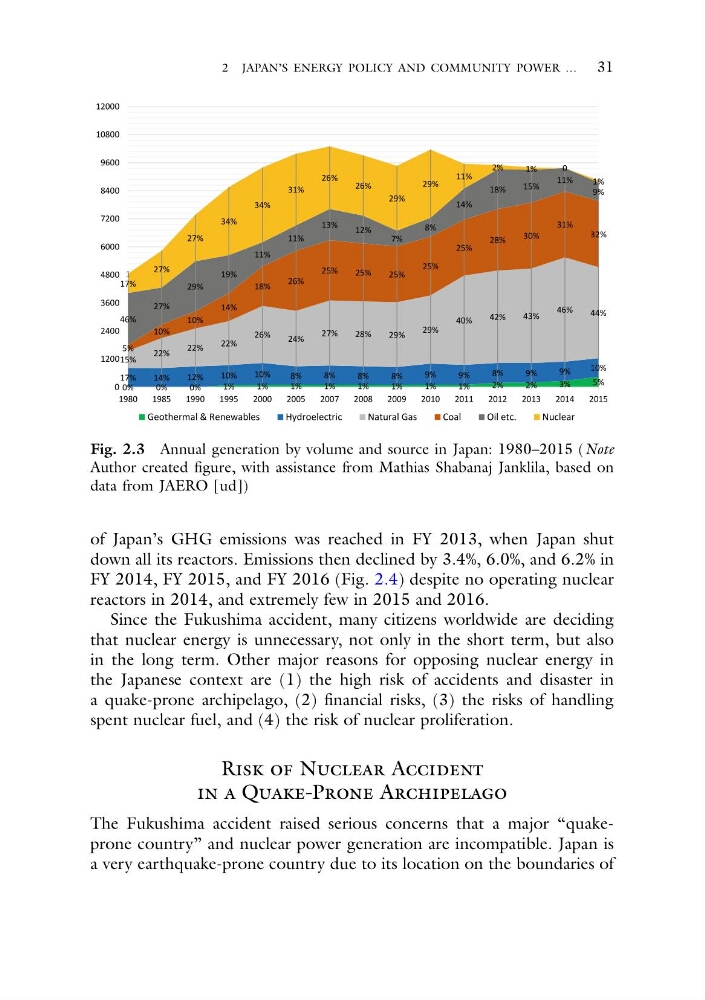
Fig. 2.3 Annual generation by volume and source in Japan: 1980–2015 (Note
Author created figure, with assistance from Mathias Shabanaj Janklila, based on
data from JAERO [ud])
of Japan’s GHG emissions was reached in FY 2013, when Japan shut
down all its reactors. Emissions then declined by 3.4%, 6.0%, and 6.2% in
FY 2014, FY 2015, and FY 2016 (Fig. 2.4) despite no operating nuclear
reactors in 2014, and extremely few in 2015 and 2016.
Since the Fukushima accident, many citizens worldwide are deciding
that nuclear energy is unnecessary, not only in the short term, but also
in the long term. Other major reasons for opposing nuclear energy in
the Japanese context are (1) the high risk of accidents and disaster in
a quake-prone archipelago, (2) financial risks, (3) the risks of handling
spent nuclear fuel, and (4) the risk of nuclear proliferation.
Risk of Nuclear Accident
in a Quake-Prone Archipelago
The Fukushima accident raised serious concerns that a major “quakeprone country” and nuclear power generation are incompatible. Japan is
a very earthquake-prone country due to its location on the boundaries of
31
0%
0%
0%
1%
1%
1%
1%
1%
1%
1%
1%
2%
2%
3%
5%
17%
14%
12%
10%
10%
8%
8%
8%
8%
9%
9%
8%
9%
9%
10%
15%
22%
22%
22%
26%
24%
27%
28%
29%
29%
40%
42%
43%
46%
44%
5%
10%
10%
14%
18%
26%
25%
25%
25%
25%
25%
28%
30%
31%
32%
46%
27%
29%
19%
11%
11%
13%
12%
7%
8%
14%
18%
15%
11%
9%
17%
27%
27%
34%
34%
31%
26%
26%
29%
29%
11%
2%
1%
0
1%
1
0
1200
2400
3600
4800
6000
7200
8400
9600
10800
12000
1980
1985
1990
1995
2000
2005
2007
2008
2009
2010
2011
2012
2013
2014
2015
Geothermal & Renewables
Hydroelectric
Natural Gas
Coal
Oil etc.
Nuclear
Fig. 2.3 Annual generation by volume and source in Japan: 1980–2015 (Note
Author created figure, with assistance from Mathias Shabanaj Janklila, based on
data from JAERO [ud])
of Japan’s GHG emissions was reached in FY 2013, when Japan shut
down all its reactors. Emissions then declined by 3.4%, 6.0%, and 6.2% in
FY 2014, FY 2015, and FY 2016 (Fig. 2.4) despite no operating nuclear
reactors in 2014, and extremely few in 2015 and 2016.
Since the Fukushima accident, many citizens worldwide are deciding
that nuclear energy is unnecessary, not only in the short term, but also
in the long term. Other major reasons for opposing nuclear energy in
the Japanese context are (1) the high risk of accidents and disaster in
a quake-prone archipelago, (2) financial risks, (3) the risks of handling
spent nuclear fuel, and (4) the risk of nuclear proliferation.
Risk of Nuclear Accident
in a Quake-Prone Archipelago
The Fukushima accident raised serious concerns that a major “quakeprone country” and nuclear power generation are incompatible. Japan is
a very earthquake-prone country due to its location on the boundaries of