

252 N. H. NGUYEN ET AL.
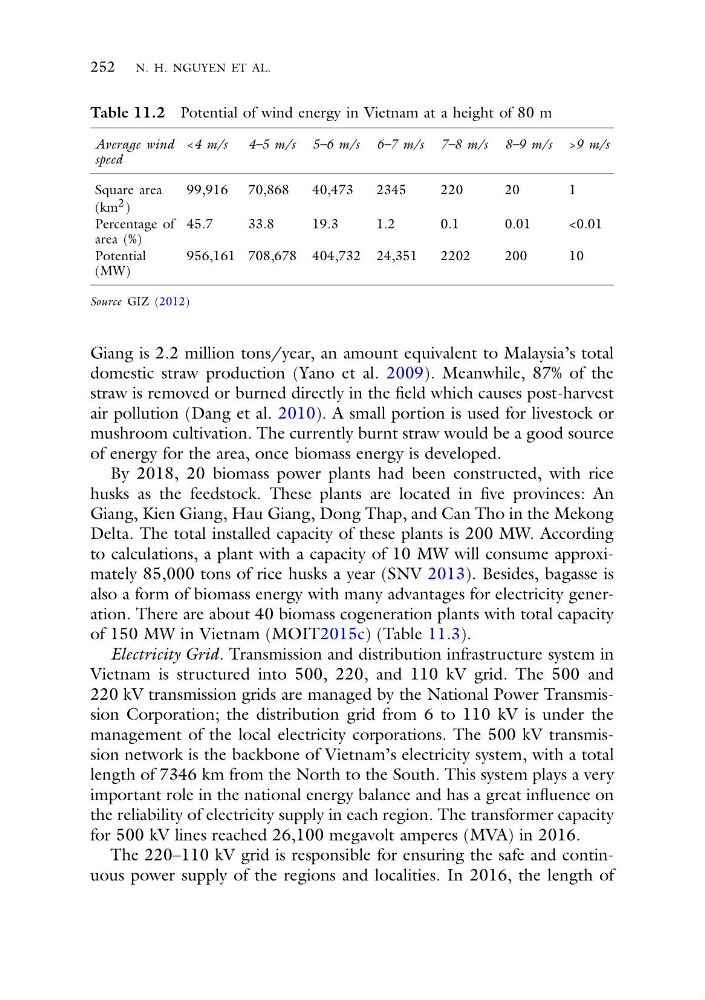
Table 11.2 Potential of wind energy in Vietnam at a height of 80 m
Average wind
speed
<4 m/s
4–5 m/s 5–6 m/s 6–7 m/s 7–8 m/s 8–9 m/s >9 m/s
Square area
(km 2 )
99,916 70,868
40,473
2345
220
20
1
Percentage of
area (%)
45.7
33.8
19.3
1.2
0.1
0.01
<0.01
Potential
(MW)
956,161 708,678 404,732 24,351
2202
200
10
Source GIZ (2012)
Giang is 2.2 million tons/year, an amount equivalent to Malaysia’s total
domestic straw production (Yano et al. 2009). Meanwhile, 87% of the
straw is removed or burned directly in the field which causes post-harvest
air pollution (Dang et al. 2010). A small portion is used for livestock or
mushroom cultivation. The currently burnt straw would be a good source
of energy for the area, once biomass energy is developed.
By 2018, 20 biomass power plants had been constructed, with rice
husks as the feedstock. These plants are located in five provinces: An
Giang, Kien Giang, Hau Giang, Dong Thap, and Can Tho in the Mekong
Delta. The total installed capacity of these plants is 200 MW. According
to calculations, a plant with a capacity of 10 MW will consume approximately 85,000 tons of rice husks a year (SNV 2013). Besides, bagasse is
also a form of biomass energy with many advantages for electricity generation. There are about 40 biomass cogeneration plants with total capacity
of 150 MW in Vietnam (MOIT2015c) (Table 11.3).
Electricity Grid. Transmission and distribution infrastructure system in
Vietnam is structured into 500, 220, and 110 kV grid. The 500 and
220 kV transmission grids are managed by the National Power Transmission Corporation; the distribution grid from 6 to 110 kV is under the
management of the local electricity corporations. The 500 kV transmission network is the backbone of Vietnam’s electricity system, with a total
length of 7346 km from the North to the South. This system plays a very
important role in the national energy balance and has a great influence on
the reliability of electricity supply in each region. The transformer capacity
for 500 kV lines reached 26,100 megavolt amperes (MVA) in 2016.
The 220–110 kV grid is responsible for ensuring the safe and continuous power supply of the regions and localities. In 2016, the length of
Table 11.2 Potential of wind energy in Vietnam at a height of 80 m
Average wind
speed
<4 m/s
4–5 m/s 5–6 m/s 6–7 m/s 7–8 m/s 8–9 m/s >9 m/s
Square area
(km 2 )
99,916 70,868
40,473
2345
220
20
1
Percentage of
area (%)
45.7
33.8
19.3
1.2
0.1
0.01
<0.01
Potential
(MW)
956,161 708,678 404,732 24,351
2202
200
10
Source GIZ (2012)
Giang is 2.2 million tons/year, an amount equivalent to Malaysia’s total
domestic straw production (Yano et al. 2009). Meanwhile, 87% of the
straw is removed or burned directly in the field which causes post-harvest
air pollution (Dang et al. 2010). A small portion is used for livestock or
mushroom cultivation. The currently burnt straw would be a good source
of energy for the area, once biomass energy is developed.
By 2018, 20 biomass power plants had been constructed, with rice
husks as the feedstock. These plants are located in five provinces: An
Giang, Kien Giang, Hau Giang, Dong Thap, and Can Tho in the Mekong
Delta. The total installed capacity of these plants is 200 MW. According
to calculations, a plant with a capacity of 10 MW will consume approximately 85,000 tons of rice husks a year (SNV 2013). Besides, bagasse is
also a form of biomass energy with many advantages for electricity generation. There are about 40 biomass cogeneration plants with total capacity
of 150 MW in Vietnam (MOIT2015c) (Table 11.3).
Electricity Grid. Transmission and distribution infrastructure system in
Vietnam is structured into 500, 220, and 110 kV grid. The 500 and
220 kV transmission grids are managed by the National Power Transmission Corporation; the distribution grid from 6 to 110 kV is under the
management of the local electricity corporations. The 500 kV transmission network is the backbone of Vietnam’s electricity system, with a total
length of 7346 km from the North to the South. This system plays a very
important role in the national energy balance and has a great influence on
the reliability of electricity supply in each region. The transformer capacity
for 500 kV lines reached 26,100 megavolt amperes (MVA) in 2016.
The 220–110 kV grid is responsible for ensuring the safe and continuous power supply of the regions and localities. In 2016, the length of