

238 G. JINDAL ET AL.
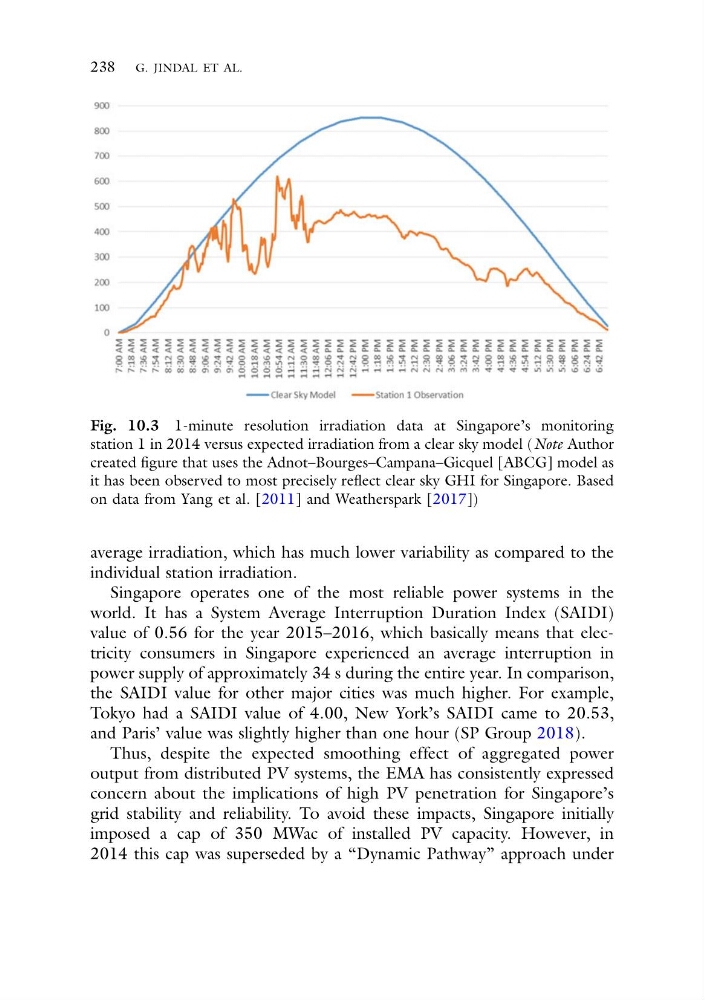
Fig. 10.3 1-minute resolution irradiation data at Singapore’s monitoring
station 1 in 2014 versus expected irradiation from a clear sky model (Note Author
created figure that uses the Adnot–Bourges–Campana–Gicquel [ABCG] model as
it has been observed to most precisely reflect clear sky GHI for Singapore. Based
on data from Yang et al. [2011] and Weatherspark [2017])
average irradiation, which has much lower variability as compared to the
individual station irradiation.
Singapore operates one of the most reliable power systems in the
world. It has a System Average Interruption Duration Index (SAIDI)
value of 0.56 for the year 2015–2016, which basically means that electricity consumers in Singapore experienced an average interruption in
power supply of approximately 34 s during the entire year. In comparison,
the SAIDI value for other major cities was much higher. For example,
Tokyo had a SAIDI value of 4.00, New York’s SAIDI came to 20.53,
and Paris’ value was slightly higher than one hour (SP Group 2018).
Thus, despite the expected smoothing effect of aggregated power
output from distributed PV systems, the EMA has consistently expressed
concern about the implications of high PV penetration for Singapore’s
grid stability and reliability. To avoid these impacts, Singapore initially
imposed a cap of 350 MWac of installed PV capacity. However, in
2014 this cap was superseded by a “Dynamic Pathway” approach under
Fig. 10.3 1-minute resolution irradiation data at Singapore’s monitoring
station 1 in 2014 versus expected irradiation from a clear sky model (Note Author
created figure that uses the Adnot–Bourges–Campana–Gicquel [ABCG] model as
it has been observed to most precisely reflect clear sky GHI for Singapore. Based
on data from Yang et al. [2011] and Weatherspark [2017])
average irradiation, which has much lower variability as compared to the
individual station irradiation.
Singapore operates one of the most reliable power systems in the
world. It has a System Average Interruption Duration Index (SAIDI)
value of 0.56 for the year 2015–2016, which basically means that electricity consumers in Singapore experienced an average interruption in
power supply of approximately 34 s during the entire year. In comparison,
the SAIDI value for other major cities was much higher. For example,
Tokyo had a SAIDI value of 4.00, New York’s SAIDI came to 20.53,
and Paris’ value was slightly higher than one hour (SP Group 2018).
Thus, despite the expected smoothing effect of aggregated power
output from distributed PV systems, the EMA has consistently expressed
concern about the implications of high PV penetration for Singapore’s
grid stability and reliability. To avoid these impacts, Singapore initially
imposed a cap of 350 MWac of installed PV capacity. However, in
2014 this cap was superseded by a “Dynamic Pathway” approach under