

5 THE POLITICS OF NUCLEAR POWER PLANT RESTARTS …
119
22%
23%
18%
10%
9%
0%
3%
1%
45%
37%
34%
18%
18%
14%
3%
0%
0%
5%
10%
15%
20%
25%
30%
35%
40%
45%
50%
Cannot
Understand
which
Companies are
Suitable
Cannot
Imagine to
Switch
Procedures are
Troublesome
Do not think
the price will
decline
No
dissaƟsfacƟon
with current
retailer
No reason
Other
Like current
retailer
Most Important
Secondary Reason
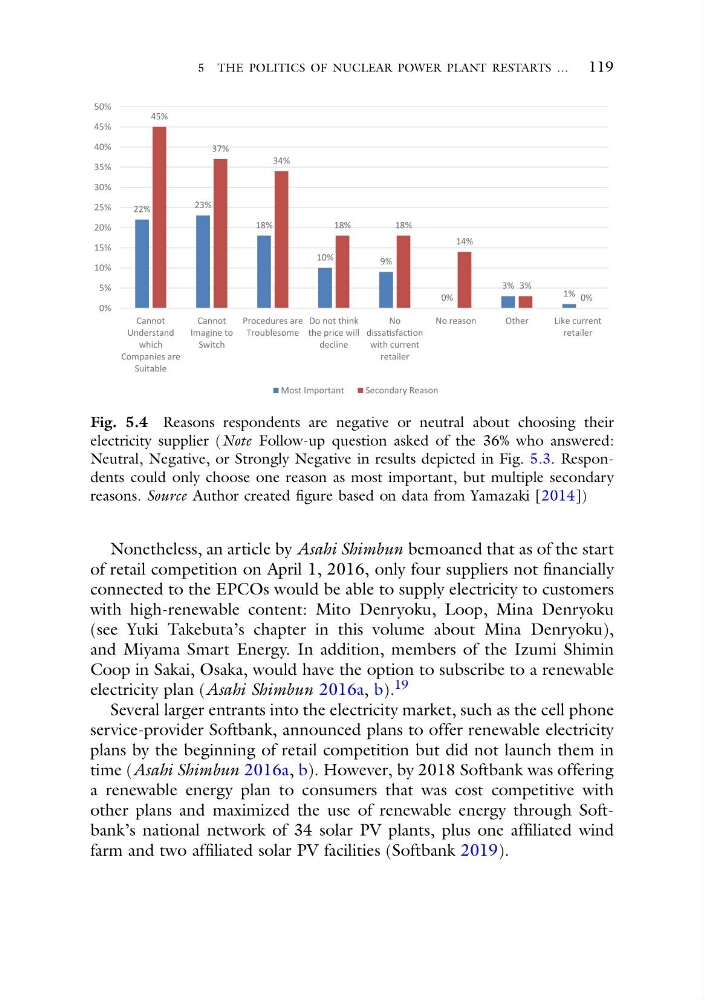
Fig. 5.4 Reasons respondents are negative or neutral about choosing their
electricity supplier (Note Follow-up question asked of the 36% who answered:
Neutral, Negative, or Strongly Negative in results depicted in Fig. 5.3. Respondents could only choose one reason as most important, but multiple secondary
reasons. Source Author created figure based on data from Yamazaki [2014])
Nonetheless, an article by Asahi Shimbun bemoaned that as of the start
of retail competition on April 1, 2016, only four suppliers not financially
connected to the EPCOs would be able to supply electricity to customers
with high-renewable content: Mito Denryoku, Loop, Mina Denryoku
(see Yuki Takebuta’s chapter in this volume about Mina Denryoku),
and Miyama Smart Energy. In addition, members of the Izumi Shimin
Coop in Sakai, Osaka, would have the option to subscribe to a renewable
electricity plan (Asahi Shimbun 2016a, b). 19
Several larger entrants into the electricity market, such as the cell phone
service-provider Softbank, announced plans to offer renewable electricity
plans by the beginning of retail competition but did not launch them in
time (Asahi Shimbun 2016a, b). However, by 2018 Softbank was offering
a renewable energy plan to consumers that was cost competitive with
other plans and maximized the use of renewable energy through Softbank’s national network of 34 solar PV plants, plus one affiliated wind
farm and two affiliated solar PV facilities (Softbank 2019).
119
22%
23%
18%
10%
9%
0%
3%
1%
45%
37%
34%
18%
18%
14%
3%
0%
0%
5%
10%
15%
20%
25%
30%
35%
40%
45%
50%
Cannot
Understand
which
Companies are
Suitable
Cannot
Imagine to
Switch
Procedures are
Troublesome
Do not think
the price will
decline
No
dissaƟsfacƟon
with current
retailer
No reason
Other
Like current
retailer
Most Important
Secondary Reason
Fig. 5.4 Reasons respondents are negative or neutral about choosing their
electricity supplier (Note Follow-up question asked of the 36% who answered:
Neutral, Negative, or Strongly Negative in results depicted in Fig. 5.3. Respondents could only choose one reason as most important, but multiple secondary
reasons. Source Author created figure based on data from Yamazaki [2014])
Nonetheless, an article by Asahi Shimbun bemoaned that as of the start
of retail competition on April 1, 2016, only four suppliers not financially
connected to the EPCOs would be able to supply electricity to customers
with high-renewable content: Mito Denryoku, Loop, Mina Denryoku
(see Yuki Takebuta’s chapter in this volume about Mina Denryoku),
and Miyama Smart Energy. In addition, members of the Izumi Shimin
Coop in Sakai, Osaka, would have the option to subscribe to a renewable
electricity plan (Asahi Shimbun 2016a, b). 19
Several larger entrants into the electricity market, such as the cell phone
service-provider Softbank, announced plans to offer renewable electricity
plans by the beginning of retail competition but did not launch them in
time (Asahi Shimbun 2016a, b). However, by 2018 Softbank was offering
a renewable energy plan to consumers that was cost competitive with
other plans and maximized the use of renewable energy through Softbank’s national network of 34 solar PV plants, plus one affiliated wind
farm and two affiliated solar PV facilities (Softbank 2019).