

108 P. MIDFORD
0
10
20
30
40
50
60
70
Jan-14
May 2015
Aug 2015
Oct 2016
Immediately Zero
Zero in the near future
Do not eliminate
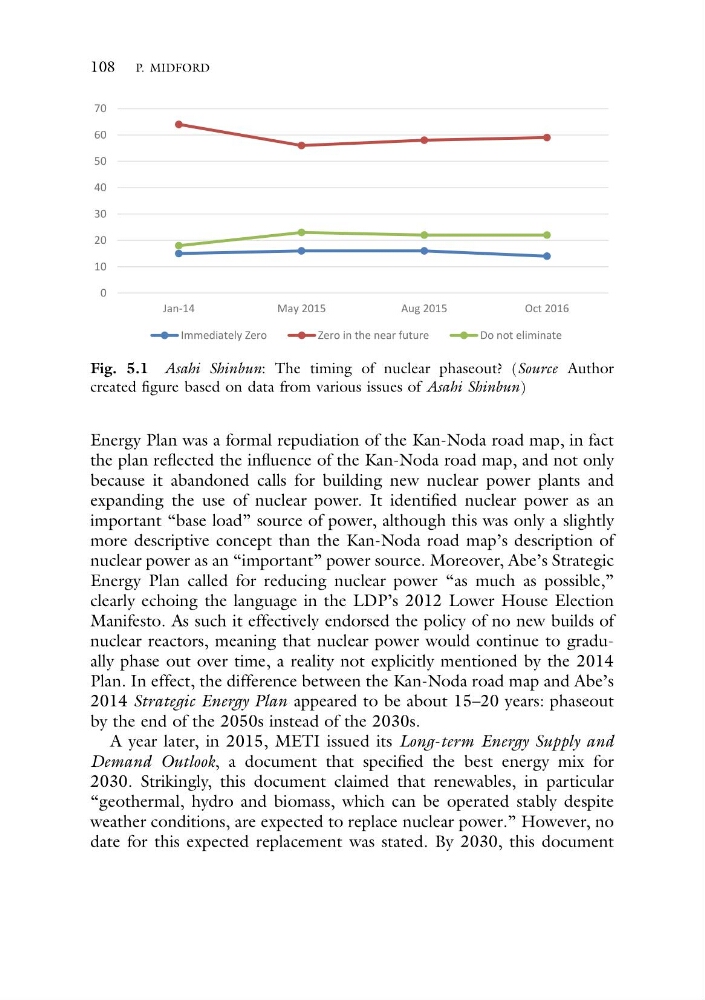
Fig. 5.1 Asahi Shinbun: The timing of nuclear phaseout? (Source Author
created figure based on data from various issues of Asahi Shinbun)
Energy Plan was a formal repudiation of the Kan-Noda road map, in fact
the plan reflected the influence of the Kan-Noda road map, and not only
because it abandoned calls for building new nuclear power plants and
expanding the use of nuclear power. It identified nuclear power as an
important “base load” source of power, although this was only a slightly
more descriptive concept than the Kan-Noda road map’s description of
nuclear power as an “important” power source. Moreover, Abe’s Strategic
Energy Plan called for reducing nuclear power “as much as possible,”
clearly echoing the language in the LDP’s 2012 Lower House Election
Manifesto. As such it effectively endorsed the policy of no new builds of
nuclear reactors, meaning that nuclear power would continue to gradually phase out over time, a reality not explicitly mentioned by the 2014
Plan. In effect, the difference between the Kan-Noda road map and Abe’s
2014 Strategic Energy Plan appeared to be about 15–20 years: phaseout
by the end of the 2050s instead of the 2030s.
A year later, in 2015, METI issued its Long-term Energy Supply and
Demand Outlook, a document that specified the best energy mix for
2030. Strikingly, this document claimed that renewables, in particular
“geothermal, hydro and biomass, which can be operated stably despite
weather conditions, are expected to replace nuclear power.” However, no
date for this expected replacement was stated. By 2030, this document
0
10
20
30
40
50
60
70
Jan-14
May 2015
Aug 2015
Oct 2016
Immediately Zero
Zero in the near future
Do not eliminate
Fig. 5.1 Asahi Shinbun: The timing of nuclear phaseout? (Source Author
created figure based on data from various issues of Asahi Shinbun)
Energy Plan was a formal repudiation of the Kan-Noda road map, in fact
the plan reflected the influence of the Kan-Noda road map, and not only
because it abandoned calls for building new nuclear power plants and
expanding the use of nuclear power. It identified nuclear power as an
important “base load” source of power, although this was only a slightly
more descriptive concept than the Kan-Noda road map’s description of
nuclear power as an “important” power source. Moreover, Abe’s Strategic
Energy Plan called for reducing nuclear power “as much as possible,”
clearly echoing the language in the LDP’s 2012 Lower House Election
Manifesto. As such it effectively endorsed the policy of no new builds of
nuclear reactors, meaning that nuclear power would continue to gradually phase out over time, a reality not explicitly mentioned by the 2014
Plan. In effect, the difference between the Kan-Noda road map and Abe’s
2014 Strategic Energy Plan appeared to be about 15–20 years: phaseout
by the end of the 2050s instead of the 2030s.
A year later, in 2015, METI issued its Long-term Energy Supply and
Demand Outlook, a document that specified the best energy mix for
2030. Strikingly, this document claimed that renewables, in particular
“geothermal, hydro and biomass, which can be operated stably despite
weather conditions, are expected to replace nuclear power.” However, no
date for this expected replacement was stated. By 2030, this document