

61
able synthesis and thermal conductivity. Nanodiamond has also found importance
for biomedical, composite and electrochemical applications (Gong et al. 2012;
Yadav et al. 2013). In particular, the functional nanodiamond has a better opportunity to interact with PU matrix compared to the non-functional nanodiamond
(Williams et al. 2010). With this in mind, Kausar (2016a) manufactured blends from
diglycidyl 1,2-cyclohexanedicarboxylate epoxy and PU, which were reinforced
with nanodiamonds (0.1–5 wt.%). These authors reported that the inclusion of
5 wt.% of nanofiller led to a 47% and 80% increase in the σ m and E values,
respectively, compared to the pure PU matrix, while the heat-induced shape memory effect of the nanocomposite showed a 95% recovery in the original shape, due
to the self- assembled interpenetrating network formed by the epoxy/PU blend,
which had a unique morphology (Kausar 2016a). On the other hand, Yoo et al.
(2017) prepared poly(ε-caprolactone)diol-functionalized nanodiamonds to be used
Table 4.2 Electroactive shape memory performance from iTRG/PU nanocomposites at 50 V for
2 min
PU sample code
iTRG (Phr)
Temperature (°C)
Shape recovery (%)
EP00
–
17
0
EP10
1.0
17
0
EP15
1.5
18
0
EP20
2.0
46
44.4
EP25
2.5
64
96.7
Reproduced with permission from Kim et al. (2015)
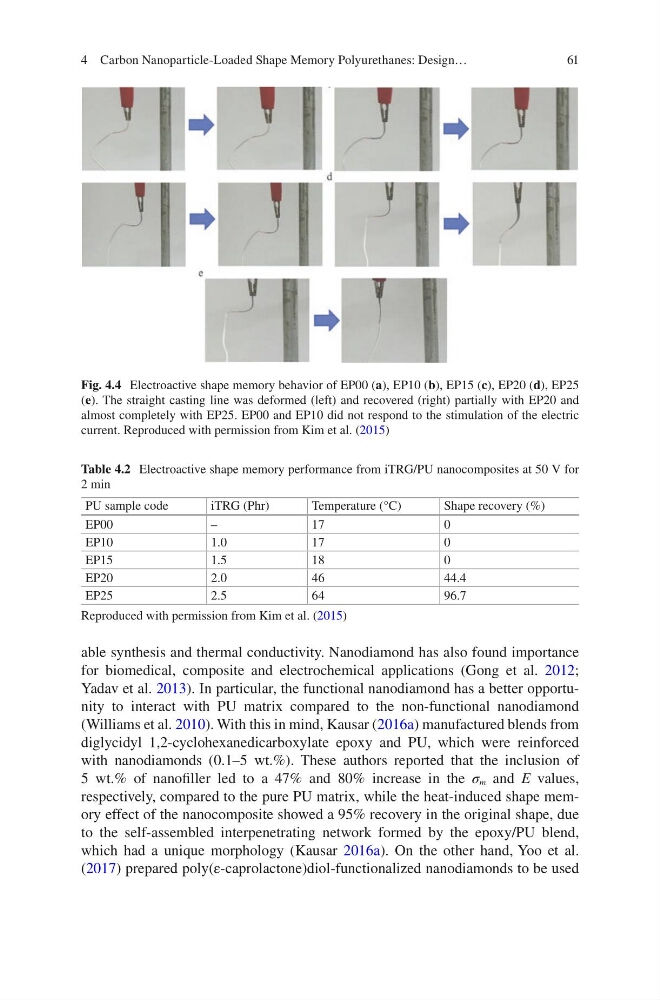
Fig. 4.4 Electroactive shape memory behavior of EP00 (a), EP10 (b), EP15 (c), EP20 (d), EP25
(e). The straight casting line was deformed (left) and recovered (right) partially with EP20 and
almost completely with EP25. EP00 and EP10 did not respond to the stimulation of the electric
current. Reproduced with permission from Kim et al. (2015)
4 Carbon Nanoparticle-Loaded Shape Memory Polyurethanes: Design…
able synthesis and thermal conductivity. Nanodiamond has also found importance
for biomedical, composite and electrochemical applications (Gong et al. 2012;
Yadav et al. 2013). In particular, the functional nanodiamond has a better opportunity to interact with PU matrix compared to the non-functional nanodiamond
(Williams et al. 2010). With this in mind, Kausar (2016a) manufactured blends from
diglycidyl 1,2-cyclohexanedicarboxylate epoxy and PU, which were reinforced
with nanodiamonds (0.1–5 wt.%). These authors reported that the inclusion of
5 wt.% of nanofiller led to a 47% and 80% increase in the σ m and E values,
respectively, compared to the pure PU matrix, while the heat-induced shape memory effect of the nanocomposite showed a 95% recovery in the original shape, due
to the self- assembled interpenetrating network formed by the epoxy/PU blend,
which had a unique morphology (Kausar 2016a). On the other hand, Yoo et al.
(2017) prepared poly(ε-caprolactone)diol-functionalized nanodiamonds to be used
Table 4.2 Electroactive shape memory performance from iTRG/PU nanocomposites at 50 V for
2 min
PU sample code
iTRG (Phr)
Temperature (°C)
Shape recovery (%)
EP00
–
17
0
EP10
1.0
17
0
EP15
1.5
18
0
EP20
2.0
46
44.4
EP25
2.5
64
96.7
Reproduced with permission from Kim et al. (2015)
Fig. 4.4 Electroactive shape memory behavior of EP00 (a), EP10 (b), EP15 (c), EP20 (d), EP25
(e). The straight casting line was deformed (left) and recovered (right) partially with EP20 and
almost completely with EP25. EP00 and EP10 did not respond to the stimulation of the electric
current. Reproduced with permission from Kim et al. (2015)
4 Carbon Nanoparticle-Loaded Shape Memory Polyurethanes: Design…