

180
than that of pure PMMA. The LOI results also showed an improvement in the fire
behavior of the obtained copolymers.
Several authors have used a large amount of phosphorus molecules. Table 8.5
shows an overall view of their structures, as well as the results obtained in terms of
flammability of chemically modified PMMA obtained from cone calorimeter: LOI,
UL94 and/or microcalorimeter of combustion tests. The structures represent the
comonomer used in copolymerization with MMA.
8.3.2 Poly(Amide)s (PAs)
The thermal degradation behavior of aliphatic PAs has been widely studied for years
(Vahabi et al. 2017; Madorsky 1964; David 1975; Bhuiyan 1984; Levchik et al.
1999). The main mechanisms of thermal degradation of PAs (cis-elimination,
hydrolysis, homolytic scission and intramolecular C-H transfer) have been well
addressed in the literature, even although some discrepancies have also been
reported. There is agreement from the literature that the chain scission of PA has its
origin in an C(O)-NH or adjacent bonds such as alkylamide NH-CH 2 , as the weakest bond identified in an aliphatic chain. On the other hand, some believed that the
thermal degradation of PA depends severely on the condition of the experiment
(Jiang et al. 2015). Depending on the type of lactam PA (PA6, PA11 and PA12), the
decomposition elements are variable with respect to diacid-diamines (PA6.6,
PA6.10 and PA6.12). While the former group enjoys from the ability to release
monomers and cyclic oligomers, the latter allows the emission of adipic acid fragments together with CO 2 and water. For example, Levchik et al. (1994) reported that
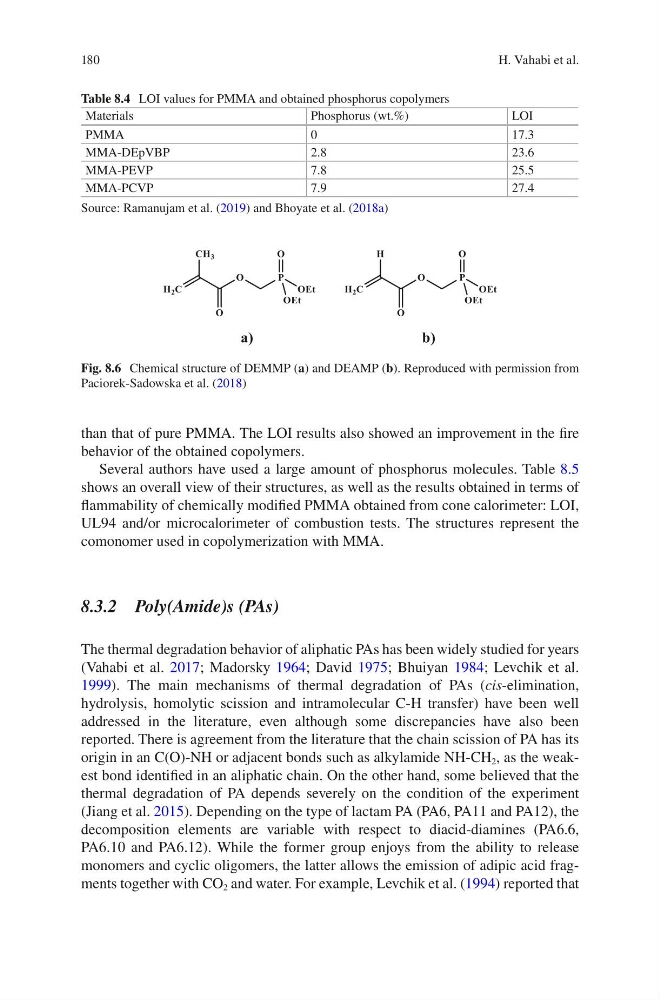
Fig. 8.6 Chemical structure of DEMMP (a) and DEAMP (b). Reproduced with permission from
Paciorek-Sadowska et al. (2018)
Materials
Phosphorus (wt.%)
LOI
PMMA
0
17.3
MMA-DEpVBP
2.8
23.6
MMA-PEVP
7.8
25.5
MMA-PCVP
7.9
27.4
Source: Ramanujam et al. (2019) and Bhoyate et al. (2018a)
Table 8.4 LOI values for PMMA and obtained phosphorus copolymers
H. Vahabi et al.
than that of pure PMMA. The LOI results also showed an improvement in the fire
behavior of the obtained copolymers.
Several authors have used a large amount of phosphorus molecules. Table 8.5
shows an overall view of their structures, as well as the results obtained in terms of
flammability of chemically modified PMMA obtained from cone calorimeter: LOI,
UL94 and/or microcalorimeter of combustion tests. The structures represent the
comonomer used in copolymerization with MMA.
8.3.2 Poly(Amide)s (PAs)
The thermal degradation behavior of aliphatic PAs has been widely studied for years
(Vahabi et al. 2017; Madorsky 1964; David 1975; Bhuiyan 1984; Levchik et al.
1999). The main mechanisms of thermal degradation of PAs (cis-elimination,
hydrolysis, homolytic scission and intramolecular C-H transfer) have been well
addressed in the literature, even although some discrepancies have also been
reported. There is agreement from the literature that the chain scission of PA has its
origin in an C(O)-NH or adjacent bonds such as alkylamide NH-CH 2 , as the weakest bond identified in an aliphatic chain. On the other hand, some believed that the
thermal degradation of PA depends severely on the condition of the experiment
(Jiang et al. 2015). Depending on the type of lactam PA (PA6, PA11 and PA12), the
decomposition elements are variable with respect to diacid-diamines (PA6.6,
PA6.10 and PA6.12). While the former group enjoys from the ability to release
monomers and cyclic oligomers, the latter allows the emission of adipic acid fragments together with CO 2 and water. For example, Levchik et al. (1994) reported that
Fig. 8.6 Chemical structure of DEMMP (a) and DEAMP (b). Reproduced with permission from
Paciorek-Sadowska et al. (2018)
Materials
Phosphorus (wt.%)
LOI
PMMA
0
17.3
MMA-DEpVBP
2.8
23.6
MMA-PEVP
7.8
25.5
MMA-PCVP
7.9
27.4
Source: Ramanujam et al. (2019) and Bhoyate et al. (2018a)
Table 8.4 LOI values for PMMA and obtained phosphorus copolymers
H. Vahabi et al.