

147
influence the dimensional accuracy, mechanical properties, surface finish and building time of the prosthetic part (Alharbi et al. 2016b). Layer thickness and construction angle are also of great importance, and they are selected depending on the
intended use of the 3D printed part, e.g. the thickness should be minimal when high
precision is required (Alharbi et al. 2016b). Keeping this in view, Alharbi et al.
(2016b) evaluated 18 polymeric crowns manufactured by STL with nine different
construction angles: 90°, 120°, 135°, 150°, 180°, 210°, 225°, 240° and 270° and two
different thicknesses as supports. These authors concluded that the highest dimensional precision was obtained for a 120° building combined with the thin support
type (Alharbi et al. 2016b).
Regarding the polymer used for single-crown provisional restorations. Mai et al.
(2017) evaluated in vitro photopolymer-jetting (PolyJet) fabrication for milling and
compression molding techniques. These authors concluded that a favorable marginal fit in the PolyJet and milling groups was obtained compared to the molding
group which was less accurate (Mai et al. 2017). Dikova et al. (2019) also tested 3D
printed materials with the aim of studying in vitro the accuracy of dimensions and
surface roughness using three different additive techniques. These authors indicated
that PMMA processing via DLP can be successfully used for the fabrication of fourunit provisional bridges (Dikova et al. 2019).
With respect to the complete manufacture of prostheses, Inokoshi et al. (2012)
demonstrated that the accuracy in the development of the try-in denture by RP was
clinically acceptable compared to the conventional method, and also reported good
patient and clinician satisfaction. Kalberer et al. (2019) also evaluated 3D printed
and CAD-CAM milled dentures in vitro, noting that milled full dentures had statistically better trueness than RP complete dentures over the entire intaglio surface,
likely due to polymerization shrinkage during the post-processing workflow
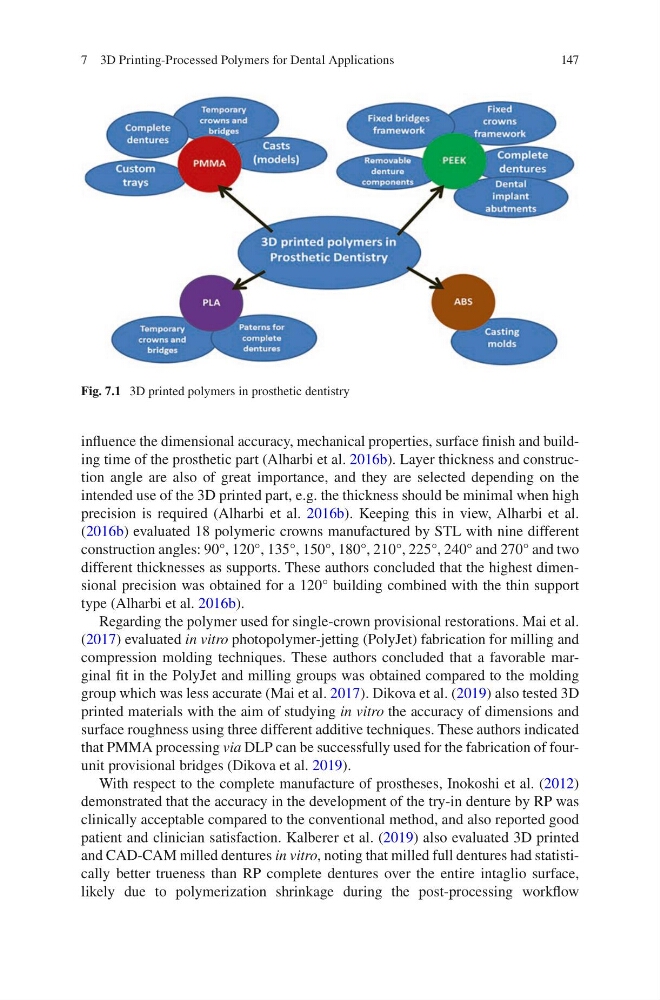
Fig. 7.1 3D printed polymers in prosthetic dentistry
7 3D Printing-Processed Polymers for Dental Applications
influence the dimensional accuracy, mechanical properties, surface finish and building time of the prosthetic part (Alharbi et al. 2016b). Layer thickness and construction angle are also of great importance, and they are selected depending on the
intended use of the 3D printed part, e.g. the thickness should be minimal when high
precision is required (Alharbi et al. 2016b). Keeping this in view, Alharbi et al.
(2016b) evaluated 18 polymeric crowns manufactured by STL with nine different
construction angles: 90°, 120°, 135°, 150°, 180°, 210°, 225°, 240° and 270° and two
different thicknesses as supports. These authors concluded that the highest dimensional precision was obtained for a 120° building combined with the thin support
type (Alharbi et al. 2016b).
Regarding the polymer used for single-crown provisional restorations. Mai et al.
(2017) evaluated in vitro photopolymer-jetting (PolyJet) fabrication for milling and
compression molding techniques. These authors concluded that a favorable marginal fit in the PolyJet and milling groups was obtained compared to the molding
group which was less accurate (Mai et al. 2017). Dikova et al. (2019) also tested 3D
printed materials with the aim of studying in vitro the accuracy of dimensions and
surface roughness using three different additive techniques. These authors indicated
that PMMA processing via DLP can be successfully used for the fabrication of fourunit provisional bridges (Dikova et al. 2019).
With respect to the complete manufacture of prostheses, Inokoshi et al. (2012)
demonstrated that the accuracy in the development of the try-in denture by RP was
clinically acceptable compared to the conventional method, and also reported good
patient and clinician satisfaction. Kalberer et al. (2019) also evaluated 3D printed
and CAD-CAM milled dentures in vitro, noting that milled full dentures had statistically better trueness than RP complete dentures over the entire intaglio surface,
likely due to polymerization shrinkage during the post-processing workflow
Fig. 7.1 3D printed polymers in prosthetic dentistry
7 3D Printing-Processed Polymers for Dental Applications