

Newly Emerging Metal–Organic Frameworks (MOF), MXenes and Zeolite …
239
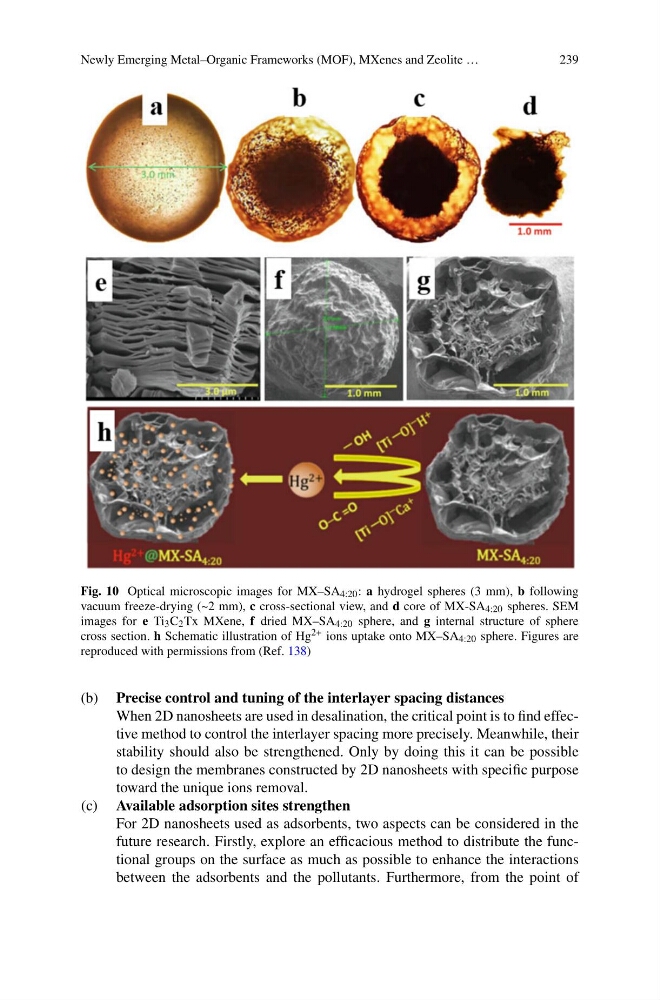
Fig. 10 Optical microscopic images for MX–SA 4:20 : a hydrogel spheres (3 mm), b following
vacuum freeze-drying (~2 mm), c cross-sectional view, and d core of MX-SA 4:20 spheres. SEM
images for e Ti 3 C 2 Tx MXene, f dried MX–SA 4:20 sphere, and g internal structure of sphere
cross section. h Schematic illustration of Hg 2+ ions uptake onto MX–SA 4:20 sphere. Figures are
reproduced with permissions from (Ref. 138)
(b) Precise control and tuning of the interlayer spacing distances
When 2D nanosheets are used in desalination, the critical point is to find effective method to control the interlayer spacing more precisely. Meanwhile, their
stability should also be strengthened. Only by doing this it can be possible
to design the membranes constructed by 2D nanosheets with specific purpose
toward the unique ions removal.
(c) Available adsorption sites strengthen
For 2D nanosheets used as adsorbents, two aspects can be considered in the
future research. Firstly, explore an efficacious method to distribute the functional groups on the surface as much as possible to enhance the interactions
between the adsorbents and the pollutants. Furthermore, from the point of
239
Fig. 10 Optical microscopic images for MX–SA 4:20 : a hydrogel spheres (3 mm), b following
vacuum freeze-drying (~2 mm), c cross-sectional view, and d core of MX-SA 4:20 spheres. SEM
images for e Ti 3 C 2 Tx MXene, f dried MX–SA 4:20 sphere, and g internal structure of sphere
cross section. h Schematic illustration of Hg 2+ ions uptake onto MX–SA 4:20 sphere. Figures are
reproduced with permissions from (Ref. 138)
(b) Precise control and tuning of the interlayer spacing distances
When 2D nanosheets are used in desalination, the critical point is to find effective method to control the interlayer spacing more precisely. Meanwhile, their
stability should also be strengthened. Only by doing this it can be possible
to design the membranes constructed by 2D nanosheets with specific purpose
toward the unique ions removal.
(c) Available adsorption sites strengthen
For 2D nanosheets used as adsorbents, two aspects can be considered in the
future research. Firstly, explore an efficacious method to distribute the functional groups on the surface as much as possible to enhance the interactions
between the adsorbents and the pollutants. Furthermore, from the point of