

232
G.-R. Xu
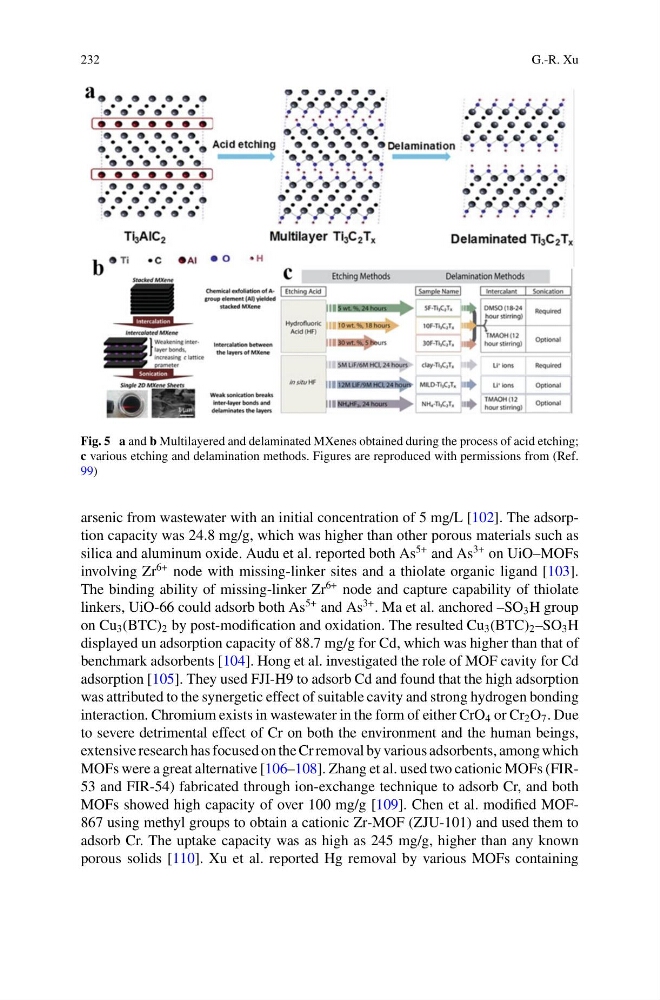
Fig. 5 a and b Multilayered and delaminated MXenes obtained during the process of acid etching;
c various etching and delamination methods. Figures are reproduced with permissions from (Ref.
99)
arsenic from wastewater with an initial concentration of 5 mg/L [102]. The adsorption capacity was 24.8 mg/g, which was higher than other porous materials such as
silica and aluminum oxide. Audu et al. reported both As
5+ and As
3+ on UiO–MOFs
involving Zr
6+ node with missing-linker sites and a thiolate organic ligand [103].
The binding ability of missing-linker Zr
6+ node and capture capability of thiolate
linkers, UiO-66 could adsorb both As
5+ and As
3+ . Ma et al. anchored –SO 3 H group
on Cu 3 (BTC) 2 by post-modification and oxidation. The resulted Cu 3 (BTC) 2 –SO 3 H
displayed un adsorption capacity of 88.7 mg/g for Cd, which was higher than that of
benchmark adsorbents [104]. Hong et al. investigated the role of MOF cavity for Cd
adsorption [105]. They used FJI-H9 to adsorb Cd and found that the high adsorption
was attributed to the synergetic effect of suitable cavity and strong hydrogen bonding
interaction. Chromium exists in wastewater in the form of either CrO 4 or Cr 2 O 7 . Due
to severe detrimental effect of Cr on both the environment and the human beings,
extensive research has focused on the Cr removal by various adsorbents, among which
MOFs were a great alternative [106–108]. Zhang et al. used two cationic MOFs (FIR53 and FIR-54) fabricated through ion-exchange technique to adsorb Cr, and both
MOFs showed high capacity of over 100 mg/g [109]. Chen et al. modified MOF867 using methyl groups to obtain a cationic Zr-MOF (ZJU-101) and used them to
adsorb Cr. The uptake capacity was as high as 245 mg/g, higher than any known
porous solids [110]. Xu et al. reported Hg removal by various MOFs containing
G.-R. Xu
Fig. 5 a and b Multilayered and delaminated MXenes obtained during the process of acid etching;
c various etching and delamination methods. Figures are reproduced with permissions from (Ref.
99)
arsenic from wastewater with an initial concentration of 5 mg/L [102]. The adsorption capacity was 24.8 mg/g, which was higher than other porous materials such as
silica and aluminum oxide. Audu et al. reported both As
5+ and As
3+ on UiO–MOFs
involving Zr
6+ node with missing-linker sites and a thiolate organic ligand [103].
The binding ability of missing-linker Zr
6+ node and capture capability of thiolate
linkers, UiO-66 could adsorb both As
5+ and As
3+ . Ma et al. anchored –SO 3 H group
on Cu 3 (BTC) 2 by post-modification and oxidation. The resulted Cu 3 (BTC) 2 –SO 3 H
displayed un adsorption capacity of 88.7 mg/g for Cd, which was higher than that of
benchmark adsorbents [104]. Hong et al. investigated the role of MOF cavity for Cd
adsorption [105]. They used FJI-H9 to adsorb Cd and found that the high adsorption
was attributed to the synergetic effect of suitable cavity and strong hydrogen bonding
interaction. Chromium exists in wastewater in the form of either CrO 4 or Cr 2 O 7 . Due
to severe detrimental effect of Cr on both the environment and the human beings,
extensive research has focused on the Cr removal by various adsorbents, among which
MOFs were a great alternative [106–108]. Zhang et al. used two cationic MOFs (FIR53 and FIR-54) fabricated through ion-exchange technique to adsorb Cr, and both
MOFs showed high capacity of over 100 mg/g [109]. Chen et al. modified MOF867 using methyl groups to obtain a cationic Zr-MOF (ZJU-101) and used them to
adsorb Cr. The uptake capacity was as high as 245 mg/g, higher than any known
porous solids [110]. Xu et al. reported Hg removal by various MOFs containing