

Newly Emerging Metal–Organic Frameworks (MOF), MXenes and Zeolite …
231
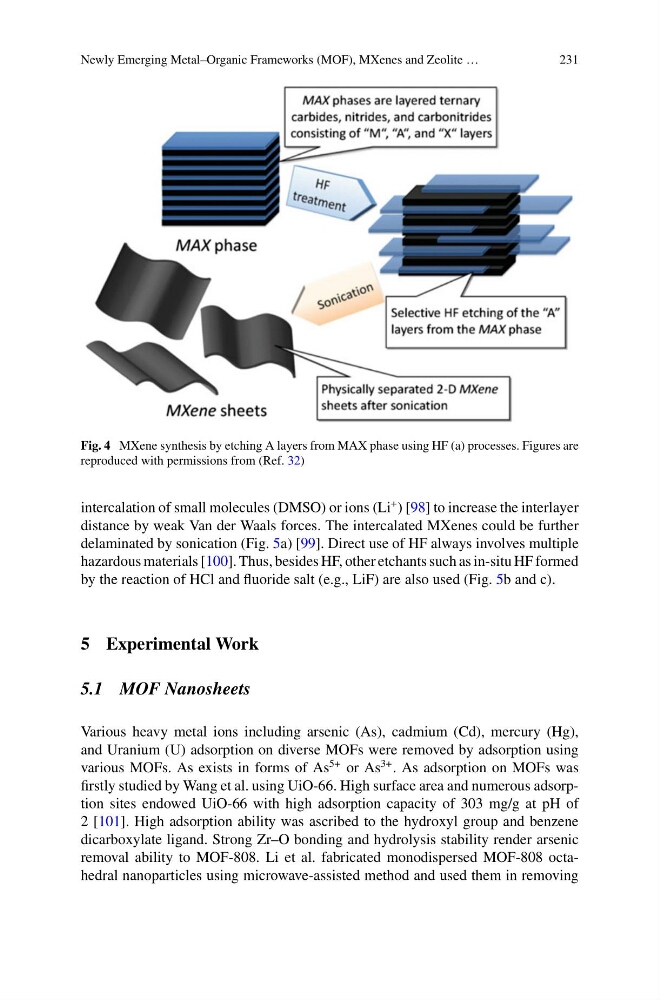
Fig. 4 MXene synthesis by etching A layers from MAX phase using HF (a) processes. Figures are
reproduced with permissions from (Ref. 32)
intercalation of small molecules (DMSO) or ions (Li
+ ) [98] to increase the interlayer
distance by weak Van der Waals forces. The intercalated MXenes could be further
delaminated by sonication (Fig. 5a) [99]. Direct use of HF always involves multiple
hazardous materials [100]. Thus, besides HF, other etchants such as in-situ HF formed
by the reaction of HCl and fluoride salt (e.g., LiF) are also used (Fig. 5b and c).
5 Experimental Work
5.1 MOF Nanosheets
Various heavy metal ions including arsenic (As), cadmium (Cd), mercury (Hg),
and Uranium (U) adsorption on diverse MOFs were removed by adsorption using
various MOFs. As exists in forms of As
5+ or As
3+ . As adsorption on MOFs was
firstly studied by Wang et al. using UiO-66. High surface area and numerous adsorption sites endowed UiO-66 with high adsorption capacity of 303 mg/g at pH of
2 [101]. High adsorption ability was ascribed to the hydroxyl group and benzene
dicarboxylate ligand. Strong Zr–O bonding and hydrolysis stability render arsenic
removal ability to MOF-808. Li et al. fabricated monodispersed MOF-808 octahedral nanoparticles using microwave-assisted method and used them in removing
231
Fig. 4 MXene synthesis by etching A layers from MAX phase using HF (a) processes. Figures are
reproduced with permissions from (Ref. 32)
intercalation of small molecules (DMSO) or ions (Li
+ ) [98] to increase the interlayer
distance by weak Van der Waals forces. The intercalated MXenes could be further
delaminated by sonication (Fig. 5a) [99]. Direct use of HF always involves multiple
hazardous materials [100]. Thus, besides HF, other etchants such as in-situ HF formed
by the reaction of HCl and fluoride salt (e.g., LiF) are also used (Fig. 5b and c).
5 Experimental Work
5.1 MOF Nanosheets
Various heavy metal ions including arsenic (As), cadmium (Cd), mercury (Hg),
and Uranium (U) adsorption on diverse MOFs were removed by adsorption using
various MOFs. As exists in forms of As
5+ or As
3+ . As adsorption on MOFs was
firstly studied by Wang et al. using UiO-66. High surface area and numerous adsorption sites endowed UiO-66 with high adsorption capacity of 303 mg/g at pH of
2 [101]. High adsorption ability was ascribed to the hydroxyl group and benzene
dicarboxylate ligand. Strong Zr–O bonding and hydrolysis stability render arsenic
removal ability to MOF-808. Li et al. fabricated monodispersed MOF-808 octahedral nanoparticles using microwave-assisted method and used them in removing