

Graphene Oxide and Reduced Graphene Oxide as Nanofillers …
121
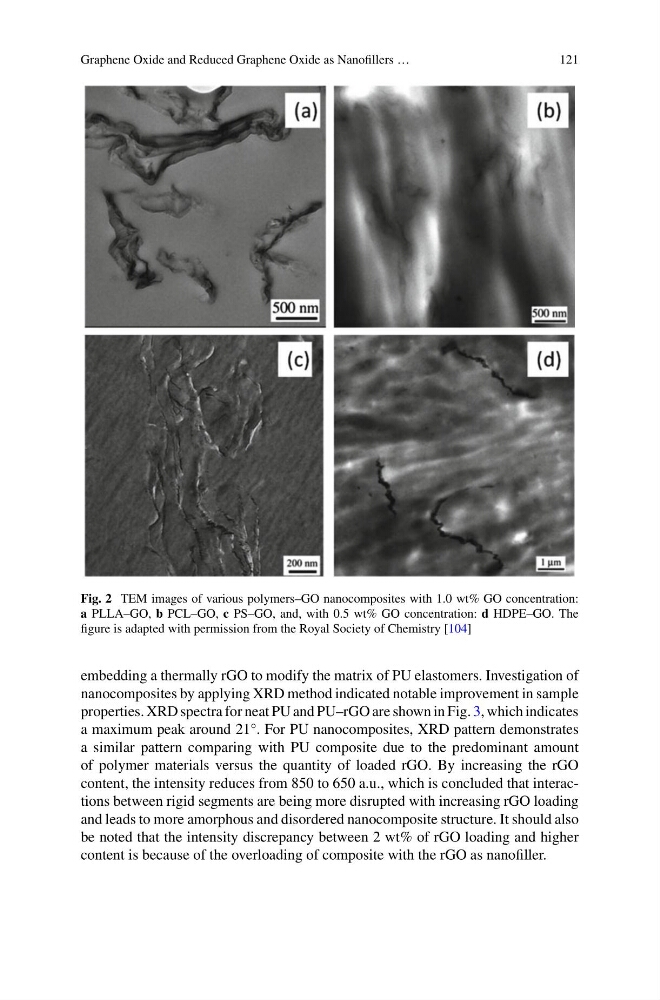
Fig. 2 TEM images of various polymers–GO nanocomposites with 1.0 wt% GO concentration:
a PLLA–GO, b PCL–GO, c PS–GO, and, with 0.5 wt% GO concentration: d HDPE–GO. The
figure is adapted with permission from the Royal Society of Chemistry [104]
embedding a thermally rGO to modify the matrix of PU elastomers. Investigation of
nanocomposites by applying XRD method indicated notable improvement in sample
properties. XRD spectra for neat PU and PU–rGO are shown in Fig. 3, which indicates
a maximum peak around 21°. For PU nanocomposites, XRD pattern demonstrates
a similar pattern comparing with PU composite due to the predominant amount
of polymer materials versus the quantity of loaded rGO. By increasing the rGO
content, the intensity reduces from 850 to 650 a.u., which is concluded that interactions between rigid segments are being more disrupted with increasing rGO loading
and leads to more amorphous and disordered nanocomposite structure. It should also
be noted that the intensity discrepancy between 2 wt% of rGO loading and higher
content is because of the overloading of composite with the rGO as nanofiller.
121
Fig. 2 TEM images of various polymers–GO nanocomposites with 1.0 wt% GO concentration:
a PLLA–GO, b PCL–GO, c PS–GO, and, with 0.5 wt% GO concentration: d HDPE–GO. The
figure is adapted with permission from the Royal Society of Chemistry [104]
embedding a thermally rGO to modify the matrix of PU elastomers. Investigation of
nanocomposites by applying XRD method indicated notable improvement in sample
properties. XRD spectra for neat PU and PU–rGO are shown in Fig. 3, which indicates
a maximum peak around 21°. For PU nanocomposites, XRD pattern demonstrates
a similar pattern comparing with PU composite due to the predominant amount
of polymer materials versus the quantity of loaded rGO. By increasing the rGO
content, the intensity reduces from 850 to 650 a.u., which is concluded that interactions between rigid segments are being more disrupted with increasing rGO loading
and leads to more amorphous and disordered nanocomposite structure. It should also
be noted that the intensity discrepancy between 2 wt% of rGO loading and higher
content is because of the overloading of composite with the rGO as nanofiller.