

102
M. H. Köhler et al.
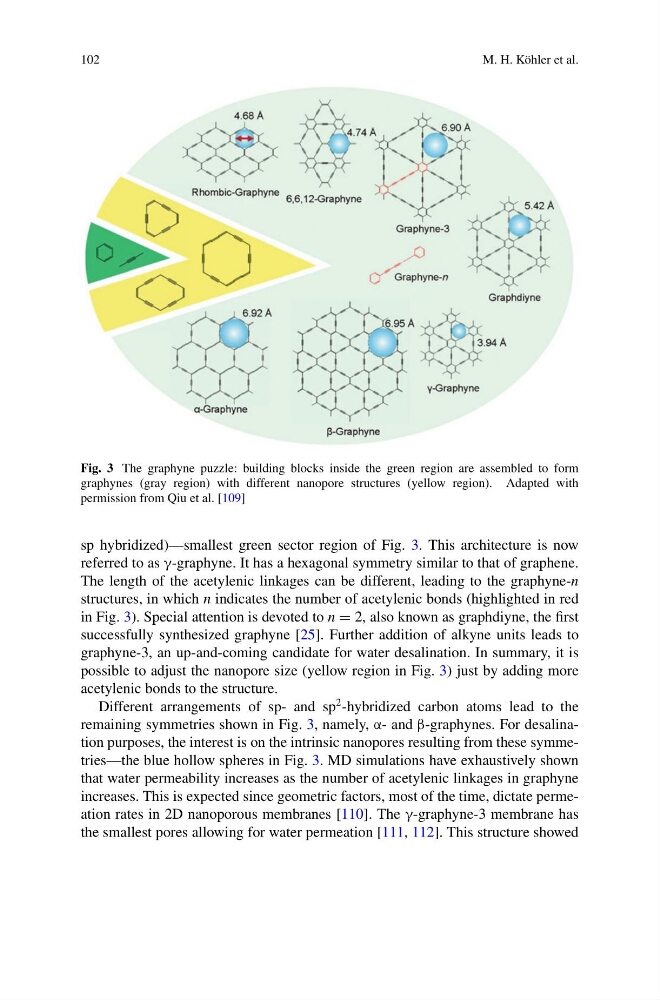
Fig. 3 The graphyne puzzle: building blocks inside the green region are assembled to form
graphynes (gray region) with different nanopore structures (yellow region). Adapted with
permission from Qiu et al. [109]
sp hybridized)—smallest green sector region of Fig. 3. This architecture is now
referred to as γ-graphyne. It has a hexagonal symmetry similar to that of graphene.
The length of the acetylenic linkages can be different, leading to the graphyne-n
structures, in which n indicates the number of acetylenic bonds (highlighted in red
in Fig. 3). Special attention is devoted to n = 2, also known as graphdiyne, the first
successfully synthesized graphyne [25]. Further addition of alkyne units leads to
graphyne-3, an up-and-coming candidate for water desalination. In summary, it is
possible to adjust the nanopore size (yellow region in Fig. 3) just by adding more
acetylenic bonds to the structure.
Different arrangements of sp- and sp
2 -hybridized carbon atoms lead to the
remaining symmetries shown in Fig. 3, namely, α- and β-graphynes. For desalination purposes, the interest is on the intrinsic nanopores resulting from these symmetries—the blue hollow spheres in Fig. 3. MD simulations have exhaustively shown
that water permeability increases as the number of acetylenic linkages in graphyne
increases. This is expected since geometric factors, most of the time, dictate permeation rates in 2D nanoporous membranes [110]. The γ-graphyne-3 membrane has
the smallest pores allowing for water permeation [111, 112]. This structure showed
M. H. Köhler et al.
Fig. 3 The graphyne puzzle: building blocks inside the green region are assembled to form
graphynes (gray region) with different nanopore structures (yellow region). Adapted with
permission from Qiu et al. [109]
sp hybridized)—smallest green sector region of Fig. 3. This architecture is now
referred to as γ-graphyne. It has a hexagonal symmetry similar to that of graphene.
The length of the acetylenic linkages can be different, leading to the graphyne-n
structures, in which n indicates the number of acetylenic bonds (highlighted in red
in Fig. 3). Special attention is devoted to n = 2, also known as graphdiyne, the first
successfully synthesized graphyne [25]. Further addition of alkyne units leads to
graphyne-3, an up-and-coming candidate for water desalination. In summary, it is
possible to adjust the nanopore size (yellow region in Fig. 3) just by adding more
acetylenic bonds to the structure.
Different arrangements of sp- and sp
2 -hybridized carbon atoms lead to the
remaining symmetries shown in Fig. 3, namely, α- and β-graphynes. For desalination purposes, the interest is on the intrinsic nanopores resulting from these symmetries—the blue hollow spheres in Fig. 3. MD simulations have exhaustively shown
that water permeability increases as the number of acetylenic linkages in graphyne
increases. This is expected since geometric factors, most of the time, dictate permeation rates in 2D nanoporous membranes [110]. The γ-graphyne-3 membrane has
the smallest pores allowing for water permeation [111, 112]. This structure showed