

78
C. H. Pyeon
0
200
400
600
800
300
400
500
600
700
Time [s]
Neutron count rate [1/s]
Experiment
Estimate by EKF
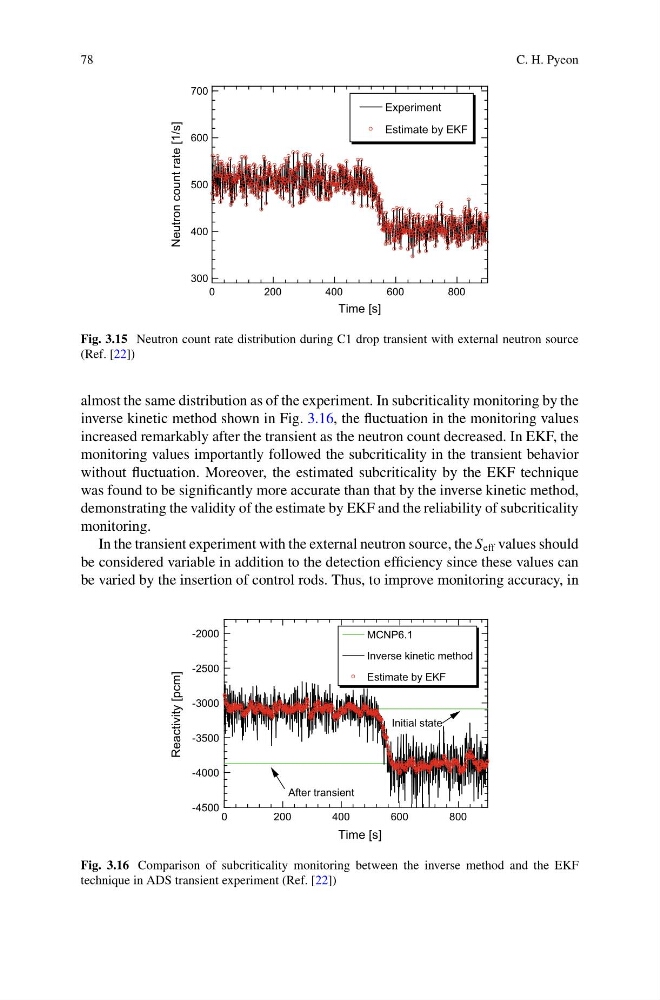
Fig. 3.15 Neutron count rate distribution during C1 drop transient with external neutron source
(Ref. [22])
almost the same distribution as of the experiment. In subcriticality monitoring by the
inverse kinetic method shown in Fig. 3.16, the fluctuation in the monitoring values
increased remarkably after the transient as the neutron count decreased. In EKF, the
monitoring values importantly followed the subcriticality in the transient behavior
without fluctuation. Moreover, the estimated subcriticality by the EKF technique
was found to be significantly more accurate than that by the inverse kinetic method,
demonstrating the validity of the estimate by EKF and the reliability of subcriticality
monitoring.
In the transient experiment with the external neutron source, the S eff values should
be considered variable in addition to the detection efficiency since these values can
be varied by the insertion of control rods. Thus, to improve monitoring accuracy, in
0
200
400
600
800
-4500
-4000
-3500
-3000
-2500
-2000
Time [s]
Reactivity [pcm]
MCNP6.1
Inverse kinetic method
Estimate by EKF
After transient
Initial state
Fig. 3.16 Comparison of subcriticality monitoring between the inverse method and the EKF
technique in ADS transient experiment (Ref. [22])
C. H. Pyeon
0
200
400
600
800
300
400
500
600
700
Time [s]
Neutron count rate [1/s]
Experiment
Estimate by EKF
Fig. 3.15 Neutron count rate distribution during C1 drop transient with external neutron source
(Ref. [22])
almost the same distribution as of the experiment. In subcriticality monitoring by the
inverse kinetic method shown in Fig. 3.16, the fluctuation in the monitoring values
increased remarkably after the transient as the neutron count decreased. In EKF, the
monitoring values importantly followed the subcriticality in the transient behavior
without fluctuation. Moreover, the estimated subcriticality by the EKF technique
was found to be significantly more accurate than that by the inverse kinetic method,
demonstrating the validity of the estimate by EKF and the reliability of subcriticality
monitoring.
In the transient experiment with the external neutron source, the S eff values should
be considered variable in addition to the detection efficiency since these values can
be varied by the insertion of control rods. Thus, to improve monitoring accuracy, in
0
200
400
600
800
-4500
-4000
-3500
-3000
-2500
-2000
Time [s]
Reactivity [pcm]
MCNP6.1
Inverse kinetic method
Estimate by EKF
After transient
Initial state
Fig. 3.16 Comparison of subcriticality monitoring between the inverse method and the EKF
technique in ADS transient experiment (Ref. [22])