

6
C. H. Pyeon
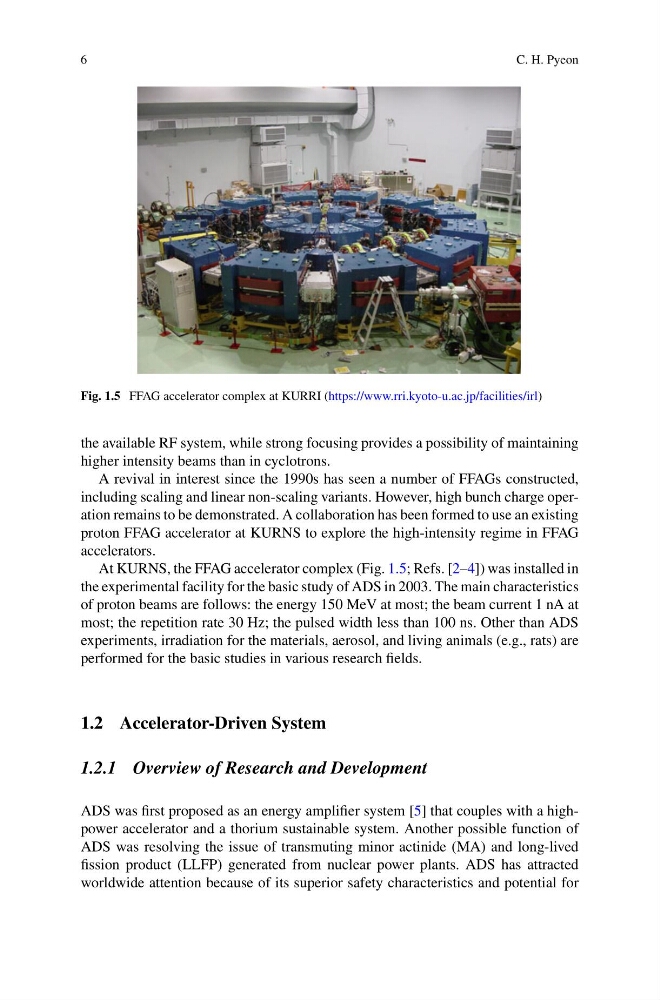
Fig. 1.5 FFAG accelerator complex at KURRI (https://www.rri.kyoto-u.ac.jp/facilities/irl)
the available RF system, while strong focusing provides a possibility of maintaining
higher intensity beams than in cyclotrons.
A revival in interest since the 1990s has seen a number of FFAGs constructed,
including scaling and linear non-scaling variants. However, high bunch charge operation remains to be demonstrated. A collaboration has been formed to use an existing
proton FFAG accelerator at KURNS to explore the high-intensity regime in FFAG
accelerators.
At KURNS, the FFAG accelerator complex (Fig. 1.5; Refs. [2–4]) was installed in
the experimental facility for the basic study of ADS in 2003. The main characteristics
of proton beams are follows: the energy 150 MeV at most; the beam current 1 nA at
most; the repetition rate 30 Hz; the pulsed width less than 100 ns. Other than ADS
experiments, irradiation for the materials, aerosol, and living animals (e.g., rats) are
performed for the basic studies in various research fields.
1.2 Accelerator-Driven System
1.2.1 Overview of Research and Development
ADS was first proposed as an energy amplifier system [5] that couples with a highpower accelerator and a thorium sustainable system. Another possible function of
ADS was resolving the issue of transmuting minor actinide (MA) and long-lived
fission product (LLFP) generated from nuclear power plants. ADS has attracted
worldwide attention because of its superior safety characteristics and potential for
C. H. Pyeon
Fig. 1.5 FFAG accelerator complex at KURRI (https://www.rri.kyoto-u.ac.jp/facilities/irl)
the available RF system, while strong focusing provides a possibility of maintaining
higher intensity beams than in cyclotrons.
A revival in interest since the 1990s has seen a number of FFAGs constructed,
including scaling and linear non-scaling variants. However, high bunch charge operation remains to be demonstrated. A collaboration has been formed to use an existing
proton FFAG accelerator at KURNS to explore the high-intensity regime in FFAG
accelerators.
At KURNS, the FFAG accelerator complex (Fig. 1.5; Refs. [2–4]) was installed in
the experimental facility for the basic study of ADS in 2003. The main characteristics
of proton beams are follows: the energy 150 MeV at most; the beam current 1 nA at
most; the repetition rate 30 Hz; the pulsed width less than 100 ns. Other than ADS
experiments, irradiation for the materials, aerosol, and living animals (e.g., rats) are
performed for the basic studies in various research fields.
1.2 Accelerator-Driven System
1.2.1 Overview of Research and Development
ADS was first proposed as an energy amplifier system [5] that couples with a highpower accelerator and a thorium sustainable system. Another possible function of
ADS was resolving the issue of transmuting minor actinide (MA) and long-lived
fission product (LLFP) generated from nuclear power plants. ADS has attracted
worldwide attention because of its superior safety characteristics and potential for