

1 Introduction
5
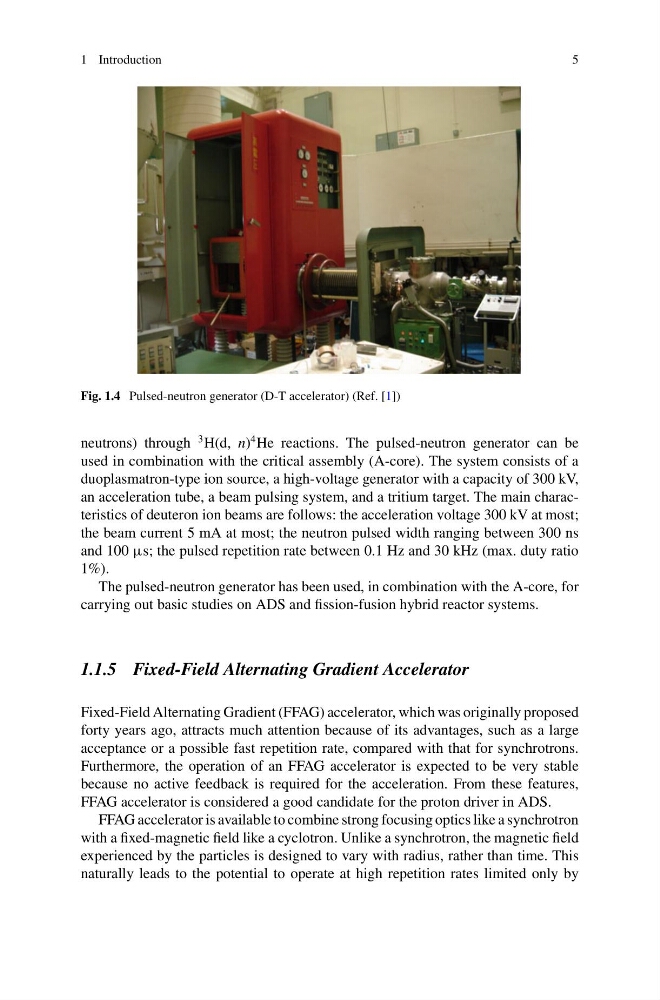
Fig. 1.4 Pulsed-neutron generator (D-T accelerator) (Ref. [1])
neutrons) through
3 H(d, n)
4 He reactions. The pulsed-neutron generator can be
used in combination with the critical assembly (A-core). The system consists of a
duoplasmatron-type ion source, a high-voltage generator with a capacity of 300 kV,
an acceleration tube, a beam pulsing system, and a tritium target. The main characteristics of deuteron ion beams are follows: the acceleration voltage 300 kV at most;
the beam current 5 mA at most; the neutron pulsed width ranging between 300 ns
and 100 μs; the pulsed repetition rate between 0.1 Hz and 30 kHz (max. duty ratio
1%).
The pulsed-neutron generator has been used, in combination with the A-core, for
carrying out basic studies on ADS and fission-fusion hybrid reactor systems.
1.1.5 Fixed-Field Alternating Gradient Accelerator
Fixed-Field Alternating Gradient (FFAG) accelerator, which was originally proposed
forty years ago, attracts much attention because of its advantages, such as a large
acceptance or a possible fast repetition rate, compared with that for synchrotrons.
Furthermore, the operation of an FFAG accelerator is expected to be very stable
because no active feedback is required for the acceleration. From these features,
FFAG accelerator is considered a good candidate for the proton driver in ADS.
FFAG accelerator is available to combine strong focusing optics like a synchrotron
with a fixed-magnetic field like a cyclotron. Unlike a synchrotron, the magnetic field
experienced by the particles is designed to vary with radius, rather than time. This
naturally leads to the potential to operate at high repetition rates limited only by
5
Fig. 1.4 Pulsed-neutron generator (D-T accelerator) (Ref. [1])
neutrons) through
3 H(d, n)
4 He reactions. The pulsed-neutron generator can be
used in combination with the critical assembly (A-core). The system consists of a
duoplasmatron-type ion source, a high-voltage generator with a capacity of 300 kV,
an acceleration tube, a beam pulsing system, and a tritium target. The main characteristics of deuteron ion beams are follows: the acceleration voltage 300 kV at most;
the beam current 5 mA at most; the neutron pulsed width ranging between 300 ns
and 100 μs; the pulsed repetition rate between 0.1 Hz and 30 kHz (max. duty ratio
1%).
The pulsed-neutron generator has been used, in combination with the A-core, for
carrying out basic studies on ADS and fission-fusion hybrid reactor systems.
1.1.5 Fixed-Field Alternating Gradient Accelerator
Fixed-Field Alternating Gradient (FFAG) accelerator, which was originally proposed
forty years ago, attracts much attention because of its advantages, such as a large
acceptance or a possible fast repetition rate, compared with that for synchrotrons.
Furthermore, the operation of an FFAG accelerator is expected to be very stable
because no active feedback is required for the acceleration. From these features,
FFAG accelerator is considered a good candidate for the proton driver in ADS.
FFAG accelerator is available to combine strong focusing optics like a synchrotron
with a fixed-magnetic field like a cyclotron. Unlike a synchrotron, the magnetic field
experienced by the particles is designed to vary with radius, rather than time. This
naturally leads to the potential to operate at high repetition rates limited only by