

electrolysis system using an iron-modified carbon cathode, with which a formate
production rate of % 10 lMmin
−1 , with a Faradaic efficiency of % 60%, was
attained [265].
FDHs from sulfate-reducing bacteria constitute other very interesting systems to
exploit, exhibiting high rates of CO 2 reduction. The D. desulfuricans SeCys–Mo–
FDH is a strikingly efficient CO 2 reducer. With a k
CO 2
cat
% 50 s
−1 and particularly
low K
CO 2
m
% 15 lM, this enzyme has a superior specificity for CO 2 (k
CO 2 % 3.3 Â
10
6 M
−1 s
−1 ) [137]. The high K m value for formate (K m
HCOO−
% 55 lM; k cat
HCOO
−
% 550 s
−1 ; k
HCOO−
% 10 Â 10
6 M
−1
s
−1 ) enables D. desulfuricans SeCys–Mo–
FDH to be a powerful CO 2 reducer, as long as the formate concentration is kept low
(is removed from the system). In addition, once the catalysis is initiated (occurring
at steady-state rates), this enzyme robustness allows the reaction to fully proceed
even in the presence of dioxygen [139]. Moreover, the D. desulfuricans SeCys–
Mo–FDH is also a good electrocatalyst (unmediated electrochemistry) to carry out
the electrochemical reduction of CO 2 with good catalytic currents being attained
[266]. The ability of D. desulfuricans to produce formate was also demonstrated in
whole-cells catalysis, where the continuous formate production exhibited a maximum specific formate production rate of 14 mM formate/g dcw h, and more than
45 mM of formate were obtained with a production rate of 0.40mMh
−1 [267].
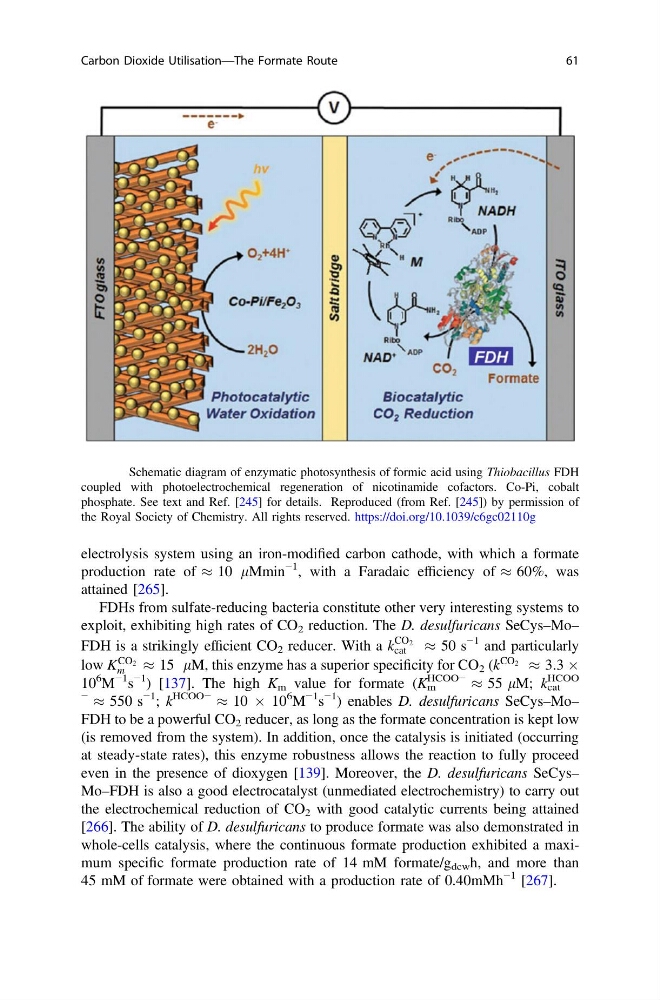
Fig. 14 Schematic diagram of enzymatic photosynthesis of formic acid using Thiobacillus FDH
coupled with photoelectrochemical regeneration of nicotinamide cofactors. Co-Pi, cobalt
phosphate. See text and Ref. [245] for details. Reproduced (from Ref. [245]) by permission of
the Royal Society of Chemistry. All rights reserved. https://doi.org/10.1039/c6gc02110g
Carbon Dioxide Utilisation—The Formate Route
61
production rate of % 10 lMmin
−1 , with a Faradaic efficiency of % 60%, was
attained [265].
FDHs from sulfate-reducing bacteria constitute other very interesting systems to
exploit, exhibiting high rates of CO 2 reduction. The D. desulfuricans SeCys–Mo–
FDH is a strikingly efficient CO 2 reducer. With a k
CO 2
cat
% 50 s
−1 and particularly
low K
CO 2
m
% 15 lM, this enzyme has a superior specificity for CO 2 (k
CO 2 % 3.3 Â
10
6 M
−1 s
−1 ) [137]. The high K m value for formate (K m
HCOO−
% 55 lM; k cat
HCOO
−
% 550 s
−1 ; k
HCOO−
% 10 Â 10
6 M
−1
s
−1 ) enables D. desulfuricans SeCys–Mo–
FDH to be a powerful CO 2 reducer, as long as the formate concentration is kept low
(is removed from the system). In addition, once the catalysis is initiated (occurring
at steady-state rates), this enzyme robustness allows the reaction to fully proceed
even in the presence of dioxygen [139]. Moreover, the D. desulfuricans SeCys–
Mo–FDH is also a good electrocatalyst (unmediated electrochemistry) to carry out
the electrochemical reduction of CO 2 with good catalytic currents being attained
[266]. The ability of D. desulfuricans to produce formate was also demonstrated in
whole-cells catalysis, where the continuous formate production exhibited a maximum specific formate production rate of 14 mM formate/g dcw h, and more than
45 mM of formate were obtained with a production rate of 0.40mMh
−1 [267].
Fig. 14 Schematic diagram of enzymatic photosynthesis of formic acid using Thiobacillus FDH
coupled with photoelectrochemical regeneration of nicotinamide cofactors. Co-Pi, cobalt
phosphate. See text and Ref. [245] for details. Reproduced (from Ref. [245]) by permission of
the Royal Society of Chemistry. All rights reserved. https://doi.org/10.1039/c6gc02110g
Carbon Dioxide Utilisation—The Formate Route
61