

4.3 Formate Dehydrogenases—Mechanism of Action
4.3.1 The Metal-Independent Formate Dehydrogenases
The metal-independent FDHs are NAD-dependent enzymes, whose chemical
strategy to interconvert formate and CO 2 is surprisingly simple and well established
(Fig. 11) [102–109]: the enzyme binds formate and NAD
+ in close proximity of
each other (1.4 Å distance between H-(formate) and C4-(pyridine ring)) and makes
NAD
+ acquire a bipolar conformation, which increases its electrophilicity and, thus,
facilitates the hydride transfer. The reaction, then, proceeds by straightforward
hydride transfer from formate to NAD
+ . In accordance, the rate-limiting step of the
pyranopterin cofactor
6+
6+
molybdenum/tungten centre in the oxidised state
4+
4+
4+
molybdenum/tungten centre in the reduced state
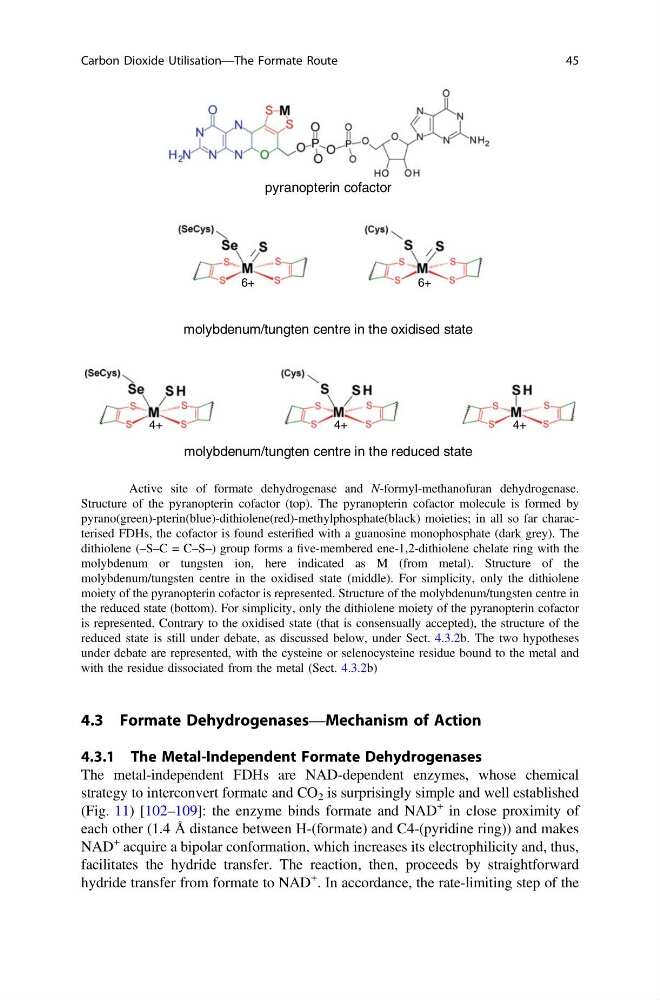
Fig. 10 Active site of formate dehydrogenase and N-formyl-methanofuran dehydrogenase.
Structure of the pyranopterin cofactor (top). The pyranopterin cofactor molecule is formed by
pyrano(green)-pterin(blue)-dithiolene(red)-methylphosphate(black) moieties; in all so far characterised FDHs, the cofactor is found esterified with a guanosine monophosphate (dark grey). The
dithiolene (–S–C = C–S–) group forms a five-membered ene-1,2-dithiolene chelate ring with the
molybdenum or tungsten ion, here indicated as M (from metal). Structure of the
molybdenum/tungsten centre in the oxidised state (middle). For simplicity, only the dithiolene
moiety of the pyranopterin cofactor is represented. Structure of the molybdenum/tungsten centre in
the reduced state (bottom). For simplicity, only the dithiolene moiety of the pyranopterin cofactor
is represented. Contrary to the oxidised state (that is consensually accepted), the structure of the
reduced state is still under debate, as discussed below, under Sect. 4.3.2b. The two hypotheses
under debate are represented, with the cysteine or selenocysteine residue bound to the metal and
with the residue dissociated from the metal (Sect. 4.3.2b)
Carbon Dioxide Utilisation—The Formate Route
45
4.3.1 The Metal-Independent Formate Dehydrogenases
The metal-independent FDHs are NAD-dependent enzymes, whose chemical
strategy to interconvert formate and CO 2 is surprisingly simple and well established
(Fig. 11) [102–109]: the enzyme binds formate and NAD
+ in close proximity of
each other (1.4 Å distance between H-(formate) and C4-(pyridine ring)) and makes
NAD
+ acquire a bipolar conformation, which increases its electrophilicity and, thus,
facilitates the hydride transfer. The reaction, then, proceeds by straightforward
hydride transfer from formate to NAD
+ . In accordance, the rate-limiting step of the
pyranopterin cofactor
6+
6+
molybdenum/tungten centre in the oxidised state
4+
4+
4+
molybdenum/tungten centre in the reduced state
Fig. 10 Active site of formate dehydrogenase and N-formyl-methanofuran dehydrogenase.
Structure of the pyranopterin cofactor (top). The pyranopterin cofactor molecule is formed by
pyrano(green)-pterin(blue)-dithiolene(red)-methylphosphate(black) moieties; in all so far characterised FDHs, the cofactor is found esterified with a guanosine monophosphate (dark grey). The
dithiolene (–S–C = C–S–) group forms a five-membered ene-1,2-dithiolene chelate ring with the
molybdenum or tungsten ion, here indicated as M (from metal). Structure of the
molybdenum/tungsten centre in the oxidised state (middle). For simplicity, only the dithiolene
moiety of the pyranopterin cofactor is represented. Structure of the molybdenum/tungsten centre in
the reduced state (bottom). For simplicity, only the dithiolene moiety of the pyranopterin cofactor
is represented. Contrary to the oxidised state (that is consensually accepted), the structure of the
reduced state is still under debate, as discussed below, under Sect. 4.3.2b. The two hypotheses
under debate are represented, with the cysteine or selenocysteine residue bound to the metal and
with the residue dissociated from the metal (Sect. 4.3.2b)
Carbon Dioxide Utilisation—The Formate Route
45